Posted on July 4th, 2015

By DERON SNYDER
— “I don’t want to be remembered for my tennis accomplishments.” – Arthur Ashe
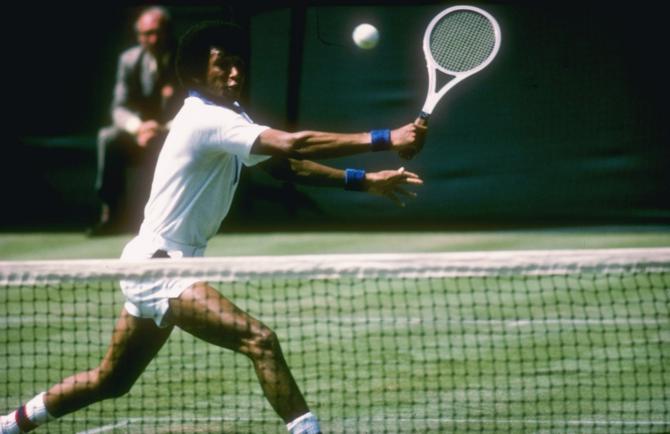
Tennis was our introduction to Arthur Ashe and he took over from there. He used the platform to become a civil rights activist, human rights champion and a model for black thinker-athletes.
The sport turned our attention on the native of Richmond, Va., and he forced us to consider more pressing matters, such as apartheid, HIV/AIDS and the barriers of poverty, privilege and racism.
But the tennis came first and he was atop the game in 1975, when he became the first African-American man to win Wimbledon.
“After 40 years, his legacy still lives on in one of the greatest ways,” Serena Williams told reporters at Wimbledon last week. “That was just an amazing match that he played against (Jimmy) Connors. … It’s been (important) for African Americans, not just in tennis, but in all sports, for breaking barriers.”
Ashe burst through the door at Wimbledon after doing likewise at the U.S. Open (1968) and Australian Open (1970). Unfortunately, no one has been able to follow him. Ashe remains as the only African-American man to win a Grand Slam event, one of the sport’s four major tournaments. In fact, only one other black man has accomplished the feat; France’s Yannick Noah won the French Open in 1983.
Ashe’s title match against Connors was a contrast in styles. Ashe was a UCLA graduate who served as second lieutenant in the Army. He carried himself as a gentleman with an officer’s bearing and was a professed lover of learning. Connors, the defending champion, was at the fore of tennis’ “showman” era. He basked in being a rebel, bragging that he never read books and showing no interest in etiquette.
There was saltiness between the two men. Ashe had questioned Connors’ patriotism because the latter skipped a U.S. Davis Cup match to participate in a lucrative exhibition earlier that year. Ashe rubbed it in by wearing his Davis Cup warm-up jacket with USA emblazoned on the front. He jumped out to a quick two-set lead and won the match in four sets, 6-1, 6-1, 5-7, 6-4.
They shook hands at the net without saying a word. It was Ashe’s last appearance in a Grand Slam final.
“Unfortunately I never got to meet Arthur,” Roger Federer told reporters at Wimbledon last week. “But I’m aware what an influential and important person he was in our game, especially for many other people as well. He’s been a leader. I was very happy for him that he was able to win here and utilize his fame for so many great things.”
Continue reading …
Posted on July 1st, 2015
 By DERON SNYDER
Once again, it’s time to check off some items on my “TIDU List” – Things I Don’t Understand:
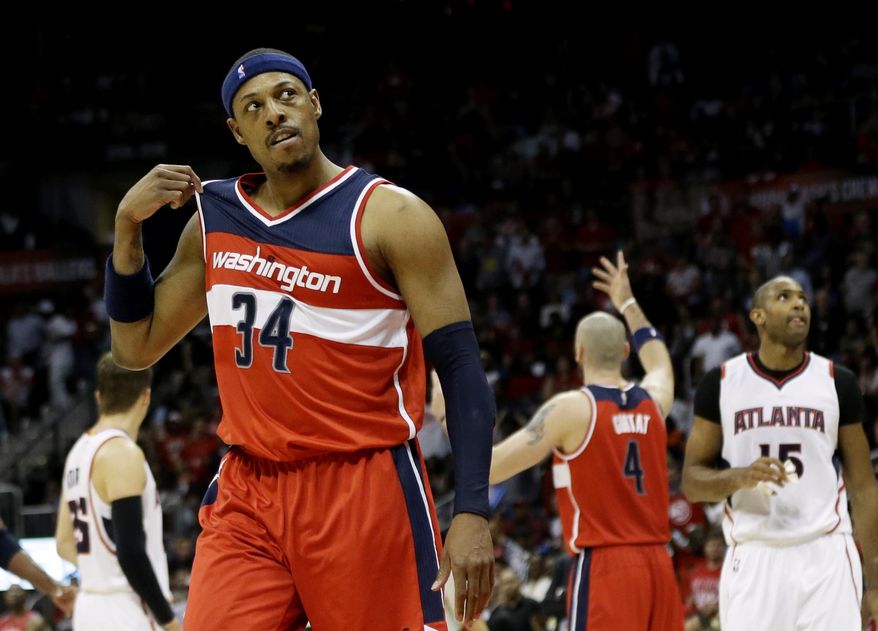
*How anyone could be mad if Paul Pierce leaves.
The veteran forward can end his Hall-of-Fame career at home in Los Angles, with the coach he won an NBA title under. Even diehard Wizards fans have to see the storybook nature of that possibility. Hollywood and Doc Rivers are powerful lures. But the Clippers are in the more-rugged West and will be less formidable if DeAndre Jordan leaves.
Either way, “I called game” will make another wining call.
*Why Phil Mickleson can’t seem to stay inbounds.
A $3 million gambling debt isn’t a big deal if you make more than $40 million annually in endorsements plus your PGA Tour earnings. But when ESPN reports that $3 million is tied to a federal investigation of money laundering and illegal gambling – one year after the feds investigated you for insider trading – you might have a problem. Mickleson’s image is at stake.
Lefty needs to straighten up and fly right.
*How Mark Brunell knows RG3’s fate.
Plenty of us agree with the ESPN analyst’s opinion: Robert Griffin III “has gone backwards.” Going from Rookie of the Year to the bench is a clue. But Brunell went further Monday, asked if he thought RG3 was good enough to succeed again. “I do not,” Brunell said. “… Does he have the skill set? Yes. But we haven’t seen it in some time.”
Blame the unnecessary (and worthless) prediction on host Stephen A. Smith.
*Why Serena Williams’ slam attempt is so quiet.
Read more…
Posted on June 29th, 2015
 By DERON SNYDER
Let’s suppose you own a business and the enterprise thrives among one segment of the population – say, redheads – but not-so-much within other segments – say, blondes and brunettes.
You love the faithful support from redheads who have been supporters since Day One. They are the base, your most ardent and passionate customers, the fuel that drives your operation.
But they have a penchant for a symbol that represents hate and terror to blondes and brunettes. Over the course of several generations, you overlooked the redheads’ habit of proudly waving the contentious emblem as they patronize your business, but now you’re finally admitting what’s obvious to everyone else who knows history and can think clearly:
Close association with the symbol isn’t a good look.
The divisive logo is not only bad for business (assuming you’re interested in growth and your brand’s image), it’s bad for society’s overall well-being, a de facto middle finger to blondes and brunettes.
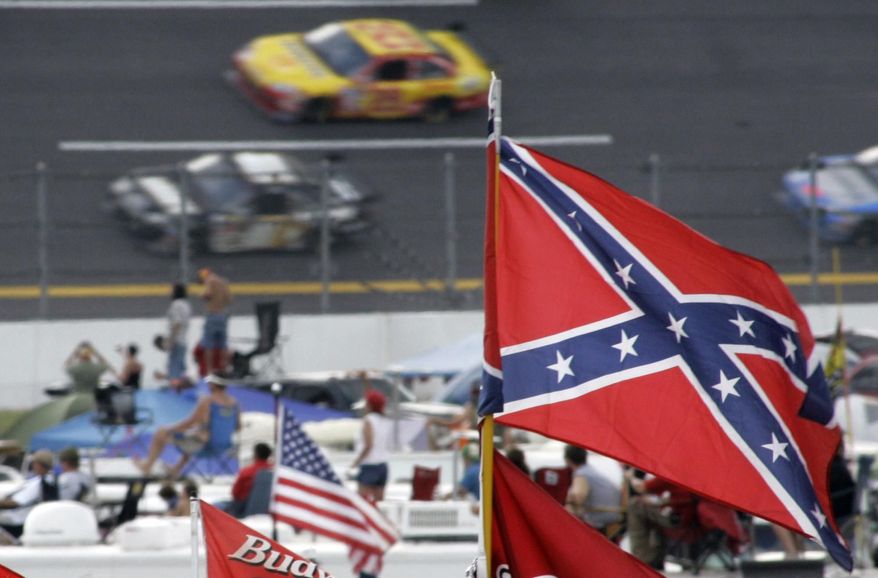
That’s the conclusion reached by NASCAR CEO Brian France, who is voicing his opposition to the Confederate flag, which is akin to America’s swastika.
“We want to go as far as we can to eliminate the presence of that flag,” France told reporters at Saturday’s NASCAR race in Sonoma, Calif. “I personally find it an offensive symbol, so there’s no daylight in how we feel about it and our sensitivity to others who feel the same way.
”We’re working with the industry to see how far we can go to get that flag to be disassociated entirely from our events.”
To NASCAR’s credit, it has banned the use of the Confederate flag on official materials, race cars and licensed merchandise for more than a decade. It also prevented PGA star Bubba Watson from driving the flag-adorned “Dukes of Hazzard” car before an event in 2012.
Yet the banners are omnipresent at places such as Darlington Raceway in South Carolina and Talladega Superspeedway in Alabama, flapping atop motor homes in the infield and dotting TV screens as the camera sweeps the track. Many NASCAR fans, primarily the figurative redheads, don’t share the circuit’s opinion on the flag and are determined to make their feelings known.
Read more…
Posted on June 24th, 2015
 By DERON SNYDER
The NFL has been masterful in transforming itself into a 12-months-a-year commodity. From the Super Bowl to the combine, free agency, the draft, minicamps, training camps and exhibition games, barely a day goes by without football in the news.
Of course there’s a downside to being the center of attention every 24/7. Everyone is tuned in the moment scandals arise, whether they occur in casinos at night or championship games at halftime.
The latest drama follows the league’s line of gated embarrassments, from Spygate to Bountygate to Deflategate. Having the New England Patriots front-and-center for two of those three clouds ratchets up the interest level. Nothing like seeing one of sports’ premier franchises brought down a few notches, hoist by its own petard.
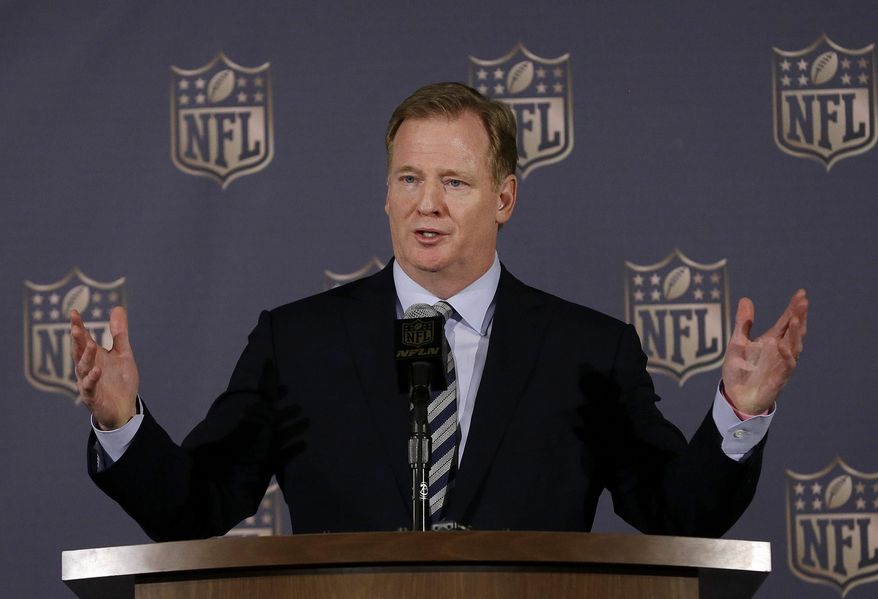
But here’s something else for the NFL and commissioner Roger Goodell to fret about. Bountygate was found to be much ado about nothing and the same is true about Deflategate – though the league can’t afford to confess on the latter case.
Surely that’s why Goodell didn’t recuse himself Tuesday as Patriots quarterback Tom Brady appealed an outrageous four-game suspension for allegedly deflating footballs in the AFC title game against Indianapolis. After a new scientific analysis by the American Enterprise Institute took the air out of the NFL’s “proof” – a 243-page report with more than half devoted to faulty mathematical analysis of ball pressurization – Goodell had no choice but to stay in the judge’s seat.
Otherwise, he’d risk more embarrassment than he faces now, which seems humanly impossible.
Read more…
Posted on June 22nd, 2015
 DERON SNYDER (as published in The Washington Times)
In “Do The Right Thing,” the 1989 comedy-drama that was nominated for two Oscars and is widely considered an all-time great film, John Turturro’s character (Pino) unwittingly shows that he is fond of African-Americans despite his frequent use of a common slur.
The revelation arrives subtly, under questioning by Spike Lee’s character (Mookie).
Mookie: “Who’s your favorite basketball player?”
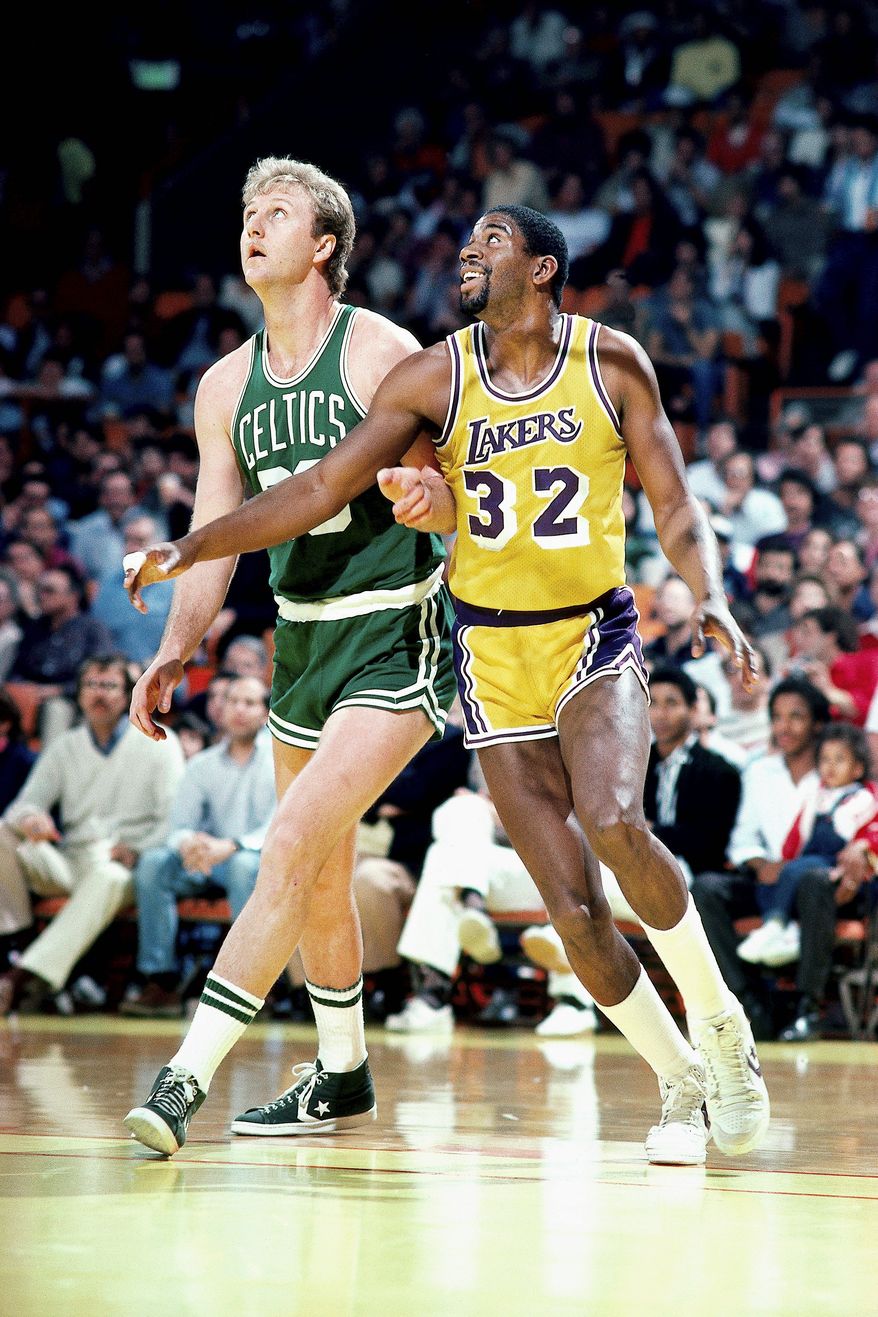
Pino: “Magic Johnson.”
Mookie: “And not Larry Bird? Who’s your favorite movie star?”
Pino: “Eddie Murphy.”
We soon discover that Pino’s favorite rock star is Prince, which leads Mookie to conclude that some of Pino’s favorite people are the same ones he refers to with the n-word.
Pino: “It’s different. Magic, Eddie, Prince are not n—–s. I mean, are not black. I mean, they’re black, but not really black. They’re more than black. It’s different.”
Like many consumers of American pop culture, Pino gets much of his information from mainstream media, where black celebrities can be among the most prominent individuals in their fields. Though he’d probably harbor different emotions if Magic Johnson was a janitor, at least he’s able to admit affinity for Magic Johnson the NBA star,.
That mindset is bad enough, but some folks’ are even worse.
There are those who can’t get past pigmentation at all, whether it’s athletes on a field or worshipers at a Bible study.
Thankfully, everyone who’s blinded by color doesn’t act out their beliefs like the wicked Dylann Roof in Charleston. There are gulfs between mere dislike, pure hatred and cold-blooded murder. But the journey isn’t made in one trip, rather via a series of easily overlooked steps that subconsciously can move us closer to the extreme.
For instance, coverage of black athletes can play a significant role in shaping some opinions of blacks in general. Cynthia Frisby, a professor at the University of Missouri’s School of Journalism, points out the problem in a new book, “How You See Me, How You Don’t.”
Her research finds that black athletes are more likely than white athletes to be portrayed negatively in the media.
Continue reading …
Posted on June 16th, 2015
 By DERON SNYDER
What a great story!
LeBron James returned home and formed his Big Three Remix, leading the Cleveland Cavaliers back to the NBA Finals.
He made everyone forget about “The Decision.” He validated management’s faith in rookie coach David Blatt. He played at a superhuman level, allowing the championship-starved citizens to rejoice as the town’s title drought ended, despite two-thirds of the star trio being out with injuries.
The NBA couldn’t go wrong with that tale of perseverance, resilience and an unsung hero nicknamed “Delly.”
That’s not what happened. But the league still capped the season with an unbelievable warm-and-fuzzy adventure.
The Golden State Warriors compiled the NBA’s best record and reached the Finals with an MVP in Steph Curry, a rookie coach in Steve Kerr and an 11-year veteran who previously had started every game in his career but came off the bench all year.
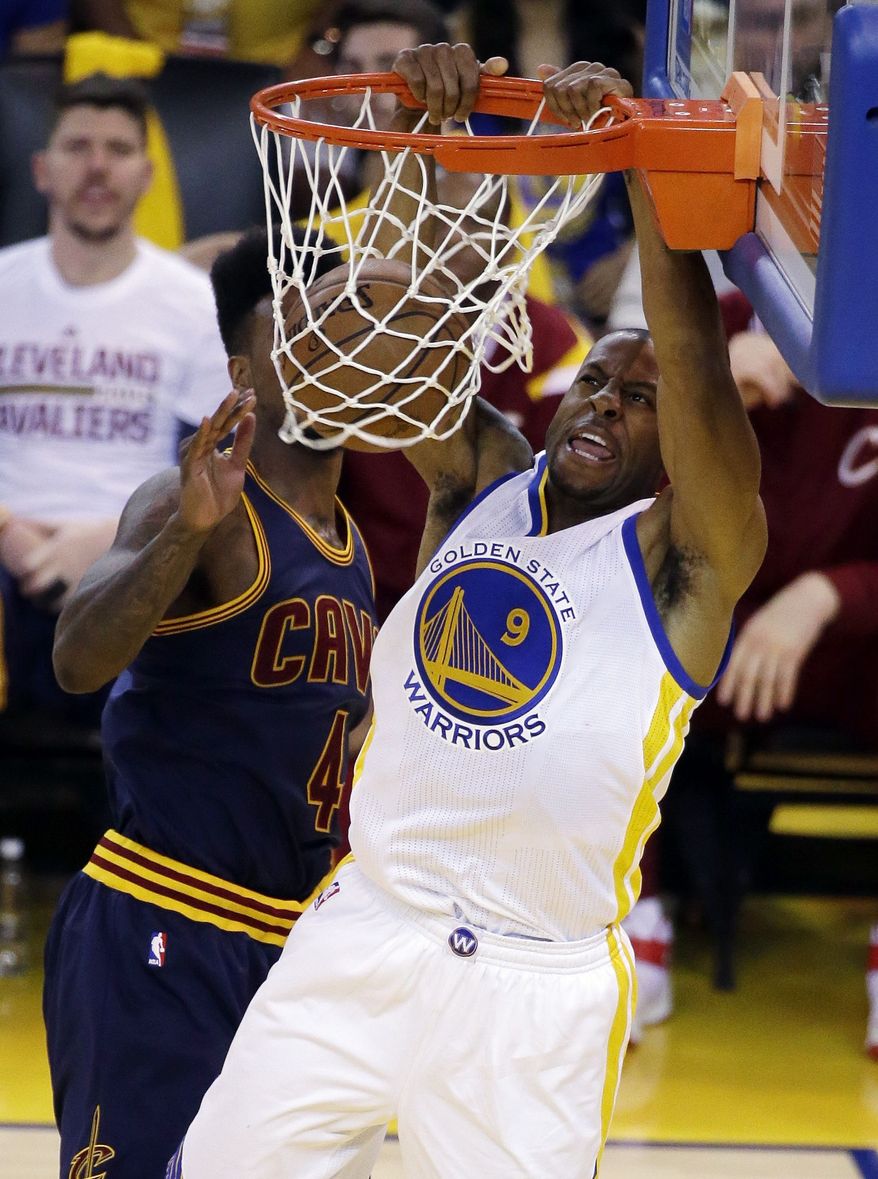
But Andre Iguodala changed the course of the Finals when he was inserted into the starting lineup for Game 4. He played superhuman defense on James, knocked down shots, crashed the boards and found the open man. He allowed the Bay Area to celebrate the franchise’s first title since 1975.
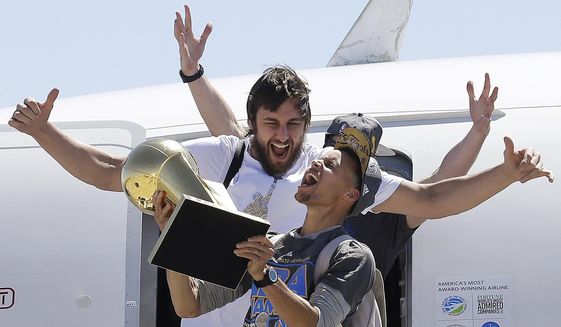
Golden State’s version made the final cut – not Cleveland’s alternate ending – and the NBA couldn’t be happier with the Warriors’ tale of unselfishness, sacrifice and a surprise Finals MVP nicknamed “Iggy.”
You can argue that a Cavs’ victory would’ve been a better narrative, the prodigal son’s homecoming culminating with a rare celebration in one of our most hardscrabble cities.
But that’s no better than the Warriors earning the O’Brien Trophy after a scintillating season of ego-less, position-less basketball that very well could transform the game.
Read more…
Posted on June 15th, 2015
 By DERON SNYDER
Golden State coach Steve Kerr made the key adjustment in the NBA Finals when he switched to small-ball in Game 4. Putting Andre Iguodala in the staring lineup helped the Warriors even the series instead of being one loss away from vacation.
The next move was up to Cleveland coach David Blatt and he followed suit, playing center Timofey Mozgov for just nine minutes in Game 5 as Cavaliers played their own small lineup.
As Golden State looks to end the series Tuesday on the road, Blatt has to decide whether to match up with the Warriors or try to pound them when they’re diminutive. The Cavs have lost both ways in the last two contests but might feel compelled to stick with the first option.
“We were in the game the way we were playing,” Blatt said in a postgame news conference Sunday night, defending the lack of playing time for Mozgov, who had 28 points and 10 rebounds in Game 4.
“We were right there,” Blatt said. “So that’s the way we played it. … I thought that was our best chance to win the game and we were definitely in the game with a chance to win.”
Asked if he would stick with that game plan, Blatt said “not necessarily.”
But it’s probably too late to turn back.
The Cavs imposed their will through the first three games, slowing the pace with a LeBron James-centric offense and taking a 2-1 series lead, but the Warriors have flipped the script. They gambled that the risk of being out-rebounded wouldn’t out-weigh the reward of more space and a faster pace.
Starting center Andrew Bogut, who played 28 and 25 minutes respectively in Games 1 and 2, played just 19 minutes total over the last three games. He didn’t play at all Sunday after playing just two minutes in Game 4.
Read more…
Posted on June 11th, 2015
 By DERON SNYDER
No matter what happens in the NBA Finals over the next two or more games, the Golden State Warriors can always savor their regular-season performance.
But it will leave a bitter aftertaste unless they find the right ingredients to neutralize Cleveland.
More Curry would be a great place to start.
A couple of weeks ago, the Warriors were in the conversation on all-time great NBA teams based on their body of work. The way they rolled through the competition was more impressive because they reside in the rugged Western Conference. Their franchise-record 67 victories included a plus-minus of 10.1 points – the only team this season with a double-digit average margin of victory – and no other squad scored more than its 110 points per game.
The Warriors seemed to have it all. They could shoot the lights out, play great defense and move the ball. They enjoyed good health, especially relative to the crippled Cavs and other hobbled playoff teams. At home the Warriors were virtually unbeatable, 39-2 during the regular season and 7-1 in the playoffs entering the Finals. They had the MVP in Steph Curry, the Defensive Player of the Year runner-up in Draymond Green and several other dangerous, multifaceted players.
Now all they have is a puzzling 2-1 deficit and a slew of questions that have perplexed the public.
How can this team twice be held to less than 60 points through three quarters? Where is the spectular offensive firepower? What happened to Curry and who is Matthew Dellavedova to stop him?
If you were looking for the same pyrotechnic attack that the Splash Brothers & Co. made routine, you might have to wait until October.
Read more…
Posted on June 9th, 2015
 By DERON SNYDER
An NBA series isn’t a series until one team loses on its home court.
So welcome to the NBA Finals.
This series was supposed to be over the instant Kyrie Irving went down with a fractured kneecap in Game 1. There was no way Cleveland could compete against Golden State minus the All-NBA point guard, the Cavaliers’ second-best player who had an incredible performance in the opener. Already underdogs with Irving, the Cavs faced the distinct possibility of being swept without him.
Even the great LeBron James wouldn’t be enough to carry an undermanned squad past the Warriors, who including the postseason were 47-3 at Oracle Arena entering Game 2. You almost pitied the Cavs; they didn’t have a fighting chance with Irving and Kevin Love – the team’s third-best player – unavailable for action.
But, sometimes, having the game’s best player is enough. He infuses teammates with confidence. They use splashes from his preternatural powers to water their limited skill sets and watch them grow.
James played 50 minutes in the 53-minute contest and failed to hit the game-winner at the end of regulation – again – but he put his team in position to win and they gutted it out, taking the lead for good on a pair of free throws from backup point guard Matthew Dellavedova who grabbed an offensive rebound with 10.1 seconds left in overtime.
“It’s the grit squad that we have,” James said in a postgame news conference after posting a 39-16-11 triple double. “It’s not cute at all. If you’re looking for us to play sexy, cute basketball, then that’s not us right now. Everything is tough. We’re going to come in with an aggressive mindset defensively and offensively.”
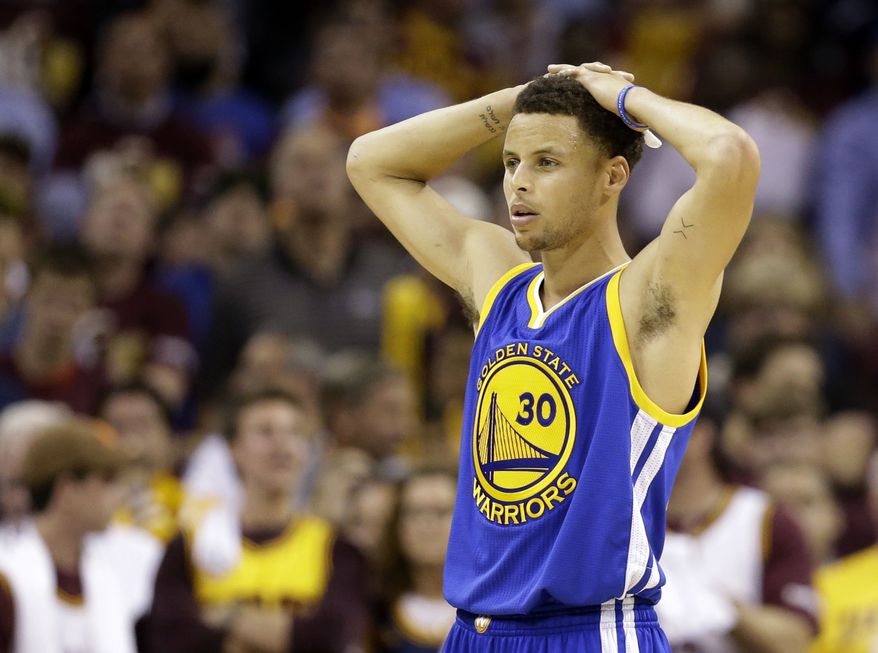
Cleveland has stolen homecourt advantage but not Stephen Curry’s confidence. The NBA MVP had a dreadful game, missing 13 of 15 attempts from 3-point territory and 18 of 23 shots overall. Fellow Splash Brother Klay Thompson was cooking Dellavedova early and finished with 34 points, but Curry never ignited after the pesky Aussie was switched to him.
Read more…
Posted on June 9th, 2015
 By DERON SNYDER
It’s the mentality in football: Playing hurt. Playing in pain. Playing with a concussion. NFL star Emmitt Smith recently said that he did it. His peers did it. And others will continue to do it. It’s part of the sport.
But it’s that part that’s also taking parents who had been sitting on the fence about letting their sons play football from “maybe” to “hell, no.”
“You do it for the sake of the game,” the NFL Hall of Famer and former Dallas Cowboys star reportedly told an audience recently at the Laura W. Bush Institute for Women’s Health Family, Football and Fame luncheon in San Angelo, Texas. “You do it for the sake of your teammates. You do it because it’s your team.”
His mindset was such that he once played in a game with a separated shoulder, simply ignoring the pain and continuing to take handoffs. Such bravado—machismo? stupidity?—is woven into the sport’s fabric. Staying on the field is more rule than exception.
“Should you be out there? The answer is probably not. Would I do it again? Yes, I would,” Smith said. “But that’s football. That’s the way I was raised. If you can’t play with pain, you can’t play the game.”
A growing number of parents, and even NFL players, have begun to question that approach, which can lead to mangled limbs, frayed joints, broken necks and scrambled brains. From the men who recently decided that early retirement beats a pro career, to the former players suffering from head trauma and suing the NFL in a class action concussion lawsuit, to the prep and youth organizations facing litigation of their own, football has become a tackling dummy.
The trend began about six years ago when Congress grilled NFL Commissioner Roger Goodell on the league’s concussion policies. It started to bear fruit in November 2013 when ESPN reported that Pop Warner, the nation’s largest youth football program, saw participation drop by nearly 10 percent. Head injuries were thought to be the No. 1 reason.
“Unless we deal with these truths, we’re not going to get past the dropping popularity of the sport and people dropping out of the sport,” Dr. Juan Bailes, Pop Warner’s chief medical officer, told ESPN. “We need to get it right.”
For some parents, their kids’ desire to play football is a lost cause. For others, it’s not a problem at all. Family members can be at opposite ends of the spectrum.
“My [15-year-old] son has played every year since he was 12,” said Deborah Crimes of Upper Marlboro, Md. “Even though he’s had a concussion, he still plays. That didn’t taint me. I know things happen with kids.
“But my sister won’t let her sons play,” Crimes continued. “They have played soccer, baseball and basketball, but she won’t allow football. The principal and football coach are trying to recruit my youngest nephew right now, and she’s not having it.”
Read more …
 Follow