(Kaitlin Newman/The Banner) The 27-year-old musician grew up performing in her church and blends that influence with hip-hop and other stylings to create her own evolution of jazz After seven years studying and performing music in Detroit, New York City and beyond, Sequoia Snyder considers it a blessing to be back in her Bowie home.
She runs through keyboard exercises in solitude in the corner of her bedroom. And she sits at the same piano she’s been playing since high school in her family’s recreation room while corralling her young niece from running around.
“I can’t quite put it into words,” Snyder, 27, told The Banner on the porch of her family’s home. “Just to be able to be there for my family and spend time with them … because they’re probably the closest people to me in my life. So, I mean, it’s done wonders for my mental health.”
It’s been the start the up-and-coming artist wanted when she moved home with her parents in her effort this past year to plant her musical flag where it all began.
She was born in D.C., and the family moved to Florida for a good chunk of her childhood before moving back to Prince George’s County when she was 10. Snyder got into D.C.’s prestigious Duke Ellington School of the Arts, where her sister also attended and her mother worked as an English teacher, to study vocal performance. But a year later she got hooked on playing piano and switched her focus.
WASHINGTON – Virtually everyone can relate to being by themself in a crowd. That sense of solitude hit Sequoia “REDWOOD” Snyder during one of her frequent solo trips for a gig. While sitting at an airport gate a few years ago, Sequoia wrote “SOLUS,” a Latin word that means “alone” and is often used in stage directions.
She’ll release “SOLUS” on Friday, Aug. 21, during a stretch when crowds around her get larger. As a 2026 Next Jazz Legacy awardee, Sequoia will play at the D.C. Jazz Festival on Sept. 5, before headlining at the Detroit Jazz Festival the next day. A couple weeks later, Sequoia will play in Los Angeles during the 2026 NEA Jazz Masters Tribute Concert for one of her mentors, Patrice Rushen.
The success being enjoyed this year has carried over from last year, when Sequoia was bandleader for shows at the Kennedy Center and the Lincoln Center. Growing exposure led to her earning the NJL award (founded by NEA Jazz Master Terri Lyne Carrington). Sequoia will promote “SOLUS” and other songs on an upcoming project during a multi-state tour later this fall.
A gifted pianist and composer who’s noted for her individuality and style, she blends contemporary jazz vibes with assorted Black music genres. She has performed with esteemed musicians such as Rodney Whitaker, Dee Dee Bridgewater, Kenny Barron, Cory Henry, and even popular R&B band The Internet. “When I can’t do a gig, I always recommend Sequoia,” says mentor Jason Moran, Artistic Director of Jazz at the Kennedy Center.
Before studying jazz, she was heavily influenced by gospel, R&B, hip-hop, funk, soul and pop music while growing up. Her eclectic tastes led her to arrange and perform DMX’s “Who We Be,” a 2025 single. “I wrote it for a Black History Month recital,” she says. “I like the melody and the rawness that he communicates about the tough parts of the Black experience.”
Her latest single explores the intricacies of being unaccompanied in crowds, using a smooth, odd-timed vamp and high-octane swing. The song expresses the complex, dual emotions of seclusion. Considering the pace of her burgeoning musical career, Sequoia gladly makes space for alone time.
###
Click here to preview “SOLUS.” Contact Deron Snyder to book Sequoia or arrange an interview. Follow @redwoodsounds on social media for upcoming performances and other news.
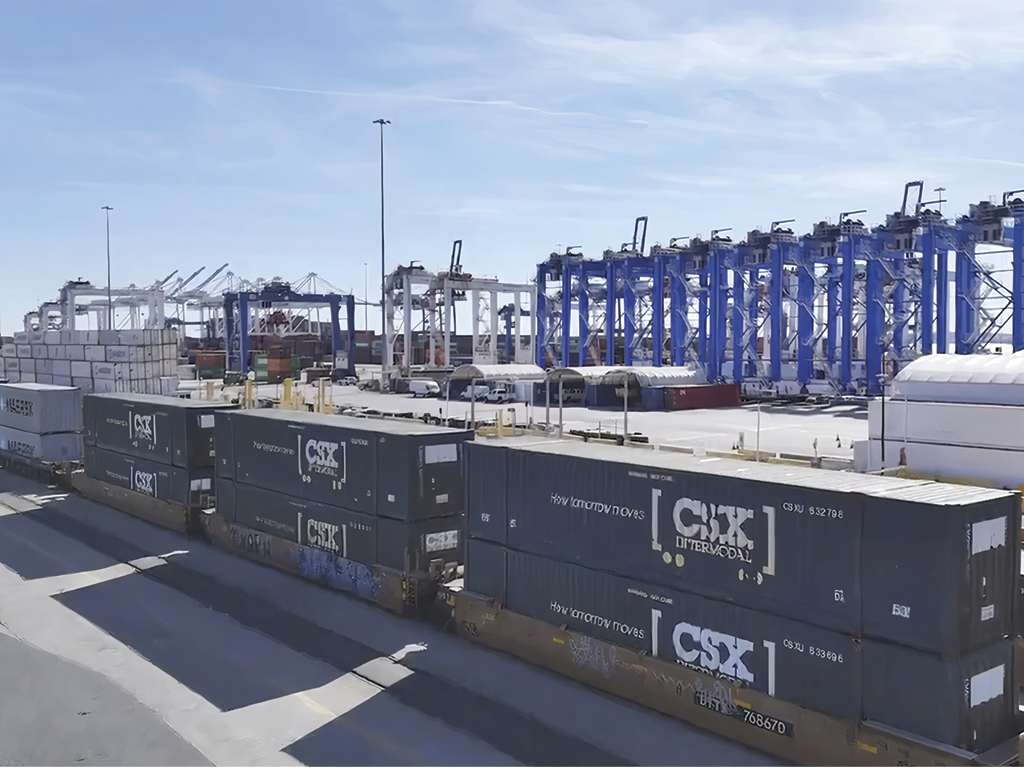
Stakeholders within the rail industry had long complained about Baltimore’s Howard Street Tunnel before Keith Davis joined CSX as a conductor in 2011. The 1.7-mile tunnel was completed in 1895 (and extended in 1985), over time becoming a vital artery in America’s transportation network. But it was decades behind the times, a source of frustration for everyone involved.
“When I first got hired, that’s what some of the talk was,” said Davis, who’s now CSX Superintendent of the Central East Zone. “I kept hearing about how the Howard Street Tunnel would be expanded.”
Decades of talk didn’t result in action before he left CSX, whose rails in Baltimore were a century-old bottleneck along the I-95 corridor. But after several years of negotiations between Maryland, CS and the Federal Railroad Administration, officials broke ground on the Howard Street Tunnel in November 2021. Davis rejoined the company in 2024, partaking in the tunnel’s last stages before it reopened in September 2025.
“I put in some work on understanding what we need to do, and the impact it was going to have on our customers and the community around us,” he said. “I had about two weeks to make a whole intermodal facility for us and keep the traffic volumes flowing in and out of Baltimore. That was a huge part of the success I feel about the project.”
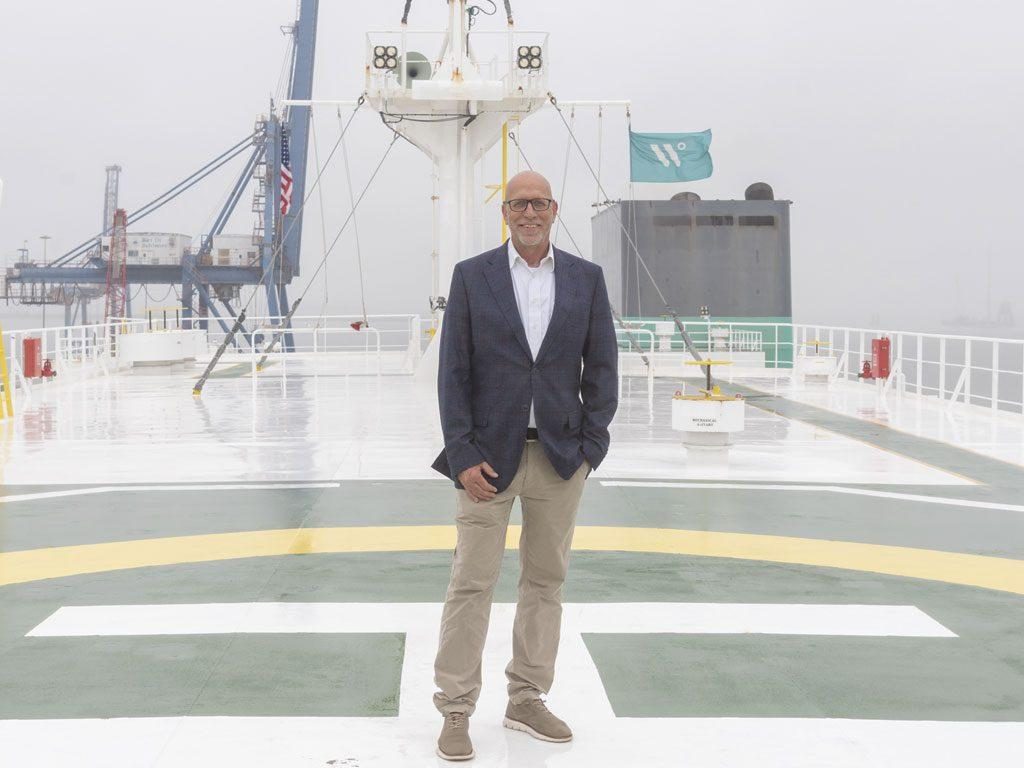
Rod Pickens was a young teen when his family moved from Prince George’s County, Maryland, to an Anne Arundel County neighborhood that happened to have a boat slip. His dad purchased a used Hobie Cat to affix atop their Volkswagen Rabbit, and the family began heading to the dock for days of boating fun.
Pickens, Vice President of Equipment and Container Processing for Wallenius Wihelmsen, has fond memories of good times spent sailing and hanging out on beaches. Being close to the water produced a liberating feeling. But something else was nudging him, too.
“We had a lot of bay pilots in the neighborhood, the guys that bring the ships up the bay and know all the twists and turns of the channels,” he said. “I was fortunate enough to meet a few and they told me what they did. It was super interesting.”
Some started their careers by attending the Merchant Marine Academy, which sounded like a good idea to Pickens. So, off he went, envisioning a life at sea.
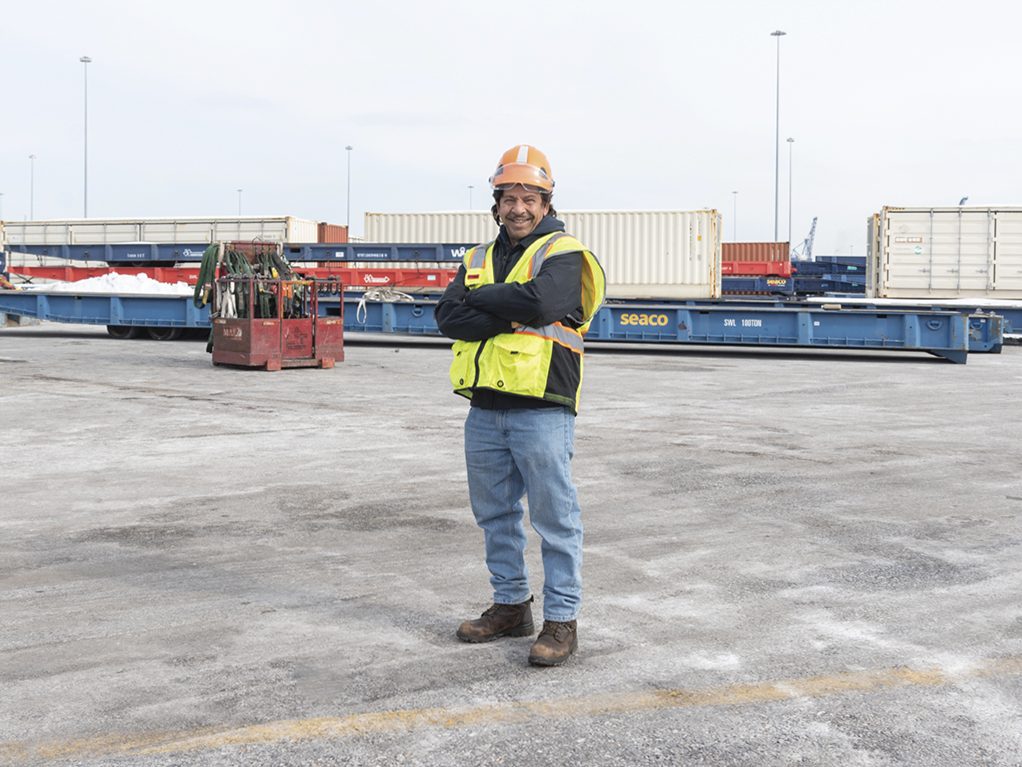
After spending 13 years as a seafarer, the last two as a captain, Alok Praharaj was ready to come ashore and raise a family. Life at sea was challenging, especially before cellular technology made communication much easier.
Now, 40 years later, Praharaj no longer spends months at sea. But as the owner of American Marine & Cargo, Inc. (AMC), the ease of modern communication has its pros and cons. He sleeps with his phone, and it can ring at any hour of the night.
“It’s a 24/7 job,” said Praharaj, who serves as AMC’s Principal Surveyor. “Our survey timings are very bad: holidays, weekends, snow, cold, heat. It doesn’t matter. Our phone is on; people call and we go. A lot of times it’s not per a schedule.”
At the mention of Perdue Farms, many people might think of the late CEO Frank Perdue, who made his birds famous through a wildly successful advertising campaign in the 1970s: “It takes a tough man to make a tender chicken.”
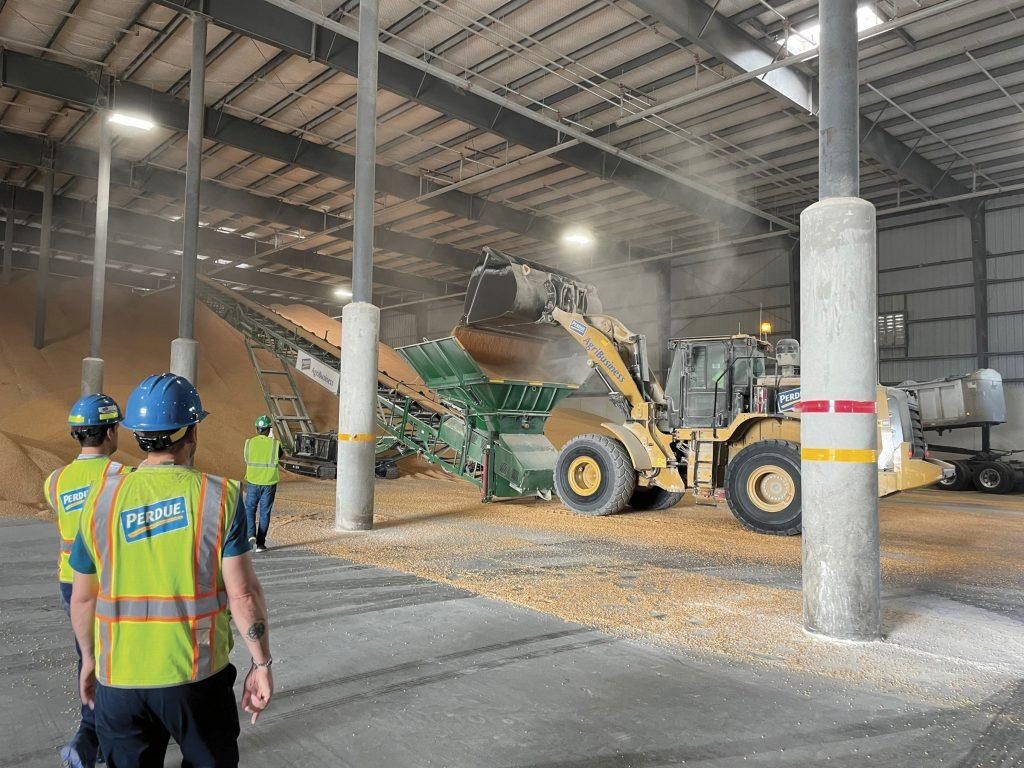
The Salisbury, Maryland-based company is nationally known for producing oven-stuffing poultry. But Perdue didn’t invest $30 million in 2018 to build a bunch of coops at the Port of Baltimore. It takes a lot of feed to grow chickens (and other livestock), which led to the 150,000-square-foot grain facility at Tradepoint Atlantic for Perdue AgriBusiness.
“We’re an agricultural buyer and processor, supporting farmers through the sourcing and processing of grains and oilseeds, and providing domestic farmers with access to international markets,” said Jeremy Hamilton, Director of Operations for Animal Nutrition and Specialty Crops at Perdue AgriBusiness. “That work spans grains, oilseeds, organic feed and nutritional ingredients, with products moving both domestically and internationally.”
When Jim Shapiro decided to grab a backpack and head overseas during a gap year from the University of Massachusetts, he wasn’t thinking about a career in logistics. He was feeding his innate curiosity about people and places.
“I had a Eurail pass and traveled for four months by myself in Europe,” said Shapiro, director of Thunderbolt Global Logistics. “That kind of opened me up to a lot of different things. I was interested in just everything.” Shapiro returned and graduated with a degree in business management, intent to focus on international commerce. He moved to Baltimore in 1984 and used a Port of Baltimore directory to conduct a job hunt.
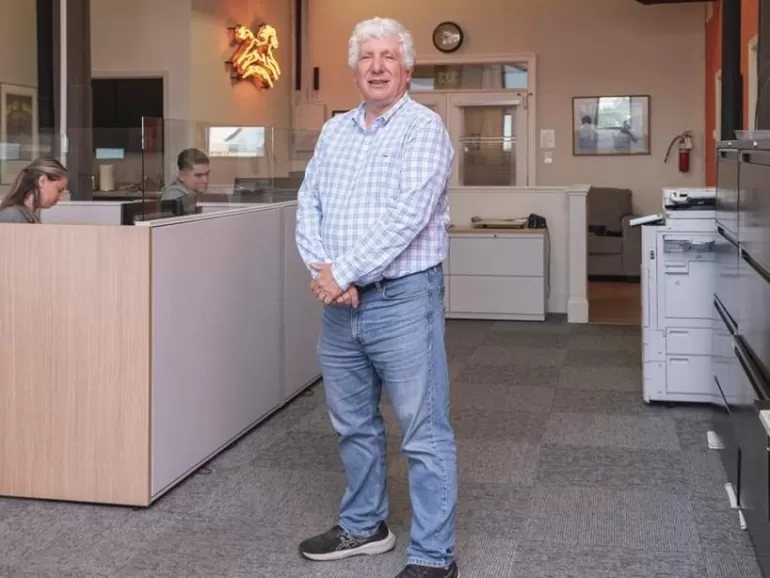
He knocked on doors at the World Trade Center — beginning on the 26th floor — and worked his way down to the fifth. That’s where he found work at Samuel Shapiro & Company (no relation), a 100-year-old shipping and logistics firm.
“Initially I was basically doing clerical work,” he said. “I was typing export declarations with carbon paper. I didn’t have much exposure to the Port, but I realized it’s a very close-knit community. I got to know a lot of people at companies in trucking and warehousing. Your competitors were your friends and you didn’t have an issue with it.”
Back in 2023, when the burgeoning startup Sindri Materials needed a place to live and grow, CEO and founder Christopher DiMarco began a nine-month research journey. He looked at private lab spaces from Maryland to New York and all the way to Boston. There were lots of business incubators in “great spaces and great ecosystems,” but he says none were the greatest fit for his graphene company.
“Then we stumbled on The Innovation Space,” DiMarco says. “The way their spaces are set up, with their leadership and their focus, they have an emphasis on advanced materials alongside life sciences. It just makes them a unique space for a company like ours.”
The residency paid off immediately. Sindri Materials won an Encouraging Development, Growth and Expansion (EDGE) Grant from the Delaware Division of Small Business in 2024 and also made the cut for Technical.ly’s RealList Startups that year. DiMarco says setting up shop at The Innovation Space has played an invaluable role in his company’s success.
Founded in 2017, The Innovation Space helps science-based startups thrive in Delaware, hopefully to the scale of companies that change the world through science and live for generations — like DuPont, which partnered with the state and the University of Delaware to develop the nonprofit. Bill Provine, a longtime DuPont director and The Innovation Space’s founder, president and CEO, says they all saw a gap in the landscape for those types of startups.
“You hear all these stories about people creating Apple Computer in their garages or some software company beginning at the local Starbucks,” Provine says. “But you can’t generate the next therapeutics company or Big Pharma company in your garage.”
DiMarco, who’s from Delaware County just outside of Philadelphia, searched far and wide before finding the ideal location right under his nose. “It’s the shortest distance of any place I looked at,” he says. “I started with Google searches and wasn’t really thinking about Wilmington. Ultimately, I heard about The Innovation Space and it was serendipitous. It was 30 minutes away from me.”
Peter O’Malley’s name often rings a bell and his face seems familiar to people as he journeys around the city and elsewhere. That’s not surprising when one of your five siblings once served as Baltimore’s mayor and Maryland’s governor.
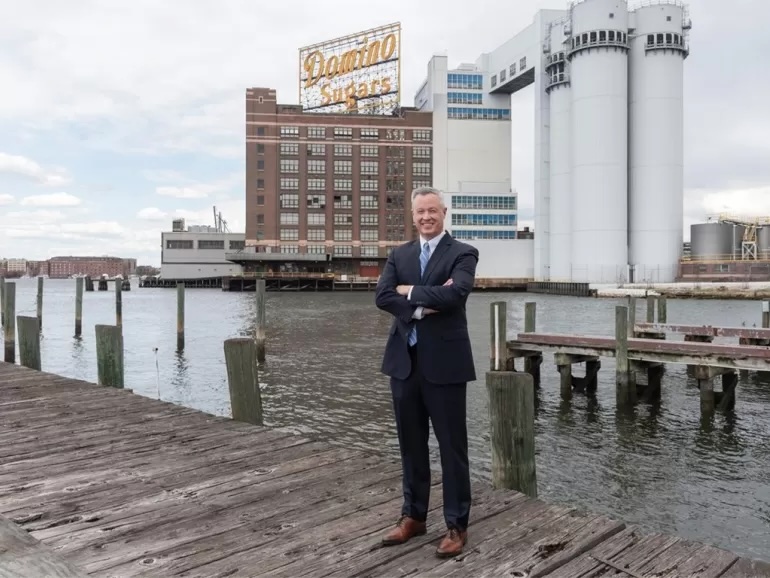
O’Malley has spent time in government as a Chief of Staff, first for Baltimore County (2007-2010) and then Baltimore City (2011-2012). But neither position had a visceral connection to the Port of Baltimore like his current job — Vice President for Corporate Relations at ASR Group, which owns Domino Sugar.
“Dominio Sugar was established here over 103 years ago and we’re the Port’s leading bulk importer,” said O’Malley, who joined the company in 2014. “We’ve been at it for a long time and most recognize us for our big sign, which is iconic. It’s a sign that the Port is still working.”
Earlier in his career, he once lived a few blocks from the refinery and enjoyed a clear view of the landmark. He’d see sugar boats come and go, but he never realized the extent of what they represented: all the various jobs and assorted products. At ASR Group, he felt the sign’s impact right away, especially when brides called to request repairs so their reception pictures wouldn’t feature unlit letters in the background.
He was at the center of media coverage in 2021 when the 70-year-old sign was replaced and its lore grew. “People have been very pleased,” O’Malley said. “But one person said, ‘Without some of the letters being out, it doesn’t have the same character.’ So, you can’t please everybody.”
Unlike sailing enthusiasts who grew up in nautical families, Nan Nawrocki was a young adult when she discovered the joy of watercraft powered by the wind. She learned to sail in the ’80s and eventually became a boat owner, tying the knot in a love affair that’s still going strong.
Nawrocki transitioned from navigating small boats to sailing aboard bigger vessels and competing in the Great Chesapeake Bay Schooner Race. Now, as Executive Director of Sail Baltimore, she helps approximately 50,000 annual visitors meet the crew and climb aboard these amazing vessels. “Having the opportunity to actually sail on a tall ship is awesome,” she said. “It’s one of those things that’s indescribable unless you get a chance to do it.”
Sail Baltimore brings tall ships, Navy and sea service vessels from around the globe to the Port of Baltimore, part of the organization’s educational programming that covers maritime history, world culture, economic development and more. Along the way to leading the nonprofit, Nawrocki spent over 30 years at the U.S. Naval Academy, where she did some offshore sail training with the midshipmen.
She also made sure that boating was a way of life for her family. “My two girls also learned to sail,” she said.
Nawrocki continued sailing after no longer owning a sailboat. “I’ve had some amazing opportunities to sail on tall ships both in the Chesapeake and abroad,” she said, including trips on the Statsraad Lehmkuhl from Norway to Scotland and Amsterdam to Norway, and more recently a cruise on the Stad Amsterdam in the Caribbean. Locally, it’s easy to go sailing without owning a boat, she noted. “There are all kinds of opportunities to sail or learn to sail if you are interested.”
 Follow