By DERON SNYDER (as published in The Washington Times)
Questions about quarterback Dwayne Haskins out-number the answers, a ratio
that won’t change anytime soon. With three starts in five NFL appearances – following
just one season as Ohio State’s starter – the Washington Redskins’ rookie can
generate as much pessimism or optimism as observers possess.
Only a few characteristics would be deemed undeniable by a consensus.
He has ideal size at 6-4 and 230 pounds. He has exceptional arm strength
to make any throw. And he comes across as a “young” 22-year-old, not mature
beyond his years.
There are a number of legitimate concerns regarding Haskins, but his
youthfulness isn’t one of them for me. I just assume he’ll grow up and grow
into the 360 degrees of being an NFL quarterback. That’s why I’m not overly concerned
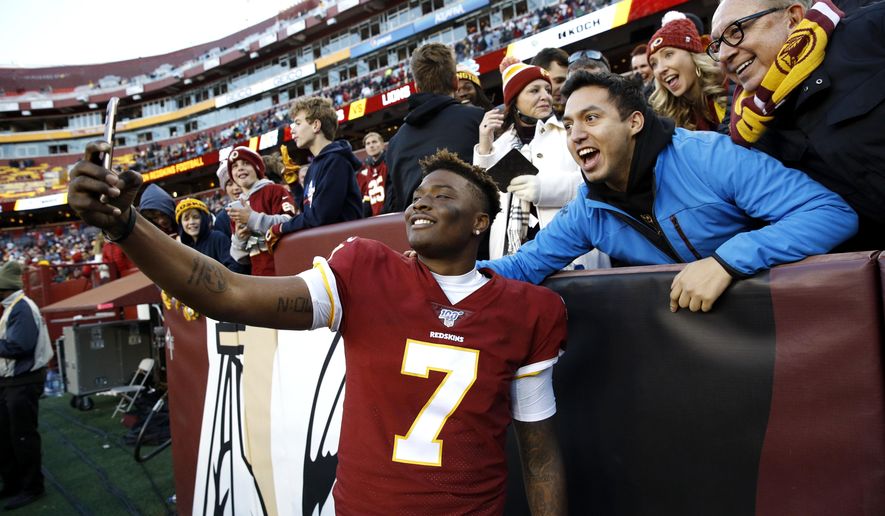
that Haskins was celebrating with fans and missed the final snap Sunday against
the Detroit Lions.
How much indignation is appropriate? I’m not sure exactly … just less than
the amount unleashed after Case Keenum entered the game to take a knee in
victory formation.
By DERON SNYDER (as published in The Washington Times)
LANDOVER, Md. — We are long past the stage where wins and losses are overriding concerns for the Washington Redskins this season. Wins and losses on given plays and key drives, in specific situations and certain conditions, are far more important considerations than the final score during the last few games.
However, week after week and month after month of chewing on defeats is
a depressing way to spend Sunday afternoons. While there’s no guarantee the
taste will linger for the young players expected to lead a turnaround, you
don’t want them growing accustomed to it, either.
By beating the Detroit Lions on Sunday, 19-16, and snapping a nine-game
streak at home, the Skins checked off a few boxes that are small in the grand
scheme, but possibly building blocks for the big picture.
By DERON SNYDER (as published in The Washington Times)
The Washington Redskins have many weaknesses as an organization and,
presumably, some strengths, too. But you won’t find “good judgment” on the latter
list.
In matters large and small, Washington routinely exhibits worst
practices, consistently veering opposite of the approach used by well-run NFL franchises.
The unsound methodology is revealed on and off the field, including player
relations, employee relations, community relations, and media relations.
Now the ineptness has touched a tragedy.
Safety Montae Nicholson had not played in three weeks as an ankle injury
sidelined him against Minnesota and Buffalo before Washington went on its bye. But
there he was Sunday, dressed and ready to go against the New York Jets. He played
on 70 of 71 snaps, and only Jonathan Bostic and Cole Holcomb recorded more tackles than
Nicholson’s five.
Except every defensive player should’ve had more tackles than Nicholson.
He should’ve been in street clothes. He didn’t belong on the field just a few
days after taking a woman to a hospital, where she was pronounced dead from a
suspected drug overdose at his house.
By DERON SNYDER (as published in The Washington Times)
Like an expansive all-you-can-eat buffet, five days of Colin Kaepernick
and the NFL last week offered something for everyone.
The league can claim it tried to do right, offering the banished
quarterback an opportunity to showcase his abilities. More than 20 NFL scouts
were at the Atlanta Falcons headquarters on Saturday, waiting to see if the
former NFC champion could still play.
Kaepernick can claim that’s exactly what he proved, albeit not per the NFL’s
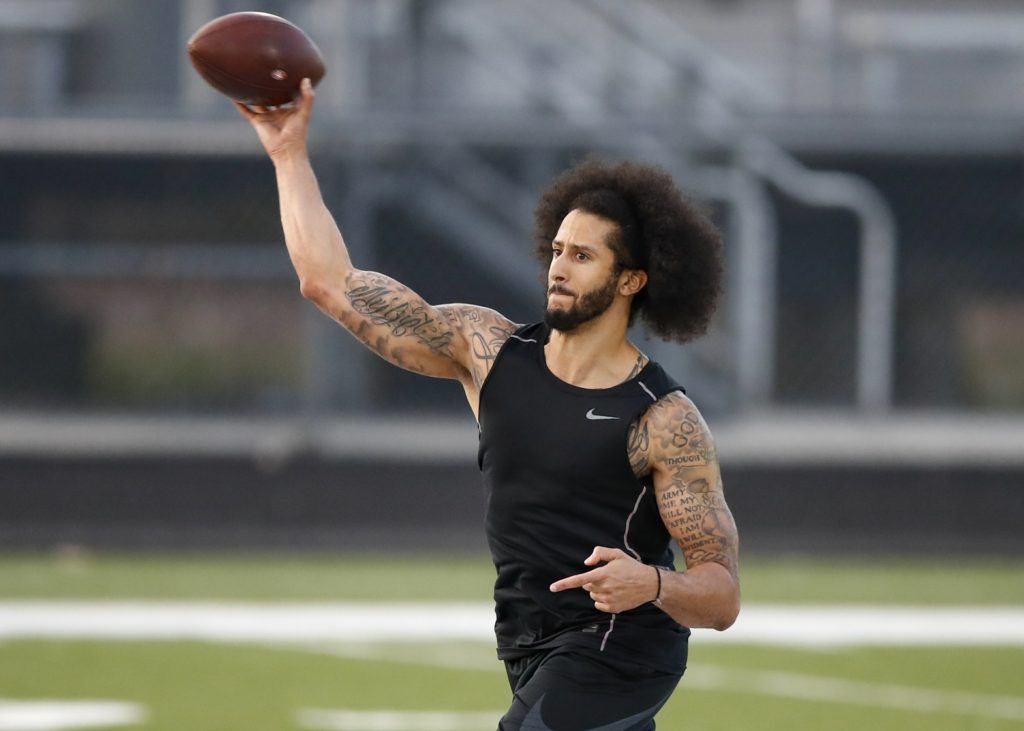
guidelines. In a 40-minute workout at an Atlanta high school, watched by a
handful of scouts in person and thousands of onlookers online, he demonstrated
that his NFL-caliber talent remains intact.
His critics can claim he’s too much trouble, more interested in making
statements than making plays. By balking at the league arrangements and declining
to attend the close workout 30 minutes before its start time – instead, moving
the session 51 miles away and making it public – he wrested control from the dictatorial
NFL.
His supporters can claim the league was never serious anyway, simply
going through the motions for appearances’ sake. The offer seemed fishy from
the jump, put together hastily and in solitude, with unnecessary restrictions
on when, where, and who. That’s no way for the culprit to treat the aggrieved.
By DERON SNYDER (as published in The Washington Times)
Before Colin Kaepernick does his first stretch, before he runs his first
sprint, and before he throws his first pass at Saturday’s NFL workout in
Atlanta, there’s likely only one thing that matters and renders everything else
moot. How he answers will outweigh his size,
conditioning, and arm strength.
Can he still play? That has never been an issue … unless you’re intellectually lazy and dishonest. Judging by the number of uninspiring-to-awful quarterbacks on NFL rosters, ability isn’t a prerequisite, but Kaepernick has plenty.
No, the main question on everyone’s mind Saturday will be the same question
on everyone’s mind since Kaepernick took his last snap.
Will he still kneel?
That always has been the most important consideration for NFL teams and
nothing in that regard has changed. The wrong response will ensure his
continued unemployment.
By DERON SNYDER (as published in The Washington Times)
If you thought a kinder, gentler, NCAA was emerging as it moves toward allowing athletes to monetize their own likeness, name, and image, you’re not paying attention.
The letters still stand for No Compassion At All and the organization’s paradigm
remains intact, despite recent pressure and threats from a few legislative
bodies. The NCAA proved as much last week, flexing its misplaced muscles against
potential No. 1 draft picks in the NFL and NBA.
WASHINGTON
– Duke Ellington School of the Arts co-founder Peggy Cooper Cafritz died in
February, but her contributions to the school and world at large live on. She
bequeathed about 250 pieces – one-third of her acclaimed art collection – to the
school, making it one of the biggest gifts ever of contemporary works by
artists of African descent.
“In My Shoes: The Peggy Cooper Cafritz Art Collection” opens at the Ellington Gallery with a reception and fundraiser on Thursday, Nov. 7, from 6 p.m. to 8 p.m. The minimum suggested donation is $20 and accepted at the door via cash or check. The exhibit remains on display at the gallery (3500 R Street NW) through Friday, Dec. 13.
Cafritz’s
inventory of primarily African-American art was among the largest in the
nation. Ellington received pieces by Hank Willis Thomas, BK Adams, Louise
Bourgeois and Mark Thomas Gibson. “She was always very clear that her collection
was not only important to her, but it had to live beyond her,” says Thomas, a
1994 alum.
“A
person’s collection says everything about where their heart and head live,” Ellington
School CEO Tia Powell Harris says. “By keeping her collection alive, we can
peer into what inspired her. These pieces have traveled with the rest of Peggy’s
collection, and now they’re home.”
By DERON SNYDER (as published in The Washington Times)
Funny how a World Series title can change your perspective.
Before the Washington Nationals embarked on an epic postseason run, fans
pulled hair and gnashed teeth fretting about the possible departures of homegrown
stars Stephen Strasburg and, more worrisome, Anthony Rendon.
This isn’t to suggest the players’ pending decisions as free agents are
no longer a concern around town. It’s just hard to generate the same sense of
urgency with the Nationals in possession the Commissioner’s Trophy.
Every front office in baseball is currently going through a familiar
process, making moves and plotting strategy that will shape their 2020 roster. It’s
nothing new for the Nationals, who also do likewise every year, adding and
subtracting faces from the prior season.
Only this time, general manager Mike Rizzo & Co. are atop the only franchise
that won its final game and commemorated the achievement with a joyous team snapshot
on the field.
That memento ensures missing players will be more noticeable than normal
on photo day in spring training.
By DERON SNYDER (as published
in The Washington Times)
Ready or not, there he was.
The Redskins finally started rookie quarterback Dwayne Haskins on Sunday
and – surprise! – the earth kept spinning on its axis.
The team didn’t implode. Haskins didn’t return in a full body cast. He
played the entire game. Washington looked about the same as usual.
Who knew?
Practicing with the starters all week didn’t hurt. Ditto for utilizing a
slimmed-down playbook and rush-heavy game plan. All of his studying and
preparing paid off in a relatively decent performance. It makes you think Haskins
might be further along if this process started sooner.
Now that his first start is out of the way – bringing us to the bye week
followed by a game against the awful New York Jets – surely the Haskins Era is
here to stay, right?
“Nothing has been decided or determined,” interim coach Bill Callahan told
reporters after Buffalo’s 24-9 victory. “I’m just going to give it a little
time and go into the bye week, let everything settle, look at the health of
Case [Keenum] and see where we’re at as a team.”
By DERON SNYDER (as published in The Washington Times)
Don’t look now, but Washington has a contender for the crown, a
challenger for the title of NFL’s most dysfunctional organization.
Have you considered the New York Jets? Their fans must view the Redskins
as also-rans when it comes to incompetent management. (Yes, the Jets have five seasons
with 10-or-more wins since 2000, compared to only a couple for the ‘Skins, but let’s
play along anyway.)
Owner Dan Snyder and team president Bruce Allen have created a unique strain
of suffering among the fan base, but they’ve been one-upped by Jets’
administrators recently. Hard to believe, but New York has done some things even
Washington might not pull off.
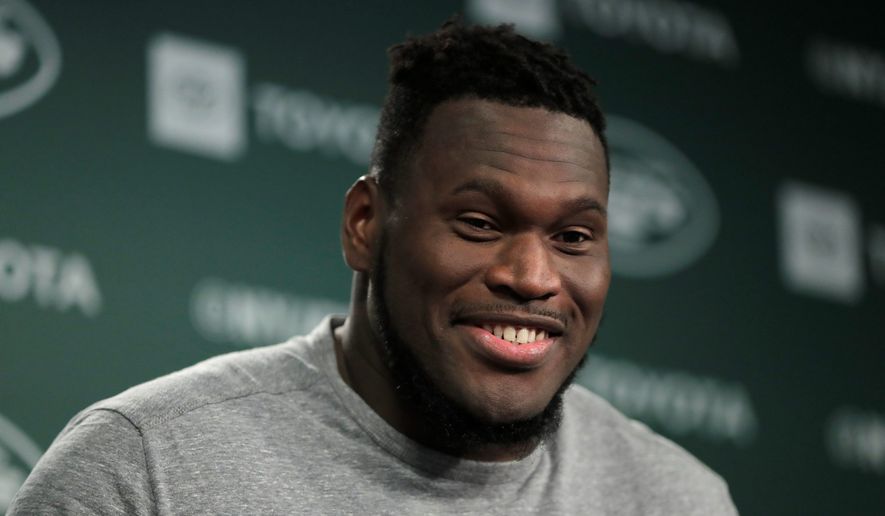
For instance, we know left tackle Trent Williams has trust issues with
the ‘Skins’ medical staff. His lack of faith and confidence in their ability reportedly
was part of the reason he held out this season. At least one player suggested that
Williams isn’t alone in his feelings toward the medical staff.
Jets management looked at that situation and said, “hold our beer.”
Former Pro Bowl guard Kelechi Osemele, who sustained a torn labrum earlier
this season, told New York the pain was unbearable and he needed surgery right
away. But the Jets deemed the injury tolerable, something he could play through
with the help of pain killers and delay surgery until the offseason. The team began
issuing weekly fines equal to his game check ($579,000) because he wasn’t
practicing, labeling his unavailability as “conduct detrimental to the team.”
On Friday, after informing the Jets of his intentions but not receiving their
blessing, Osemele flew to Boston and underwent the operation. ESPN’s Adam
Schefter reported that the surgery was successful and the damage to Osemele’s
shoulder was “more extensive than anticipated.”
On Saturday, the Jets released him,
The Associated Press, citing a person with direct knowledge of the
situation, said Osemele was cut for an “unexcused absence” and having unauthorized
surgery.
So much for caring about their players, huh?
“Obviously not an ideal situation for either party,” Jets general
manager Joe Douglas told reporters Tuesday in his first public remarks since
the transaction. “We felt we did what was best for the team. The one thing I
will clarify: The safety and well-being of all of our players is paramount.”
That comment should’ve been followed by a rim shot and laugh track.
The Jets’ paramount concern was keeping Osemele on the field, not making
sure he was healthy. The player told reporters he received treatment and
anti-inflammatory drugs early in the season, but the effectiveness had worn off
and he struggled to raise his arm.
“A
lot of guys play through injuries,” he said last week before his surgery. “But
once it stops working and it doesn’t do anything for you anymore, then you’re
at the point of, ‘What do I do now?’ Do I take Vicodin? Where is the line? How
much should a player play through pain? Am I just supposed to be in pain and
miserable every day?”
To which the Jets would counter, “Suck it up.”
Williams’ ordeal with the ‘Skins is just another reason prospective free
agents might think twice about relocating to Ashburn. I imagine New York’s treatment
of Osemele is even more off-putting. The Jets – already a low-rent brand before
this debacle – look worse than ever to NFL players contemplating career moves.
After all, what organization lets a general manager run the draft and
spend more than $125 million on free agents, only to fire him prior to the
season and replace him with a new general manager, the fourth in eight years?
J-E-T-S, Mess, Mess, Mess!
Still don’t think they’re worthy contenders to the ‘Skins throne?
Osemele told reporters last week that Douglass admitted sending doctors blank
MRIs of the injured player’s shoulder, with the GM calling the mishap “an
honest mistake.” That same day, Adam Gase confirmed that he hadn’t talked to
Osemele in weeks. “He hasn’t asked to speak to me,” the coach said.
That’s some first-rate dysfunction right there, even by Washington’s high
standards.
Osemele’s agents and the NFL Players Association are considering legal
action against the Jets’ team doctors for violation state medical board regulations.
The player also has filed a grievance against the team.
“They owe him the balance of his contract both under the standard injury
guarantee provision of the player contract and under termination pay,” agent
Andrew Kessler said in a statement. “We will pursue through that and all fines
to be rescinded through grievances.”
It would be great if fans could file grievances, too. Folks in this area
can’t always tell from here, but they’re not alone.
They have green-and-white company at the bottom.
— Brooklyn-born and Howard-educated, Deron Snyder writes his award-winning
column for The Washington Times on Tuesdays and
Thursdays. Follow him on Twitter @DeronSnyder.
 Follow