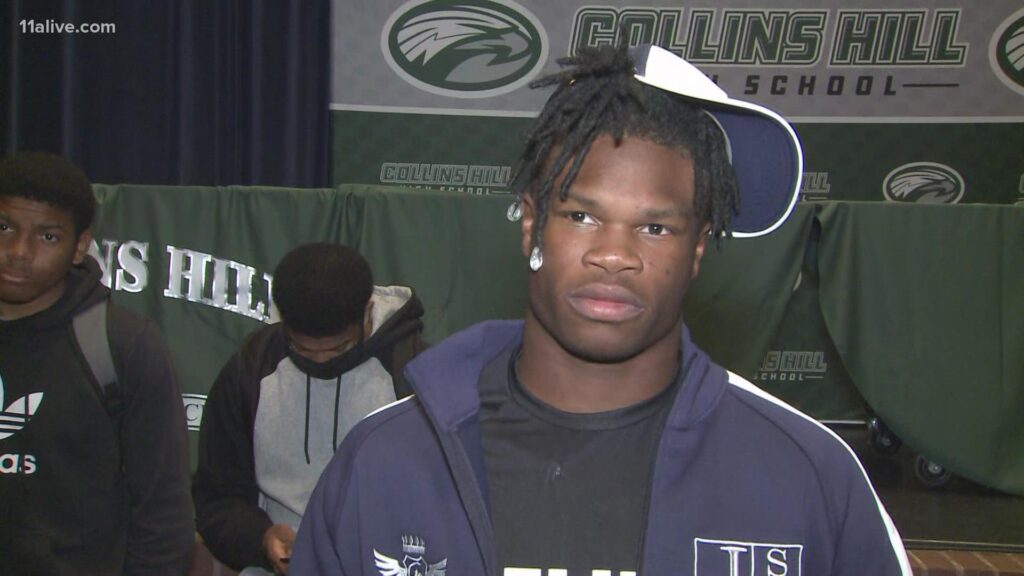
Like prized recruit Travis Hunter, Jackson State coach Deion Sanders has a lot of gall.
The nerve of them! They
clearly don’t know their place in college football’s billion-dollar industrial
complex. The tippy-top talent ALWAYS congregates at the biggest universities with
the highest profiles. Power 5 schools consider it their birthright to
monopolize the crème de la crème. It’s a time-honored tradition, one that dates
to integration’s baby steps.
Yes, a very long time ago
(1969), No. 1 Texas played No. 2 Arkansas in the “Game of the Century,” with nary a Black
player on either roster. Yes, one week earlier, all-Black Florida A&M beat virtually
all-white Tampa in a veritable groundbreaker. And, yes, the turning
point by Hollywood’s measure was way back in 1970; USC, the first fully integrated
team to play in Alabama, clobbered Bear Bryant’s
boys
and the Crimson Tide subsequently revised its admissions policy.
A new custom took root around
the country, including in the laggard deep South. An aggressive, invasive
species, it has choked the fertile soil at HBCUs that produced generations of athletes
once forbidden elsewhere. Given that evolution, we figured powerbrokers would be
astounded if a school like Jackson State flipped the script and landed a player
like Hunter, the nation’s top recruit.
Like
multitudes of students around the nation in early 2020, Elise Franchi had to
take virtual classes as the COVID-19 pandemic took hold. But studying dance on
Zoom might have contributed to what eventually was diagnosed as a partially
torn labrum in her left hip.
“We think because I didn’t have proper
flooring and it was slippery, it caused me to grip in my hips too much to stay
stabilized,” says Elise, an 18-year-old trainee in the Charlotte Ballet
Pre-Professional Program. “ That’s when the problem started.
Elise
has a little pain here and there, and eventually it progressed into intense
pain. “This was my first major injury, and it was very terrifying. I have a
high pain tolerance, so it took me a few months before the pain got bad enough
to see the doctor.”
Charlotte Ballet referred her
to Atrium Health Wake Forest Baptist, where she received care from David
Popoli, MD, and Allston Stubbs IV, MD, at the new Performing Arts Medicine
Clinic in Winston-Salem, N.C. One of few programs in the country offering unique
performing arts and sports medicine services, it provided the specialized care that
Elise needed. She since has has resumed dancing and is participating in a
treasured December tradition.
“I’m back to performing in the
Nutcracker this holiday season!” she says. I’m able to do everything I need to
do, and I’ve worked on modifying my technique and performances in a healthy
way.”
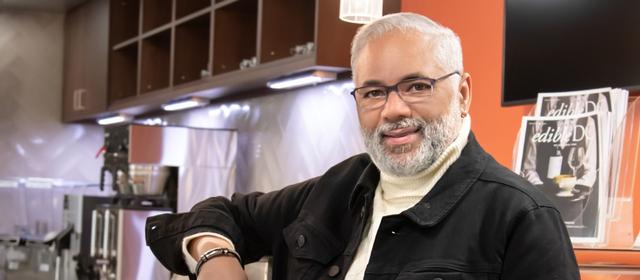
Professor Tim Banks has always been passionate about maintaining a growth mindset, especially since becoming department chair for the Howard Community College (HCC) Center for Hospitality and Culinary Studies in 2018.
His personal philosophy is necessary more than ever as society copes with a global pandemic that has upended the food, travel, and event management industries. Banks said HCC is well positioned to pivot and transition as it prepares hospitality and culinary students for careers now and in the future. The curriculum has been realigned, courses have been added, and a new certificate in restaurant/hospitality management is being offered.
“We always want to be a step ahead of what the industry is doing and what the industry is talking about,” Banks said recently on HCC’s Dragon Digital Radio. “We want to teach our students the classics, but we also want to emphasize the contemporary way of doing things. We’ve gone through this whole shift of face-to-face events turning into virtual events. Some of that is going to be a permanent fixture in our landscape.
Professor Michelle Sotka grew up in a family business but fell in love with her first accounting course in college. Now she chairs the entire accounting program at Howard Community College.
Professor Adriano Lima e Silva majored in mechanical engineering and once envisioned a lifetime in that pursuit. However, he decided to switch careers to become a Certified Public Accountant (CPA). Now he coordinates the college’s CPA candidacy certification.
Sotka has seen the same change of direction in students she’s taught. “One of my most successful was a biology undergraduate,” Sotka said recently on Dragon Digital Radio.
“He thought he wanted to go on to med school. But at a career fair, he met with some folks from one of the big four accounting firms. They talked to him and said he’d be a great candidate. He hooked up with our accounting program and now he’s doing wonderful things” as a CPA.
Students come to the HCC accounting program from different paths and for varied reasons.
In the 1975 disco hit
titled “Free Man,” a guy makes a pass at a sister who wants to make sure he’s not
married. She’s apparently had experience as the other woman and wants to avoid a
repeat scenario.
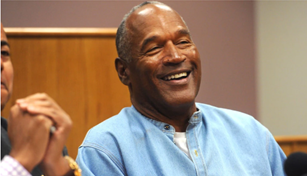
O.J. Simpson wasn’t singing Tuesday as he parted with the Nevada penal system, discharged from parole 13 years after his conviction for armed robbery and kidnapping, a verdict delivered 13 years after his infamous acquittal. Simpson is free, a quarter-century after making Nicole Brown and Ronald Goldman household names.
But I wonder how much
of Black America is interested in hooking up with him on a cultural level.
Even if Simpson steps up disavowals of racists he openly embraced, even if it’s finally clear that, um, he’s black, too, can there be a warm homecoming within the greater community? The relationship was complicated in 1995, when both a gulf and a bridge emerged during the Trial of the Century. Determining Simpson’s place on the current landscape – where the ends fall apart and the middle vanishes – is especially challenging.
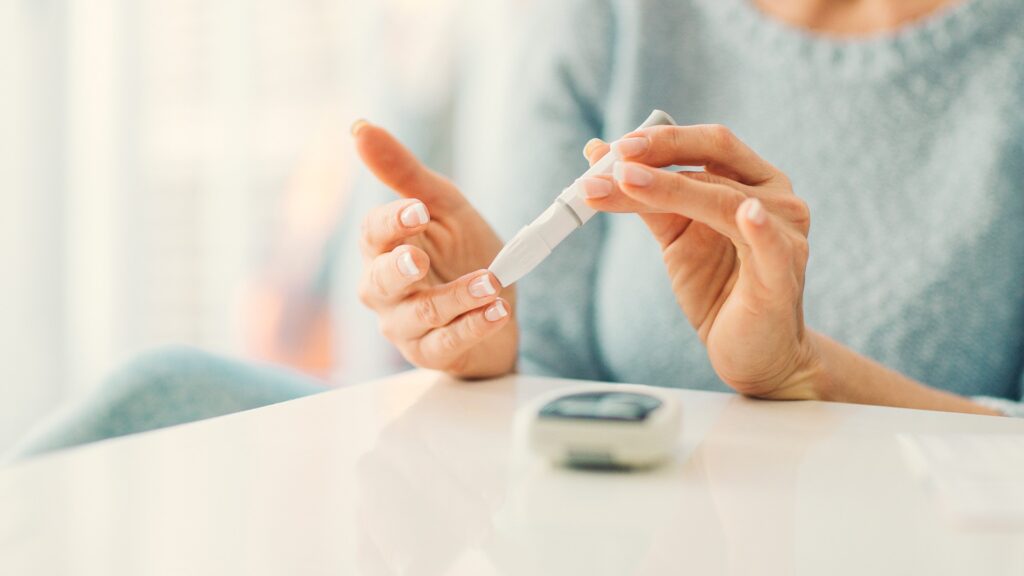
“I have gestational diabetes, which I developed through pregnancy,” she says. “Fifty percent of diabetes cases involve gestation and can develop into full-blown diabetes. Genetics can also play a role. My grandmother lost both legs and was on dialysis. I saw what that was like for her, and it terrified me.”
A big focus of diabetes awareness and education is on prediabetes and preventing diabetes. According to the Centers for Disease Control and Prevention (CDC), about 88 million U.S. adults have prediabetes, a serious health condition where blood sugar levels are higher than normal – but not high enough yet to be diagnosed as diabetes. The majority of those adults are unaware that they’re prediabetic.
Diabetes is a group of diseases that result in high blood glucose, meaning there’s too much sugar in one’s blood. The most common forms are Type 1 and Type 2. The former is a chronic condition in which the pancreas produces little or no insulin. The latter – which is the case for about 90-95% of patients – affects the way the body processes blood sugar (glucose).
Diabetes, especially if unmanaged, can lead to kidney failure, blindness, amputation, stroke, and heart attack.
“We used to think that Type 1 was ‘juvenile diabetes,” Dr. Vuong says. “But we got away from that and don’t say it anymore. Diabetes is a spectrum; you’re not born with it; it develops.”
A “woke” descendant of Christopher Columbus visited last night and asked me to pass this along:
Dear fellow Americans:
Some of you have mixed
feelings about honoring my two-dozen-times-removed-great-grandfather, Christopher
Columbus.
I understand.
Since the 18th century,
when a number of cities and states began unofficial celebrations, our country
has commemorated his 1492 landing in the Americas. “Columbus Day” became a
federal holiday nearly 450 years later, and many people still consider it a dual
celebration of his achievements and Italian-American heritage.
But to be clear, I’m
not one of them.
Despite being a direct
descendant, I feel no need to boast about my forebearer’s role in history. My
thoughts on Columbus are aligned with NBA coach Greg Popovich’s recent comments
before a San Antonio Spurs a preseason game.
“He initiated a New
World genocide,” Popovich told reporters. “Beginning with him, he
set in motion what followed: the annihilation of every indigenous person in
Hispaniola, which is Haiti and the Dominican Republic today. He took slaves. He
mutilated. He murdered.”
Those aren’t pleasant facts for Columbuses to swallow. But they’re facts, indeed, and we must live with those truths.
People say that the older you
get, the less you care about what people think. You’re more likely to do and
say what you feel because the filters are gone.
I don’t think that’s a bad
thing. Because when the filters are off, there is authenticity.
Example.
I only recently accepted my
inner nerd and made peace with it. Even though this doctoral process has been
long, there’s a part of me – the nerdish part – that’s actually enjoying all the
researching, writing, editing, rewriting, thinking, reflecting and studying … only
to start again.
So, I guess I’m learning to be
authentic. Learning to just be me.
I can finally admit that I
like reading academic books and discussing theories and trying to make
connections between theory and practice. And even though the writing is hard,
the challenge of completing this study is quite the ride.
I think about how I can apply my
research to my job, and how I can make a difference in the lives of children
and perhaps the entire field of education. The possibility that I can make a
real difference is overwhelming, in a good way, and it keeps me going.
Yes, it’s good to be
authentic. It’s good to know who you are, what you like, what inspires you and
what brings you joy.
There’s a lot of work involved
when we try living an inauthentic life. And a lot of time is wasted. The
earlier you decide to be who you truly are, the better off you’ll be. We don’t
have to conform to society’s norms on identity, who we’re supposed to be based
on our age, race, gender, etc. Deep
inside, we know what brings us true joy and fulfillment. But our fear of what
others think and expect from us often gets in the way.
So, I say get alone and be
still. Look at your life and decide if you’re being authentically you. If not,
decide to “do you.” It’s not too late.
Authenticity never gets old.
(A former journalist currently
working on her doctorate in Social Emotional Learning, Vanessa is a dedicated and
passionate educator in the DC Public Schools system. She loves learning,
leadership, innovation, collaboration, and discovering new ways to drive
student gains and support staff members).
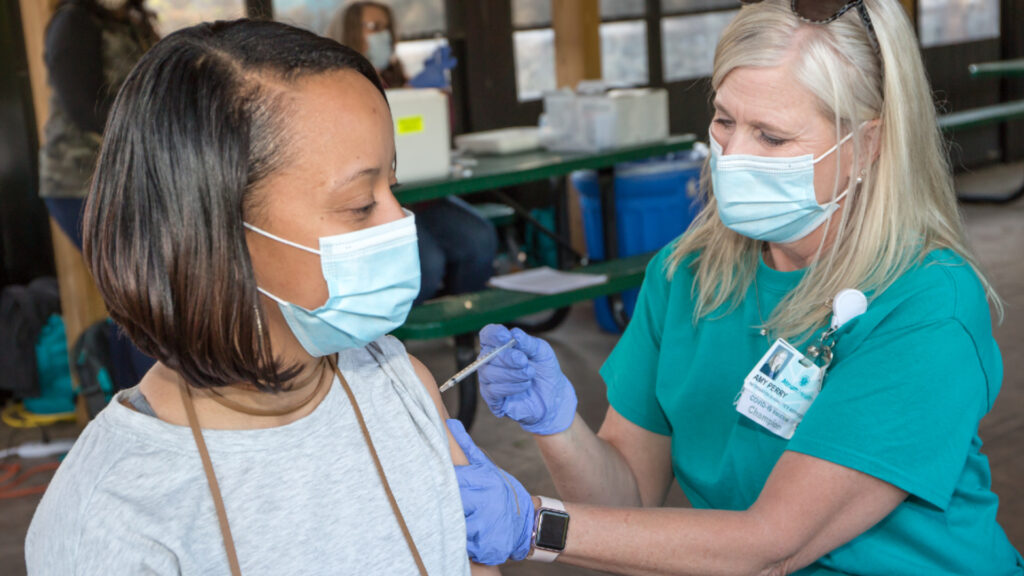
Over the past nine months, many people have told Katie Passaretti, MD, medical director of infection prevention at Atrium Health, that they were hesitant to receive the COVID-19 vaccine because it didn’t have full approval from the Food & Drug Administration (FDA).
On August 23, the FDA gave full approval to the Pfizer-BioNTech COVID-19 vaccine for individuals 16 and older. Prior to that, all COVID-19 vaccines had been approved under Emergency Use Authorization (EUA) as a public health measure.
“This is great news,” Dr. Passaretti said. “Hopefully, the full approval will help some people’s comfort level and help us increase our vaccination rate, which really continues to be essential for our communities right now.”
“We’re continuing to see that we’re at a very dangerous point in this pandemic, with hospitalizations and cases still on the incline,” she said. “This news was much anticipated by a grateful crowd of infectious disease specialists and healthcare workers.”
CONFIDENCE NEVER WANED
Dr. Passaretti said the FDA’s full approval builds upon the confidence from its emergency-use approval. Large-scale trials for the Pfizer vaccine, with tens of thousands of individuals, looked at the vaccine’s efficacy and safety. Those initial trials showed that the vaccine was highly effective and highly safe.
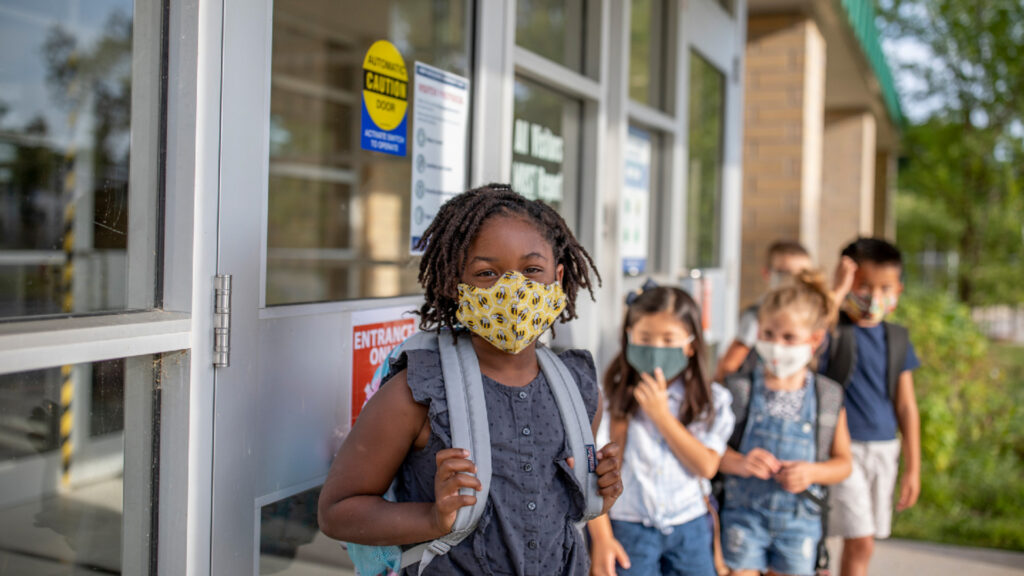
The term “back to school” has a whole new meaning this year. Many students haven’t been in their physical school building since the spring of 2020. When the upcoming academic year begins, many school-aged children and their parents will have questions on what to expect.
Transitioning to in-person learning – in the midst of an ongoing pandemic – might be easier for some students than others. The same might be true for their parents/guardians, but the adults can set a good example for the youth.
“I recommend that parents and children start the school year with a positive outlook,” says Kathy Davis, MD, a pediatrician at Atrium Health Levine Children’s Southlake Pediatrics. “Last year was difficult for everyone, and this year will likely have challenges as well, as we are starting to see an increase in COVID-19 cases due to the Delta variant.
“A child’s outlook is often influenced by their parents, so avoid negativity and try to remain optimistic! I encourage parents to try to be patient as children go back to school.”
Parents who are struggling mentally and emotionally about sending their children back to school can also take steps themselves to feel more comfortable. Talking to other parents can help as a reminder that everyone is in this together, and it’s normal if you feel a little anxious.
“There are things a parent can do to help themself and their children feel more prepared,” says Crystal Bullard, MD, a child and adolescent psychiatrist with Atrium Health Behavioral Health Services. “For starters, parents can contact school officials to get more information about the safety measures schools have put in place to make the schools safer during the COVID-19 pandemic.”
AVOID THE SILENT TREATMENT
Dr. Bullard says people often avoid talking about things that make them anxious. But talking about returning to school can help ease students’ nerves. “Talk to them about all the things they like about school,” she says. “Remind them of good memories from prior years. This will help them focus their attention on the positive aspects of school.”
 Follow