Regardless of clients’ guilt or innocence, attorneys are obliged
to provide a vigorous and competent defense, actively fighting for the
accused’s freedom will not judging or making moral decisions.
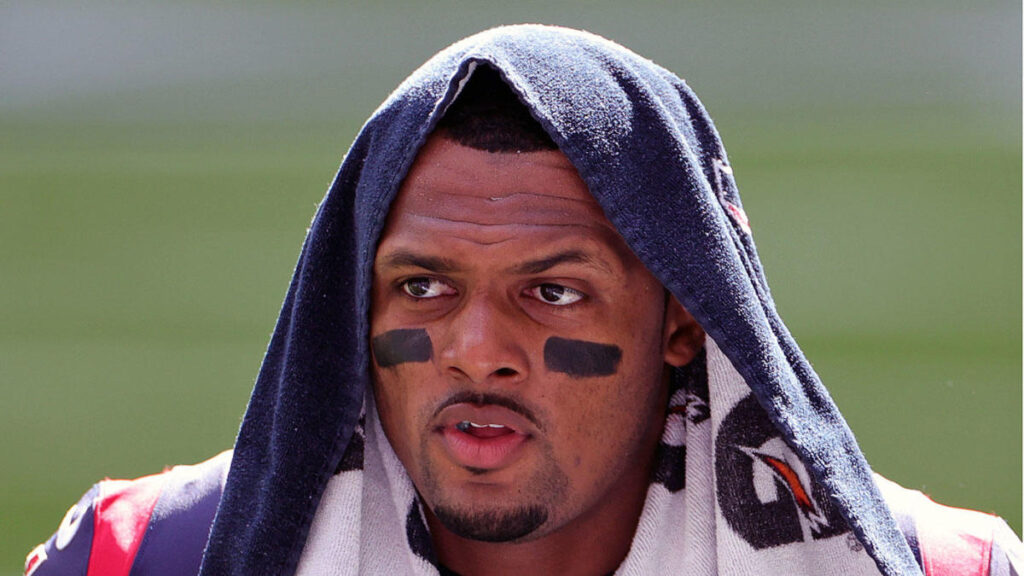
NFL quarterback Deshaun Watson has one of the best that money
can buy in Rusty Hardin, a particular favorite among star athletes. He
shepherded Watson through a grand jury process that resulted
in no criminal charges tied to allegations of misconduct during massage
therapy sessions.
Watson’s agent is no slouch either, a true ride-or-die
homey.
When the grand jury declined to indict Watson, David
Mulugheta tweeted “Keep the
same energy” to those who dare believe any of the women saying Watson committed
sexual harassment and/or assault. He would classify Watson’s case as “he said
vs. she said.” Actually, it’s “he said vs. she-she-she-she-she-she-she-she-she-she-she-she-she-she-she-she-she-she-she-she-she-she-said.”
(That’s 22, if you’re counting.)
But Mulugheta wasn’t finished proving his loyalty. He
negotiated an NFL-record contract – $230 million guaranteed – between Watson
and the Cleveland Browns, who say they
traded for him after “extensive investigative, legal, and reference work
over the past several months.” Cleveland reached its conclusion without speaking
to the women or their attorney.
That’s like drawing a full picture with your eyes closed and hands tied behind your back.
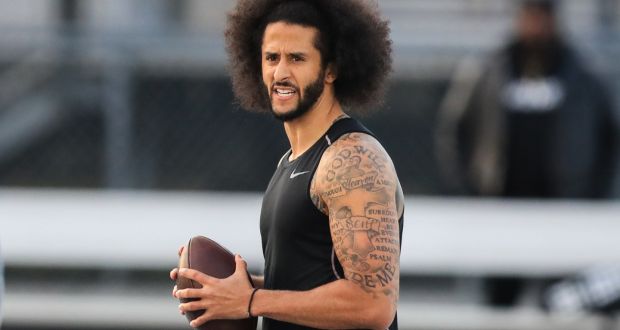
The only team
that’s given Colin Kaepernick a workout since 2016 has an opening at quarterback,
his position.
Kaepernick, who
has trained nonstop and received a rave this week from a player on the team,
still wants to play.
Seems simple
enough. But the head coach – Pete Carroll of the Seattle Seahawks – sounds awfully
confused.
“Does that guy
deserve a second shot? I think he does. Somewhere.” Carroll
told reporters Wednesday after saying Kaepernick asked for a tryout. “I
don’t know if it’s here. I don’t know where it is. I don’t know if it’s even in
football. I don’t know.”
But we know. Actions
talk and BS walks, and the NFL is full of it. The league has wanted no parts of
Kaepernick since he protested social injustice by kneeling during the national
anthem in 2016, his last NFL season.
Funny how
Carroll was crystal clear in 2017 after bringing him in for a workout. “He’s a
starter in this league, and we have a starter,” the
coach told reporters. “But he’s a starter in this league, and I can’t
imagine that somebody won’t give him a chance to play.” Carroll wasn’t perplexed
in June 2020 either, expressing
regret that Seattle didn’t sign him three years earlier. “The reason it
wasn’t the right fit is because I held him in such a high regard,” he said. “I didn’t
see him as a backup quarterback and I didn’t want to put him in that situation
with [Russell Wilson].”
Now that Wilson
is gone and there’s a gaping hole at QB, Carroll isn’t certain about the fit. If
that’s the attitude from a one-time supporter, we can’t imagine anyone else giving
Kaepernick a chance, though they should.
There’s nothing
to lose by seeing if he can still play like Seattle wideout Tyler Lockett suggested Monday
in a tweet: “Yessir!! That man Kap is ready!!” There’s no guarantee that
any player would regain top form at Kaepernick’s age (34) after a five-year
layoff. But that’s the purpose of physical exams, workouts, and training camp.
Teams will give your grandfather a shot if they think Pop-Pop might help.
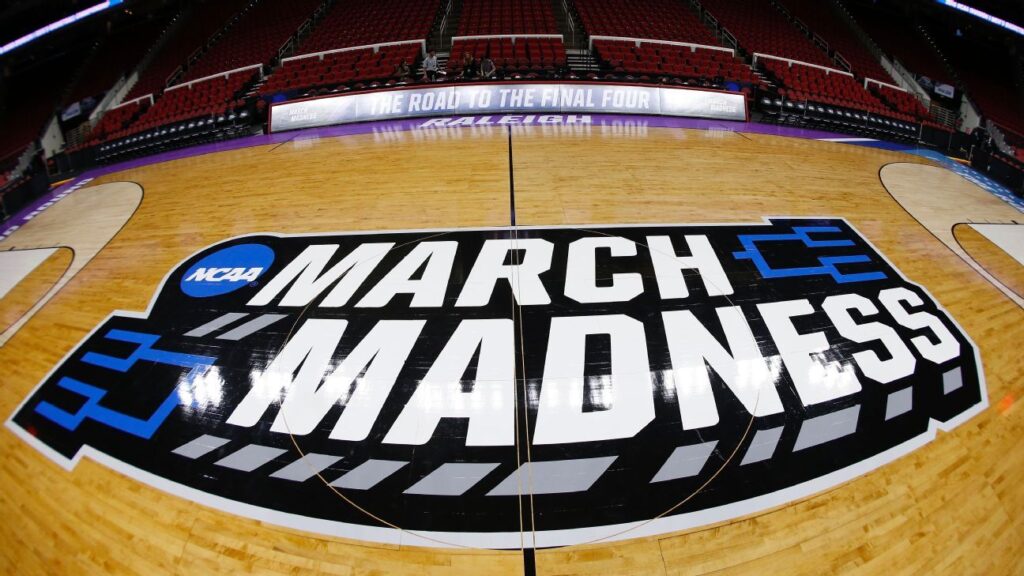
March Madness is back, signaling a
return of office pools, watch parties, and – if we’re lucky – a bunch of buzzer-beating
baskets throughout the tournaments.
It’s also fine time to recall a dirty
detail about this vast enterprise, a little fact that big-time college hoops
shares with big-time college football. Recent relaxations of NCAA rules might’ve
have obscured the truth and pushed it out of mind, but the reality remains
unchanged, so don’t get it twisted.
Consider this a friendly reminder:
Players aren’t compensated for the labor that produces ginormous bags for everyone
else, from coaches making eight figures, athletic directors making seven
figures, and down the line.
Former Ole Miss basketball player
Kylia Carter – mother of Orlando Magic forward and former Duke star Wendell
Carter Jr. – nailed it during
remarks to the Knight Commission on Intercollegiate Athletics in 2018. She
said the NCAA is a system “where the laborers are the only people that are not
being compensated for the work they do while those in charge receive mighty
compensation. The only two systems where I’ve known that to be in place are slavery
and the prison system.”
I know you’re thinking, “That’s changed. What about players’ deals for their name, image, and likeness? The NCAA allowed them to start making loot on NIL last summer. Doesn’t that count?”
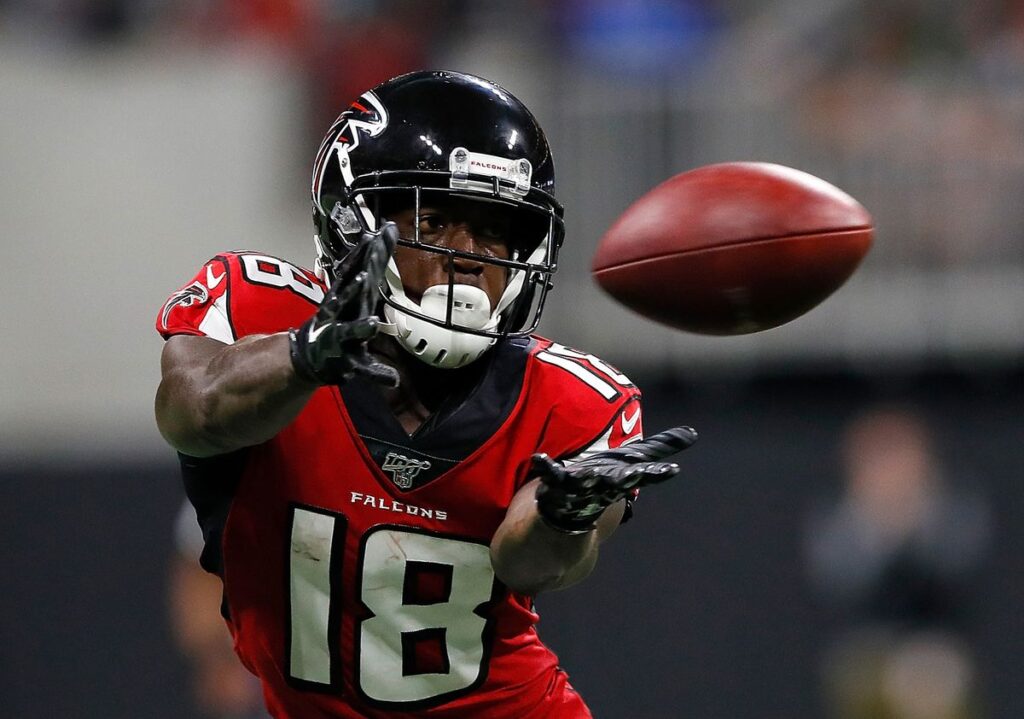
Atlanta Falcons wide receiver Calvin Ridley might not
have a gambling problem, as he claims. But he definitely doesn’t have much
common sense, either. Otherwise, intuition would’ve kicked in and made him follow
the first rule for NFL players wagering on NFL games:
Let someone else make your bets.
Surely there’s a cuz or homey he could’ve trusted. Ridley could’ve
had them place $1,500 on three multilegged parlays involving several games last
November. Instead, he did itself – on his own cell phone – and got busted. The play
netted him a one-year suspension, at minimum, and cost the $11 million salary he
was slated to earn next season.
“Your actions put the integrity of the game at risk,
threatened to damage public confidence in professional football, and
potentially undermined the reputations of your fellow players throughout the
NFL,” commissioner Roger Goodellwrote
in a letter to Ridley notifying him of the suspension.
Maybe Ridley wasn’t paying attention in November 2019 when
the NFL suspended cornerback Josh Shaw for betting on football; Shaw’s
ban covered the rest of 2019 and the entire 2020 season for
a total of 21 games. Perhaps Ridley thought his actions were OK because he
picked the Falcons to win in each bet. Conceivably, he never imagined getting
caught breaking an NFL taboo that’s been in place since
at least the 1960s.
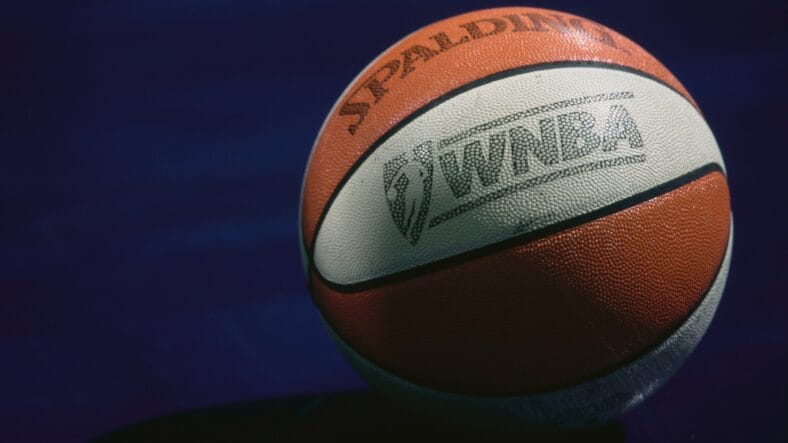
The first takeaway regarding last
week’s controversy over chartered flights for the WNBA’s New York Liberty is
simple:
Team owners Joe and Clara Wu Tsai
are straight gangsta.
They knew the league’s collective
bargaining agreement expressly forbids teams from using chartered flights. They
knew not every franchise has the stacks to provide such arrangements. They knew
there
could be serious repercussions if someone snitched and word got back to league
headquarters.
And the Tsais STILL said eff it.
They didn’t put the Liberty on a private
flight just one time, but for all five road games following last season’s All-Star
break. Oh yeah, a real boss move: They flew the team to Napa Valley for a
getaway over Labor Day weekend during the final road trip. Sabrina
Ionescu, who co-stars with Chris Paul in one of those State Farm
commercials, commemorated the excursion with a festive Tik Tok from
sun-drenched California: “Can your owners do this???? Wassup??!”
A few have the means to. But their “want to” has been diminished like the Tsais’ bank account, now 500 grand lighter after a league-record fine.
Major League Baseball commissioner
Rob Manfred and the owners he represents obviously don’t give a damn
about the sport, its players, or its fans.
There’s no other explanation for imposing
a lockout on Dec. 1 and waiting 43 days to make a proposal, before hastily pitching
a weak offer they knew the players couldn’t swallow. The owners seem intent on finally
breaking the players’ union, historically the most powerful among pro sports
leagues.
The 2022 season was set to begin
March 31, but Manfred & Co. canceled
the first week of games Tuesday after failing to reach a new collective bargaining
agreement. Now they need to hurry up and stop screwing around before the second
week is canceled, too, because that threatens the only baseball thingy many of us
might care about:
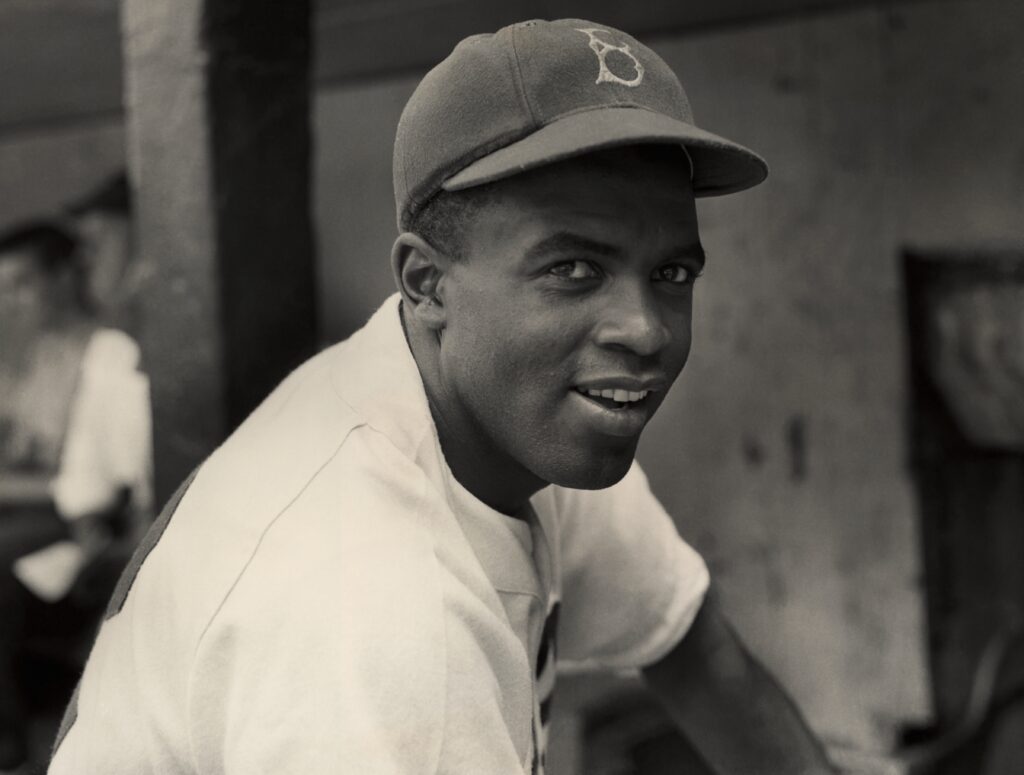
Seventy-five years ago, on April
15, 1947, Robinson broke baseball’s longstanding color line when he debuted for
the Brooklyn Dodgers. His legacy has been celebrated on that date annually throughout
MLB since 2004. Starting in 2009, all players and on-field personnel began
wearing Robinson’s No. 42 during games on that day. It’s the only time you’ll
see “42” on a major league uniform, as the number was retired across all teams
in 1997.
When Robinson trotted to his position at Ebbets Field, he helped move the nation – kicking and screaming for the most part – toward a more-inclusive society. He became a virtual one-man civil rights movement, years before sit-ins, freedom rides, boycotts, and protests became fixtures in the news cycle.
A recent news article revived
a question we often ponder: What is appropriate employment for individuals after
punishment?
Turns out that a man convicted of murder as a teenager, has served his 29-year sentence, completed an 18-month re-entry court program, and now does entry-level clerical work at the Prince George’s County (Md.) State’s Attorney’s Office. The victim’s step-brother said “it’s pretty disgusting” that the SAO made that hire.
Thankfully, it was dead on arrival, with Briles offering his resignation on Monday, just four days after being announced. “I feel that my continued presence will be a distraction … which is the last thing that I want,” Briles said in a statement according to ESPN.
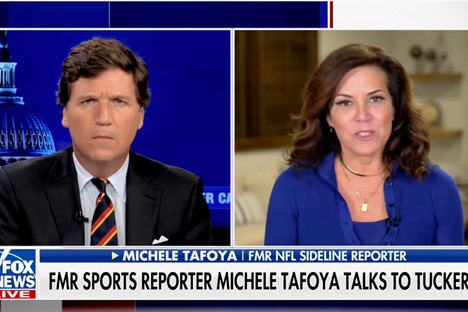
“It breaks my heart that my kids are being taught that skin color matters,” said Michele Tafoya.
Surely, she can’t be serious.
Tafoya, who recently retired as a sportscaster, is too old to be that naive and too smart to be that ignorant. But that’s what she said on a recent installment of Tucker Carlson’s Fox News program, embarking on her new gig as co-chair of a Minnesota Republican gubernatorial campaign.
If she thinks skin color doesn’t matter, here’s the natural follow-up question: Since when?
I presume her short answer would be since America passed laws banning racial discrimination, roughly six decades ago. There’s no way to argue that skin color was inconsequential during slavery, Reconstruction and Jim Crow, although Tafoya pushes back on the latter two periods.
During an appearance on “The View” last year, she said white people have been fighting for racial equality “since the Civil War.”
To folks like her and Carlson, we spend too much time on history and not enough on the present, where Black people sit up front on buses, eat lunch at any deli counter and even land high-paying jobs. She told Carlson that we should appreciate “the progress that we’ve made in this country” instead of “looking in the rearview mirror.”
Unfortunately, we don’t have to look back far to see how skin color remains relevant.
When Professor Cindy Garnsey
began her career as a high school English teacher in the 1980s, computers were hardly
ubiquitous devices. Unless students were studying computer science, most rarely
came in contact with the machines.
But now, they’re part of our
everyday lives and Garnsey chairs the Howard Community College Office
Technology program. Computers and software have become so prevalent, the
department could be renamed Office/School/Home Technology. And the field continues
to grow.
“Technology waits for no one,”
Garnsey said recently on Dragon
Digital Radio. “They’re going to keep coming up with new
programs and keep doing all these new things. If we want to be included in
humanity at this period of time, we’re going to have to jump into the game. I
encourage you to do it sooner than later, and have some fun with it.”
The Office Technology program
offers more than 25 courses – some integrated into different HCC programs – whether
students are looking for career advancement, personal development, or both. Classes
are conducted virtually, face-to-face, and in hybrid formats. Through the
program’s open-entry learning format, students can take advantage of flexible
scheduling and one-on-one instruction, working at their own pace en route to earning
valuable Microsoft certifications and HCC letters of recognition.
“In the past, our main degree was called office assistant or administrative professional,” Garnsey says. “That’s a very important career field and I don’t want to diminish it. But the position has changed quite a bit over the last few years. Now, a lot of people in management no longer have that administrative assistant to help them; they’re required to do some of those tasks themselves – creating documents, spreadsheets, and presentations.
History indeed can repeat itself. Lord knows we’re seeing that
again in Black America’s back-and-forth battle against racism.
But for all the pain and strife we’ve endured, we’ve also mastered
finding joy amidst sorrow while planting hope for tomorrow. Pick any field you
like – agriculture, business, science, communications, etc. – and you’ll find
examples of Black ingenuity dating to our arrival on these shores.
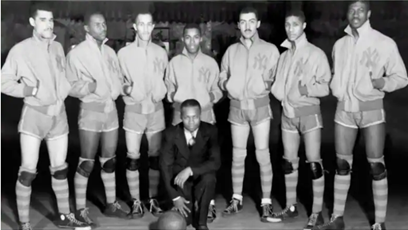
Fifty years ago on Feb. 5, the Basketball Hall of Fame
recognized as much when it welcomed Robert “Bob” Douglas, its first
Black honoree. Douglas was so cold as a coach and entrepreneur,
the team he founded beat him there by nine years, enshrined in 1963.
The New York Renaissance – aka the “Harlem Rens” and “New
York Rens” – were as formidable on the court as they were in the culture. They
provide a case study for what was possible under segregation (and what’s been lost
since integration), maneuvering through an openly hostile era with excellence,
paving the way for today’s predominantly Black NBA.
Ascending from the ranks of Black barnstorming teams that
were wildly popular as the Harlem Renaissance picked up steam, the Rens were
pioneers in every sense. They were formed in 1923 when
Douglas reached a deal with the newly opened Renaissance Ballroom and Casino in
Harlem. Douglas agreed to name his team after the ballroom, in exchange for playing
home games at the facility. In return, the ballroom owner received promotion all
over, which helped pack the premises for steamy post-game dances.
One year earlier, a couple of white sports promoters formed a Black team and reached a similar deal with another Harlem casino. They offered their players guaranteed, full-year contracts, making the Commonwealth Five the first fully professional Black basketball squad. When Douglas followed suit with the Rens, they became the first Black-owned pro hoops team. (The NBA and antecedent leagues didn’t have a Black-owned franchise until BET founder Robert Johnson purchased the Charlotte Bobcats in 2004).
 Follow