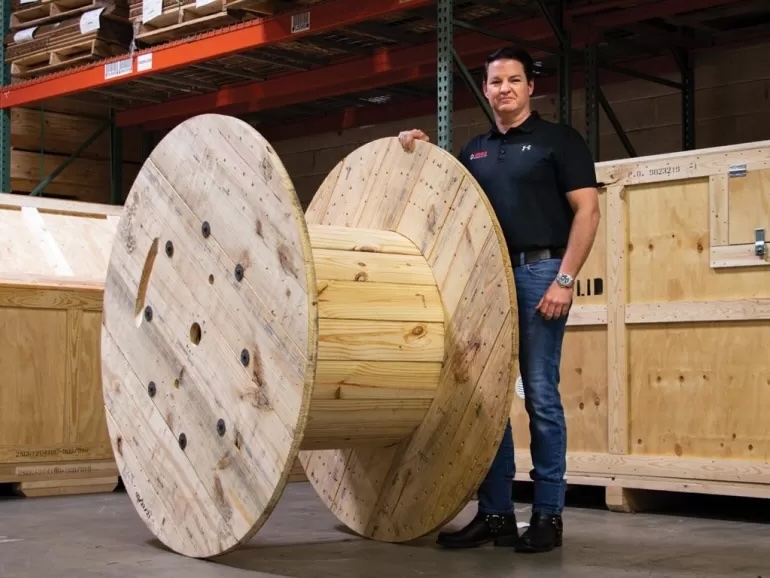
A family business doesn’t last for 90 years and through four generations of leaders in an everchanging field without navigating and initiating disruptive innovation. No one has to convince Mick Arnold of that fact.
What began in 1933 as Arnold’s Factory Supplies — a Baltimore maker of adhesives and inks for packaging materials — has since evolved into Arnold Packaging, a comprehensive firm that designs and supplies innovative packaging solutions and automation systems to optimize customers’ shipping, storage and production processes.
“The company obviously was a lot smaller under my grandfather, when we made glues and mineral pigments,” said Arnold, who became company president in 1995 after his father’s death. “Transportation wasn’t very good and things were manufactured a lot closer to point of use. You didn’t think of handing off to UPS or FedEx and competing in a market that was two or three states away, let alone on the other side of the Mississippi.”
Today, Arnold Packaging has 82 employees and the firm has boomed since 2020. “We doubled the size of the business from 2018 to 2022,” Arnold said.
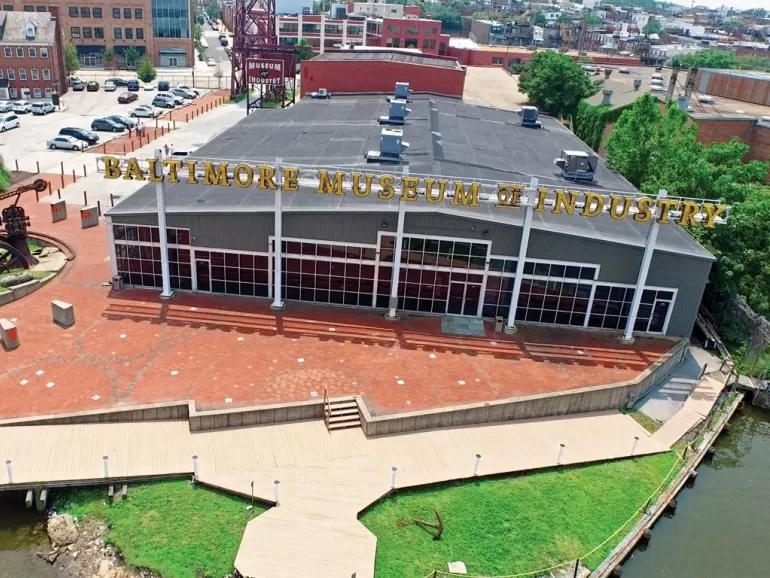
The Baltimore Museum of Industry (BMI) mission statement doesn’t specifically mention the Port of Baltimore. Nor does the museum have a massive exhibit devoted to the waterfront. The mission is to “interpret the diverse and significant human stories behind labor and innovation in Baltimore” and inspire reflection on “the intersection of work and society.”
But BMI Executive Director Anita Kassof said the Port and the museum’s work are inextricably intertwined.
“Baltimore grew up from a colonial town into a major world-class city due to the Port, because of our strategic location,” Kassof said. “So implicitly, the Port is reflected in a lot of our exhibitions. Explicitly, we would actually like to have an exhibition dedicated specifically to the Port of Baltimore and we’d been working on conceptualizing that before the pandemic derailed our plans.”
The tragic collapse of the Francis Scott Key Bridge on March 26 has put BMI’s plans back on track.
“This is our opportunity to revisit those discussions and finally create the exhibition about the Port of Baltimore that belongs at the Museum of Industry,” Kassof said. “Because when the bridge collapsed, there was a moment when the eyes of the world were on Baltimore. Everybody recognized how logistically essential we are. … It was eye-opening because the Port is kind of hidden in plain sight in this community.”
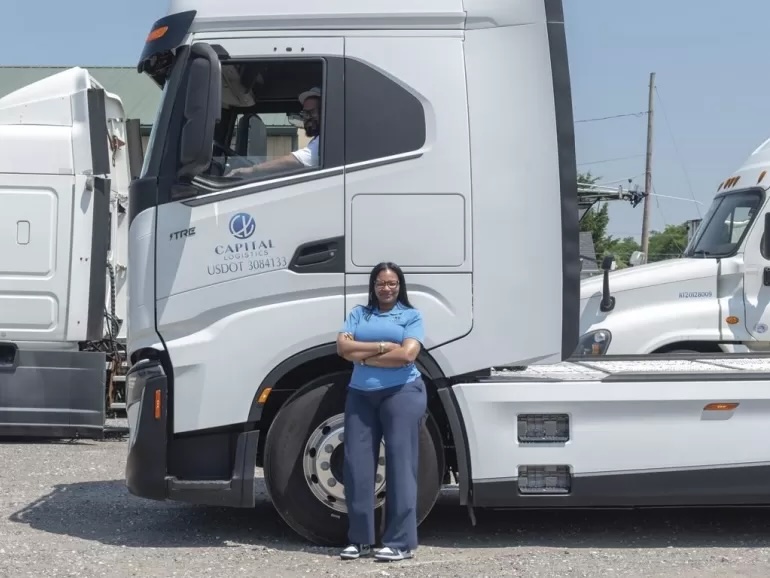
In 2018, Gloria Baldwin made a major career pivot — from healthcare to transportation. An acquaintance initially steered her toward freight brokerage, cautioning her against the challenges of owning trucks. But when she and her oldest daughter began seeking clients, the message they heard was clear: “We need trucks to move our freight.” Two months later, Capital Logistics was born.
“We didn’t have any trucks at the time,” Baldwin recalled. That quickly changed. The company acquired its first vehicle in 2019, and within three years, its fleet grew to 25. Today, Capital Logistics operates 35 Class 8 trucks and is a key partner in the Clean Ports Program with the Port of Baltimore — a $3 billion federal initiative aimed at modernizing port operations and trucking fleets.
Baldwin is determined to lead the company into an electric future. Capital Logistics owns three electric trucks, with plans to transition to a fully electric fleet in the next few years. The company also intends to establish a commercial EV charging station to support small and mid-sized fleets. “We made a bold decision in 2022 to shift toward electric trucks,” she said. “Our mission now centers around innovation and sustainability.”
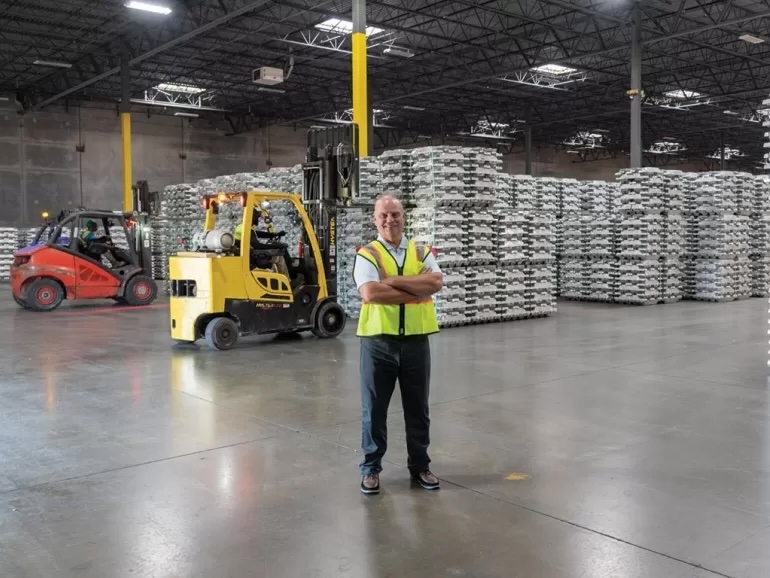
In March 2020, the World Health Organization declared COVID-19 a global health emergency. Five months later, owners Frans Zwanenburg and Kathy Haines founded Ancora Warehousing & Logistics, LLC.
Starting a business amid a worldwide pandemic isn’t ideal and only a few would do it, Zwanenburg said.
“Nobody was working from offices anymore and we began our journey in a conference room at one of our vendors. We needed some more privacy and decided to move into a rental house owned by Kathy Haines, which became vacant during COVID-19. Then neighbors started to complain, and we signed our first office lease at the Maritime Center at Tributary Street,” Zwanenburg said.
As the company’s customer base grew, and the demand for warehouse space to hold inventories skyrocketed, Ancora’s providers strained to keep up with its volumes, which led Zwanenburg and Haines to look for their own warehouse space around Baltimore. “None was available, but finally we found a path forward and ended up getting our own large Class A warehouse and office in May 2023,” Zwanenburg said. “The best part: every step we took was done with our own capital and cashflow. No company or financial institution was willing to take any risk in financing us during these uncertain times, and without employees, there was no governmental payroll help for Ancora or any available aid programs for a startup trying to hire people. No matter what, we focused on our priorities and hard work and became who we wanted to be.”
The founders focused on the potential rewards of filling a vacancy at the Port of Baltimore and rode out the virus until business returned to normal.
“We were not afraid,” Zwanenburg said. “We just had to make decisions. We had a business plan, but a lot of things happened that nobody [expected] and the container business was becoming very difficult.”
For whatever reason, Andrew Middleton couldn’t sleep the night after taking the captain and a crewman from the cargo ship Dali on a quick shopping trip before their vessel was set to embark from Baltimore. He was lying in bed awake around 1 a.m. when he heard “this loud rumbling.”
“Initially I thought it was thunder,” said Middleton, Director of Apostleship of the Sea for the Archdiocese of Baltimore. “It lasted for 20-25 seconds and then it got quiet again. I lay there for a while and decided to get up and get my day started.”
Within seconds of turning on the radio, Middleton learned that the Francis Scott Key Bridge had collapsed after being struck by the Dali. “My first thought was, ‘I was just with those guys yesterday,’” he said about the March 26 tragedy. “I sent text messages to the crewmembers asking if everyone was OK. One of them responded within a few minutes. And that started what ultimately ended up being a very, very long day.”
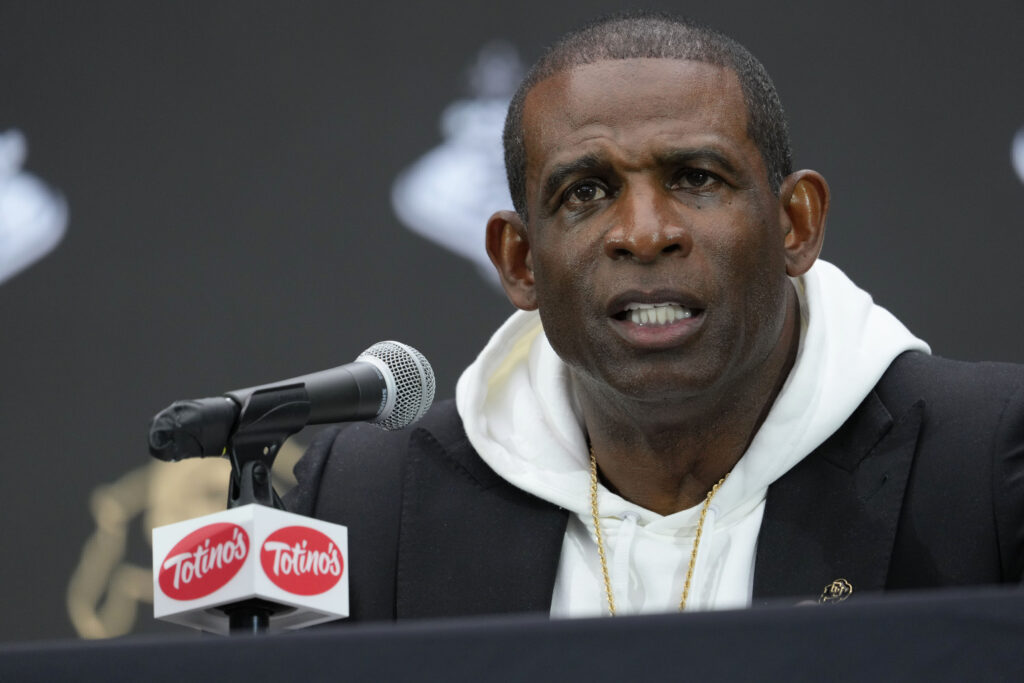
When I moved to Fort Myers, Fla., in 2000 to write a thrice-weekly sports column, I quickly learned that the city’s most famous athlete had a rocky relationship with his hometown and the local media.
Deion Sanders was born and raised in that city, once deemed America’s most segregated, where the railroad depot kept whites and Blacks separated into the 1970s. Back in town while starring at Florida State in the mid-’80s, Sanders was arrested at a mall for allegedly trying to steal. He was arrested again in Fort Myers — in 1996 when he played for the Dallas Cowboys — for trespassing and fishing on a private lake at the airport.
He generally never trusted city leaders, the cops or the media.
I learned that America was exceptional at an early age, way before high school. There was the United States, nation of no wrongs, followed by every other country. Despite the treatment of Native Americans and Mexicans, kidnapped Africans and late-19th-century immigrants from Ireland and Italy (before they were granted white privilege), we were No. 1! It said so right in the textbook.
As an avid sports fan during childhood, I didn’t question the concept of American exceptionalism. We clearly were the bomb in a geo-political sense. But the NBA and NFL bemused me by using “world champions” to describe their title winners. Major League Baseball, presumptuous to the max, went further by calling its championship the “World Series.”
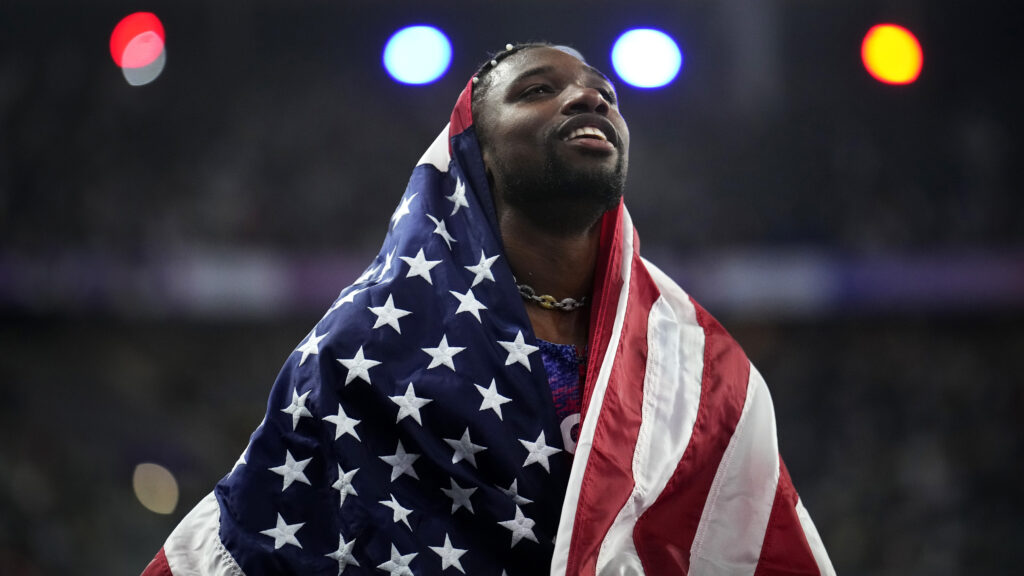
As a young’un, I thought we were tripping. Team USA sprinter Noah Lyles still feels that way as a 27-year-old Olympic gold medalist.
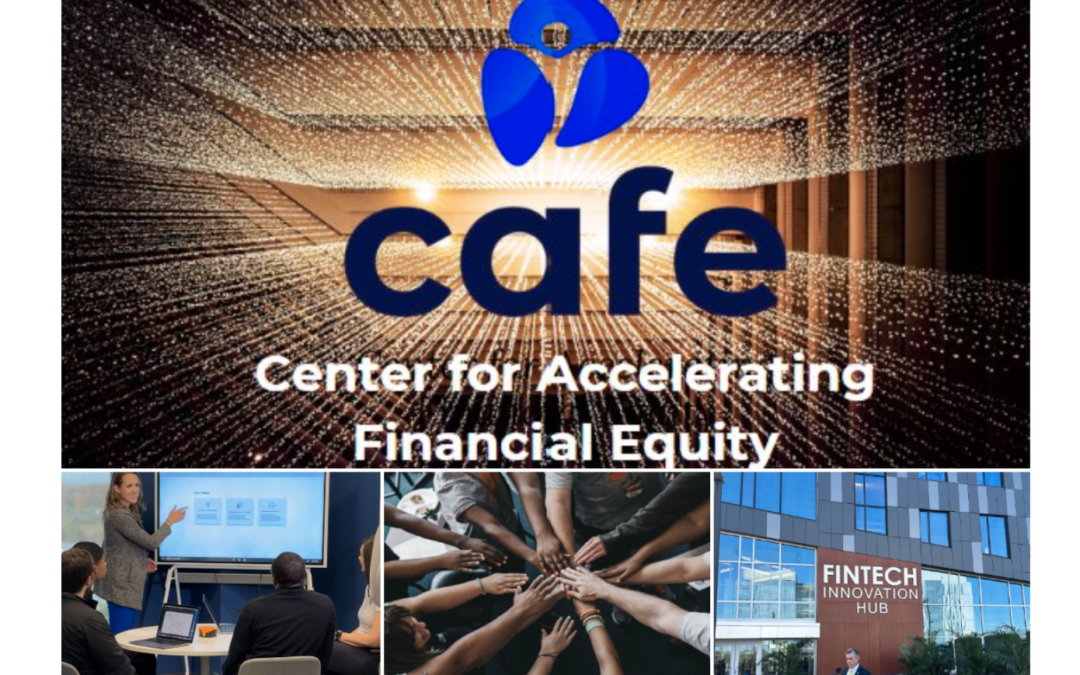
When Kristen Castell signed on to become executive director of The Center for Accelerating Financial Equity (CAFE) in July, she never doubted the nonprofit’s value and critical mission. Her belief was reinforced when more than 60 companies nationwide applied to join the organization’s inaugural cohort of the Fintech Accelerator Program, which launched in March.
“These are financial technology — or fintech — companies that arein the early or growing stage,” says Castell, formerly a corporate financial services pro before joining CAFE. “They have products in market towards this mission of somehow helping people’s financial well-being. Many of them are business to business, so they sell to large financial institutions like banks or credit unions or others.”
CAFE is a spoke in the wheel at the FinTech Innovation Hub, a six-story building located on theUniversity of Delaware’s STAR Campus. Six companies in the inaugural accelerator program will tackle issues like funding, partnerships, data science and regulations — areas of focus in the Hub’s mission to improve financial health in underserved, underrepresented, and low-to-moderate income communities.
“The idea is transforming the financial system to be more inclusive,” Castell says. “There’s a huge need, which the pandemic exacerbated. The question is how we’re building for the future so people are more secure. Financial security is how people are secure and have better lives, in terms of their housing, their food security, their families, their education, all of it.”
Before COVID accelerated the prevalence of fintech, Mike Bowman recognized the industry’s growth and partnered with Discover Bank to build the Hub. As president and CEO of Delaware Technology Park, Bowman wanted a place committed to helping the 6 million American households that are unbanked (meaning they have no access to a bank account).
“Fintech really took off after COVID because people were staying home,” says Bowman, whose nonprofit owns the Hub building. “Pretty soon, everything you can transact, you could do on your phone or your computer without going anywhere. With Delaware being known for its financial services, we wanted to be sure we’re at the cutting edge of that.
“The building is dedicated to the digital services that make fintech happen,” Bowman says. “It also has a second purpose: to see if we can help improve the issues of financial equity and health for the low-to-moderate income populations. The gap is getting bigger and bigger.”
A MULTI-PRONGED ATTACK
Improving people’s financial health and well-ness is a massive undertaking that requires collaboration among multiple stakeholders.
The University of Delaware has several teams in the Hub, including the College of Engineering, the Alfred Lerner College of Business and Economics, and the Office of Economic Innovation and Partnerships. The state’s Small Business Development Center has office space, too. So do fintech-related firms in data analytics and software development.
“The problems and challenges related to this are really complex,” says Tracy Shickel, UD’s associate vice president for corporate engagement and a CAFE advisor. “You can’t do that alone as a university. You can’t do that alone as a business, and the government certainly can’t do it alone. I think the important thing is this model where everybody’s got a seat at the table and we’re working together to make Delaware and the nation more financially well and healthy.”
Increasing financial literacy is one key to assisting unbanked and underbanked house-holds. (A household that is underbanked owns an FDIC-insured checking or savings account, but regularly uses alternative financial services.) Carlos Asarta, a UD professor of economics, is co-director of education and outreach at the Hub. That outreach includes “Lunch & Learn” sessions, held twice a month and financially supported by Discover Bank, which bring together community members andHub tenants for conversations.
“We discuss challenges that individuals and businesses are facing, and what our researchers are working on,” Asarta says.“Then we open up the floor for discussion. We’re seeing a lot of collaborations taking place. The Hub is serving as a way to bring the entire ecosystem together.”
In April, the Hub hosted the inaugural Fintech and Financial Institutions Research Conference, sponsored by UD and The Federal Reserve Bank of Philadelphia. The conference was designed as a forum for presenting and sharing current research related to fintech organizations and the greater financial services systems.
There have also been collaborations with the fintech center at Baltimore’s Historically Black College or University (HBCU) Morgan State University. Asarta and teammates have visited multiple times and Morgan State students were invited to join UD students in an event called “Spark! In 5” where each speaker presented their research and ideas on financial health in five minutes to a large audience.
“If you think about the Hub, it’s not just our community and our students and our faculty,” Asarta says. “We’re branching out and working with other institutions that have the same mission. It’s super exciting.”
PROCEEDING WITH CAUTION
Well-intentioned researchers and business owners aren’t the only groups excited about the expanded use of fintech. Plenty of bad actors are eager to engage in fraud at individuals’ expense. The Hub helps fintech providers remain vigilant in ensuring that their products are trustworthy.
“There are a lot of scammers out there,” says Ben duPont, managing director of Chartline Capital, which oversees Discover’s $36 million Financial Health Improvement Fund. “We can use technology and startups to help identify and call them out. Venture capital plays a role in helping these companies get started.”
Fintech companies can’t devote all of their attention to finding solutions for consumers. Equal energy must be allotted toward preventing fraudulent activity that builds mistrust among the unbanked. “I think solutions and preventive measures are merging,” duPont says. “They’re not separate and they’re merging from a regulatory point of view, for good reason.” Bowman, who also serves as director of Delaware’s Small Business Development Center, says the Hub works with the American Fintech Council to improve cybersecurity and build consumer confidence.
“We’re developing students through our programs and we’re also teaching it to the community,” Bowman says. “It’s not just the ability of a device or how well it works and how easy it is. We also want to make sure it’s not fraudulent or easily hacked. There’s a lot of seminars, webinars and products that come up around the issues.”
Shickel says one of the Hub’s first funded research projects involved theCollege of Engineering and the state’s Department of Transportation developing a system for secure transactions using digital identification. Another deals with the issue of mobility equity —financial health for individuals who don’t own a vehicle and can’t get to work.
“We’re aiming to develop a national center of excellence that creates technology solutions that will enable people to transact business in the hours that they want to transact business and to trust the system because information is secure and authenticated and protected,” Shickel says. “There is a continuum of needs and the FinTech Innovation Hub will serve to engage various stakeholders to address fundamental barriers to participation in the financial system.”
Bowman says there’s “no silver bullet” to address FinTech equity and improve financial well-being. But the Hub is “chipping away at the problem” with many, many little steps.
“We’re working on products to help and we’ve already funded four, with others to come,” he says. “There are a lot of different pieces to this puzzle because the populations are quite different.”
There’s a place for all of them at the FinTech Innovation Hub.
Dr. Martin Luther King Jr. delivered a lecture entitled “The Other America” in March 1968, outlining our nation’s schizophrenic dualism. “There are two Americas,” he proclaimed.
U.S. sprinters Tommie Smith and John Carlos demonstrated as much six months later, each raising a gloved fist for Black power while “The Star-Spangled Banner” played at the Mexico City Olympics. The Summer Games have been our time to make a statement since 1904 when hurdler George Coleman Poage became the first African-American to win an Olympic medal. And ain’t nothing changed.
Sports contain metaphors for life and lessons on commitment, sacrifice, winning and handling defeat. They’re taught in a universal language that’s understood by every athlete around the world. But extraterrestrial visitors would have a skewed picture of the United States if their observations were based solely on Team USA.
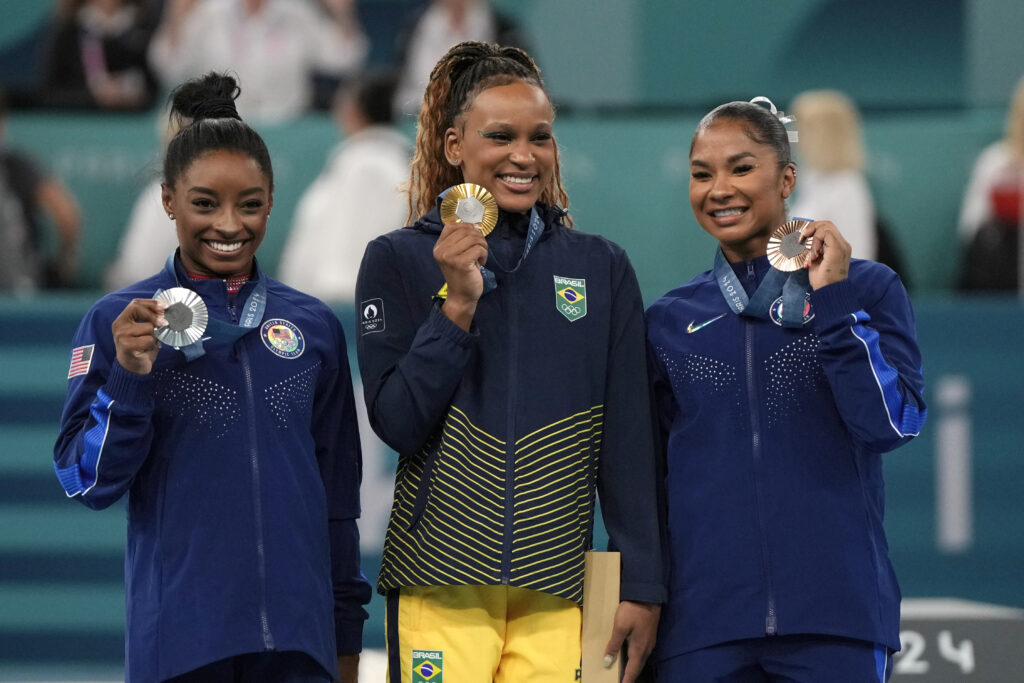
Men’s gymnastics has always taken a backseat to the women’s version, which routinely produces bevies of international champions from these United States. We’ve now reached the point where Black Girl Magic has become a thing in the sport — from Dominque Dawes in 1992 and Gabby Douglass in 2012, to the incomparable Simone Biles since 2016 — while the men have remained mostly obscure and devoid of color.
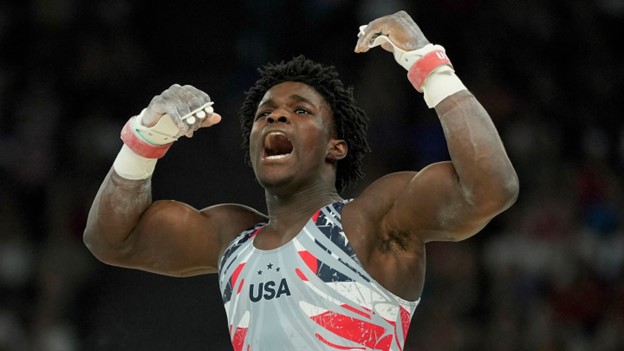
Frederick Richard was born for this moment.
Just 20 years old, he finds his life’s purpose and childhood dream intersecting in Paris, with growing anticipation for another crossover at the Los Angeles Olympics in four years. By then, he’ll be further along in his mission, a task some athletes might avoid but he embraces with gusto.
 Follow