Posted on June 15th, 2011
 By DERON SNYDER
Their high-profile positions give them access to gifts and services not available to everyone else. They know they’re not supposed to accept the extra benefits, but they do so anyway, often bringing shame to their institutions when caught. Despite numerous examples of prohibited perks leading to a downfall, the cycle continues, with new reports surfacing on a regular basis.
No, not quarterbacks and point guards in college dorms, but politicians and CEOs in halls of power.
Paul Magliocchetti, head of a powerful lobbying firm on Capitol Hill, pleaded guilty last fall to campaign-finance fraud. Tom DeLay, the former House majority leader, was convicted in November of illegal contributions and money laundering. Jack Johnson, former Prince George’s County Executive, pleaded guilty last month to accepting bribes. And in my home state, New York, the scandal-scarred Legislature is crafting a bill to address an unprecedented string of corruption and ethics cases.
When adults are willing to risk criminal charges and jail time for hundreds and thousands of dollars, we shouldn’t be surprised when teens and 20-somethings risk their collegiate eligibility for tattoos, autographs and sweet deals on a car.
Continue reading…
Posted on June 10th, 2011
BY VANESSA W. SNYDER
T he other day I overheard my daughters arguing about the childish behavior of one celebrity.
“Anybody can make a mistake!” one argued.
“Yeah well he’s old enough to not be having a tantrum for all the world to see,” the other retorted.
“Look I used to have tantrums…does that make me a bad person?”
“Used to?”
The conversation dissolved from there, but you get the idea. I was about to intervene until I realized they were repeating things I’ve said to them or someone else.
Have you ever just listened to your kid and heard yourself talking? My husband used the word “idiot” once to describe the actions of another driver in traffic, and the girls couldn’t wait to come home and try it out. I can recall many statements that flew out of my daughters’ mouths after originating in mine. Some of them good and some I wish I had kept to myself.
So if you’re inclined to use curse words, don’t be surprised when yours kids use them, too. Or if you like to gossip, don’t be annoyed when your kids pick up the habit.
It’s easy to forget they’re listening and paying attention because there’s not always an outward indication. And it goes beyond gossiping and cursing. For instance, math is not my favorite subject. I have terrible memories about trying to master math concepts in school. This isn’t something I want my daughters to pick up, so I’m careful not to whine and go on about it. But it’s a challenge, especially when I see one struggle with her math.
Despite the way kids often behave and despite what they say, they watch and listen more than we think. The influence we have on them is real and not to be taken lightly.
I have to watch myself every time I make a comment about my weight, my hair or anything else for that matter. They’re listening even when I don’t notice. They even pick up our sarcasm and try it out on us – which just isn’t pretty sometimes.
So remember the old lesson, especially when children are within earshot: Think before you speak.
VS
Posted on June 7th, 2011
 By DERON SNYDER
The folks at Nike were amazingly prescient in November 2005 when they unveiled a 110-foot high by 212-foot wide billboard to introduce their new ad campaign for LeBron James – “We Are All Witnesses.” Yet they couldn’t have imagined how much the proclamation would evolve over five seasons, twisting and turning as James morphed into arguably the NBA’s best player and sports’ most-hated superstar.
Along the way, it has become difficult to determine exactly what was being seen, especially by the legions of newly minted “hostile” witnesses. Their account differs sharply from sympathetic observers, which is only natural. But the venom and vitriol from those who would testify for the prosecution is so acute, neutral onlookers can be pushed into the defense’s camp. It’s enough to make you sound like an apologist when you’re not even convinced there’s been any wrongdoing.
That’s the position I keep finding myself in, baffled by the level and extent of criticism heaped on James since he joined the Miami Heat. Previously, I enjoyed James as a player but was neither a fan nor a detractor. When he left Cleveland to team with Dwyane Wade and Chris Bosh, I figured there’d be championships in their future, though I didn’t want them to enjoy instant gratification by winning it all this season.
But now, I’m virtually rooting for James and the Heat, simply to spite all the haters against them.
Continue reading…
Posted on June 2nd, 2011
 By DERON SNYDER
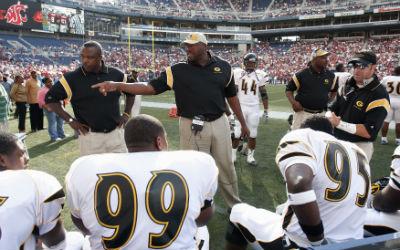
Fifty or so years ago, before they became commonplace at major colleges such as Louisiana State, the University of North Carolina and the University of Florida, the nation’s top African-American student-athletes played at HBCUs such as Grambling, North Carolina Central and Florida A&M. Professional scouts knew where to find them, too, traveling to black schools to watch future all-time greats on the basketball court, football field and baseball diamond.
But HBCUs no longer serve as black athletes’ primary pipeline to the pros. That function is left to big-time programs in the major conferences regularly featured on TV. Fine. Part of progress includes the right to attend any school, and if prime-time athletes largely abandoned HBCUs, so be it. However, it’s not fine if HBCUs fail to adequately educate the athletes they receive.
According to the NCAA’s annual Academic Progress Rates, HBCUs aren’t getting the job done for their athletes in the classroom, ostensibly the schools’ most important battleground. The APR, which measures the eligibility and retention of student-athletes, is calculated for every team at each Division I school, using data collected over a rolling four-year period. Teams are rewarded for retaining athletes and for having athletes make progress toward degrees that year. Low scores lead to penalties, including bans on postseason play and a reduction in scholarships.
In this year’s report, spanning the academic years from 2006-2007 to 2009-2010, 103 teams at 67 schools were sanctioned for poor academic performance. Of those teams, 33 hail from HBCUs. Of the eight teams that suffered postseason bans, half hail from the historically black Southwestern Athletic Conference.
The numbers are alarming because they’re so disproportionate. More than 340 schools were evaluated for APR, but only 24 — about 7 percent — are HBCUs.
Continue reading…
Posted on May 27th, 2011
 By VANESSA W. SNYDER
To start or not to start.
If you’re a writer, you might know what it feels like when your characters are calling your name. On the other hand, if you haven’t thoroughly promoted your first book, what’s the point in moving to the next one?
I’m torn, but leaning toward starting the next writing project. There will be naysayers and doubters who’ll point out that the first book hasn’t been “worked” yet. But a writer writes, and that’s true no matter how many books you’ve sold or how much publicity you’ve gotten.
In a perfect world, some publisher would beg you to produce that next book. But in the real world, independent writers must be self-motivated and focused. We have to keep it moving and not give up.
Besides, the beauty of the second book is the opportunity it gives you to correct errors from the first one. I’ve learned so much already as I reflect on “The Second First Lady,” and I can’t wait to do better in writing the sequel.
First-time authors have plenty of resources to help them overcome common mistakes, and lots of information on writing a book that actually sells. I believe that continuing to write is part of the hustle as we strive to improve and produce the work we imagine.
Producer/actor/writer Robert Townsend visited my school recently. He said it’s important for artists to become accustomed to hearing “No,” and keep persisting anyway. He talked about going the extra mile and making yourself stand out above the rest.
Perhaps writing that second book is the way to persist, against all odds.
Posted on May 25th, 2011
 By DERON SNYDER
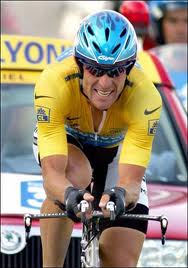
I’m not sure how many folks can watch Tyler Hamilton’s interview on “60 Minutes” and still think that Lance Armstrong was clean in becoming the world’s top cyclist. If holdouts were uncertain beforehand, Hamilton’s apparent pain and reluctance in outlining Armstrong’s supposed doping history should remove doubt.
“He took what we all took,” said Hamilton, Armstrong’s former teammate. “There was really no difference between Lance Armstrong and the majority of the peloton. There was EPO … testosterone … a blood transfusion.”
I always suspected that Armstrong was just like everyone else at the top of his sport, but that never changed my opinion of his accomplishments. Since his competitors were doping, too, he didn’t gain an unfair advantage. On a level, performance-enhanced playing field, he proved himself the best by winning seven consecutive Tours de France.
But there’s a certain amount of sadness surrounding Armstrong’s case. It was captured in the anguish on Hamilton’s face as he discussed the drug use, including his own. It was heard in the fierce denials of Armstrong’s true believers as they ignored the latest evidence, including testimony under oath to a grand jury. And it was seen in Armstrong’s unconvincing response as he launched yet another defense, including a scathing press release, a new website and this tweet: “20+ year career. 500 drug controls worldwide, in and out of competition. Never a failed test. I rest my case.”
Marion Jones never failed a drug test, either.
And she rested her case after a guilty plea and tearful apology on the courthouse steps.
Continue reading…
Posted on May 17th, 2011
 By DERON SNYDER
In other news, Phoenix Suns president Rick Welts announced that he’s gay. He’s undoubtedly not the only such executive in the league. Surely other teams also have homosexuals on the payroll. About the only thing remarkable would be a discovery that Welts, actually, is the NBA’s sole employee who prefers same-sex relationships.
But rare is the occasion when homosexuality and team sports are mentioned in the same story. So we must pause and take notice.
Welts‘ proclamation in Sunday’s New York Times is the biggest step forward for gays in sports since 2007, when John Amaechi became the first former NBA player to come out. Amaechi’s revelation led to recollections of former Major League Baseball player Billy Bean, who came out in 1999, three years after his retirement. In 2002, former NFL nose tackle Esera Tuaolo announced on HBO’s Real Sports that he’s gay, making him the third former NFL player to come out after David Kopay (1975) and Roy Simmons (1992).
Now here are the male athletes in major team sports who came out while active:
.
The next one will be the first one.
Continue reading…
Posted on May 16th, 2011
 By DERON SNYDER
Here we go again. Just two months after ESPN’s The Fab Five documentary sparked a controversy involving Jalen Rose and Grant Hill, we’ve suffered another instance of black athletes sorting our dirty laundry in public. This time it’s boxer Bernard Hopkins, who claims in a recent Philadelphia Daily News article that Washington Redskins quarterback Donovan McNabb isn’t black enough.
“He’s got a suntan. That’s all,” said the boxer during press day at his gym. Hopkins further implied that McNabb’s privileged upbringing set him up for a rude awakening when the Philadelphia Eagles traded him to the Washington Redskins last year. “Why do you think McNabb felt he was betrayed? Because McNabb is the guy in the house, while everybody else is on the field. He’s the one who got the extra coat. The extra servings. ‘You’re our boy,’ ” Hopkins said, patting a reporter on the back to illustrate his point. “He thought he was one of them.”
We’ve gone from Rose calling Hill an Uncle Tom, to Hopkins calling McNabb a house slave. How long before someone brings Oreos and handkerchiefs into play?
Always viewed as a classy, consummate professional, McNabb hasn’t dignified the comments with a response. But in a statement, McNabb’s agent, Fletcher N. Smith III, called Hopkins’ remarks “ill informed,” “dangerous” and “irresponsible,” saying they perpetuate “a maliciously inaccurate stereotype that insinuates those African Americans who have access to a wider variety of resources are somehow culturally different than their brethren.”
Actually, McNabb and Hopkins are culturally different. The former was raised in Chicago’s suburbs, excelled at an all-boys Catholic school and went on to play football and basketball at Syracuse University. The latter was raised in a rough section of Philadelphia, turned to a life of crime at 13 and was a convicted felon by 17, leading him to spend nearly five years in prison.
Continue reading…
Posted on May 16th, 2011
 By VANESSA W. SNYDER
Teachers love it when parents are supportive and involved with their children’s schoolwork. It’s great to know there’s accountability and reinforcement at home because it helps us do our job. It also sends the students a message that their parents and teachers are on the same team.
But when I don my parent hat, I wonder how much support is too much. I admit I’ve gotten a little too excited about a few projects over the years, before reminding myself I’ve already been through school and it’s not MY assignment. On other occasions, I can see how much better their work would be if they just… (fill-in-the-blank). And what parent hasn’t wanted to rescue their children from a looming deadline by just finishing the work for them (hopefully, not outright doing it).
Well, switching back to my teacher hat, I can usually tell when parents have gotten a bit heavy-handed in assisting with projects or other schoolwork. It’s completely understandable – and disappointing. Learning is a process. A major part of the process is allowing students to create, discover and work out their difficulties – even if it results in less-than-perfect outcomes. Sometimes learning is tough and that’s okay.
I understand how parents get caught up in grades, because that’s how we measure and evaluate student achievement. We like to see A’s and B’s because they’re symbols of excellence, but learning isn’t always about the final grade. It’s also about what you learn along the way. That usually includes organizing your time, your materials and your thoughts.
It’s tough to watch your child fail or flounder when it would be so easy for you to come in and play Supermom or Superdad. However, the lessons students gain as they work through their learning (even if it means failing at first) are invaluable.
I’ve spoken to many teachers who have tales of students suddenly becoming focused, hard workers after the shock of a poor grade.
That may be a tough pill for parents to swallow (self included), but it’s worth it.
Posted on May 5th, 2011

By VANESSA W. SNYDER
Sometimes there’s not enough of something, like discipline or relationship-building, as discussed in the previous entries on wimpy parenting. But here’s a case where there’s too much of something in raising our children.
The whole notion of “express yourself and share your feelings” has gotten out of hand.
Where is the line between allowing kids to express themselves and teaching them to respect us as their parent? I think it might be getting blurry, because I’m pleasantly surprised whenever whenever my students or children say “yes ma’am.”
I’m not a stickler for “yes ma’am,” but I find myself having conversations with my kids — mine or others — that would have landed me a sore behind at the very least. Once again, I think the wimpy parenting monster has taken over and we just can’t go out like this.
Once again, I consulted my dear friend who doesn’t seem to put up with anything from her child. “I don’t tolerate sucking of the teeth, eye-rolling, sighing in exasperation or any of that,” she says.
So what does she do when her 10-year-old slips up? “I ask him what the appropriate response is and he knows what that is,” she says. It’s “yes ma’am” or “yes sir,” and if he has difficulty remembering, she sends him to his room to help his memory. On occasion, she plucks him in the mouth. Her husband doesn’t approve of that tactic, but she’s determined that their son learns to respect authority.
“There’s a right time and a right way to express yourself,” she says. “When I ask him to do something, he needs to simply do it right then. We can talk about his feelings about it later.”
I really think she has the right idea. Sometimes I’m sure I’m having an out-of-body experience when I hear the things coming out of kids’ mouths, mine included. Maybe it’s the smart-aleck kids on TV who have desensitized us to the way our children relate to us. Maybe we’re just too tired to deal with the disrespect and we let it slide.
Remember when “no” was just “no” — with no backtalk?
Neither can I. Ever heard or experienced “first-time obedience?”
I believe it’s important to communicate with kids honestly and respectfully. I also believe that parents and authority figures should choose to explain decisions when appropriate.
However, there is a line of basic respect that we must insist our children do not cross. We shouldn’t ignore eye-rolling, muttering under the breath, walking away or any visible sign of disrespect. When we do, we are setting them up for authority issues in the future with teachers and employers.
Part of growing up is learning to control your emotions, even when you don’t like what’s being said to you. Kids simply have to learn to keep it together, even if they’re angry.
Of course the flip side of that is parents should model respect and appropriate responses to others. Kids are watching.
We all know that the old adage, “Do what I say, not as I do,” is pretty ridiculous.
VS
 Follow

 By DERON SNYDER