Two Americas squared off over the weekend in the NCAA women’s Final Four. Each won a game.
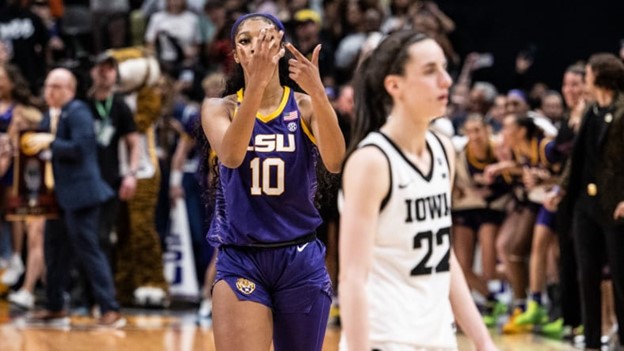
Louisiana State beat Iowa for the championship Sunday, avenging South Carolina’s loss against Iowa on Friday. Both contests felt like expressions of this country’s culture war, a fight that has escalated since 2016 but has been waged from the start.
Racists and bigots love to talk about a “colorblind” society, misrepresenting MLK’s dream while pushing agendas that harm Black people. “We don’t see color,” they sniff as if adherence to that fantasy proves moral superiority.
But no one must lose their vision in order to achieve King’s dream.
Anyone who says they didn’t notice a glaring difference between LSU/South Carolina and Iowa is either lying or needs an eye exam. It was clear as a chief distinction between Apollo Creed and Rocky Balboa.
The women of March Madness are hooping like it’s nobody’s business, Some of us have noticed.
They’re raising the roof and smashing records in the NCAA women’s basketball tournament. ESPN set highs for viewership in the Sweet 16 and Elite Eight, bringing us to a Final Four with an unfortunate twist: The matchup everyone longed for is in the semifinals, Friday night.
Iowa’s Caitlin Clark and Aliyah Boston square off in what feels like the title game. Clark won this season’s award for Associated Press National Player of the Year; Boston won it last season. For those who don’t watch a lot of college basketball, Clark and Boston are worth paying attention.
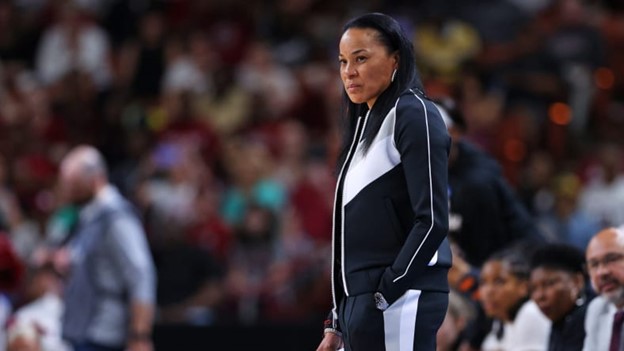
Naturally, we’ve watched as Boston and coach Dawn Staley seek their second straight national title. Doing so would also give South Carolina the first perfect season in school history. The stakes are always high for Staley, the three-time National Coach of the Year whose program exudes HBCU vibes.
Like John Thompson and Georgetown were for a lotta Black folks in the ‘80s, Staley and South Carolina are the de facto squad if you don’t have a rooting interest. The Gamecocks get all our love for being an extension of their super-cool coach.
Clark gets her share of love with a “You see that?!” style of play, brilliance built for modern hoop heads and viral videos. She’s a showstopper with the attributes of fabled blacktop legends: unlimited range, audacious passing and dramatic flair. Her rank as the sport’s most exciting player was certified in the Elite Eight when she hit Louisville with a historic 40-point triple-double (41 points, 10 rebounds and 12 assists). She’s the game’s new darling, garnering tweets from LeBron James, Isaiah Thomas and Magic Johnson, among others.
The contrast between Boston and Clark couldn’t be greater, adding another layer of intrigue, the punishing power forward versus flashy point guard. Both are dominant but do their damage in opposite ways.
Speaking truth to power isn’t for the faint of heart, especially when it can impact your livelihood. Blowing the whistle requires courage and resolve because it can lead to unemployment. Griping among friends and colleagues is far easier than complaining to the boss who approves your direct deposit.
Hired by the NFL to cover the NFL, veteran journalist Jim Trotter was unafraid, handing the league a mirror and braving the blowback.
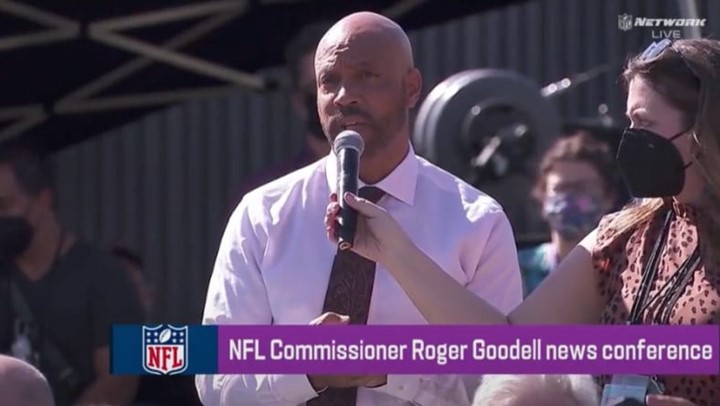
He pointed out obvious disparities and asked pointed questions. He wondered aloud about Commissioner Roger Goodell’s thoughts on Black journalists in the newsroom and Black coaches on the sidelines. Trotter wasn’t satisfied to simply swallow the company line on diversity, how much the league desires equity and values inclusion.
Instead, he pressed the issue and referenced a James Baldwin quote in the process: “I can’t believe what you say because I see what you do.”
Trotter uttered that line in February at Goodell’s annual Super Bowl news conference. He asked about hiring practices within the league’s media division, which includes NFL Network and the NFL.com website. That made two consecutive “State of the League” press events where Trotter presented a mirror on diversity, having inquired about coaching hires in 2022.
The league has offered plenty of words, but actions keep speaking louder. Trotter is gone.
As a youngster in Brooklyn, my love affair with the
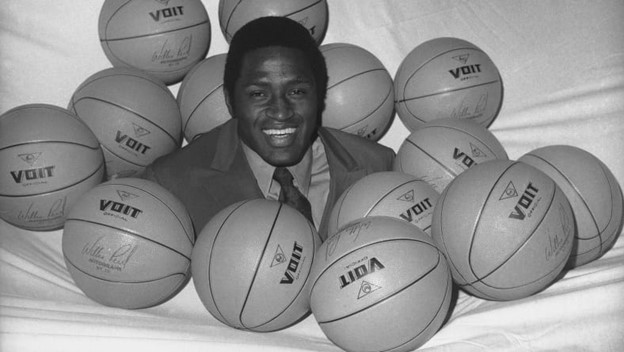
NBA and the New York Knicks hadn’t kicked in yet when Willis Reed created one
of sports’ most iconic moments. I was still getting used to white classmates in
a white neighborhood after being put on a school bus for second grade. But I
eventually grew to realize why May 8, 1970, stirred so many emotions, in the
city and elsewhere.
That’s when Reed limped from the tunnel onto the court
at Madison Square Garden for Game 7 of the NBA Finals.
Hollywood draws inspiration from such scenes, a crowd erupting
as the injured star unexpectedly emerges from the locker room for a must-win
game. The Los Angeles Lakers were shook and never recovered. A legend was born and
Reed, who died Tuesday at age 80, was cemented in sports lore forever.
Not bad for a country boy from Hico, Louisiana, which he once described as so small, it doesn’t have a population.
Dawn Staley has been a boss on the sideline for 23 seasons and shows no sign of slowing as top-seeded South Carolina opens defense of its NCAA women’s basketball title on Friday. But as the only Black basketball coach with two Division I titles in women’s (or men’s) hoops, she always pays homage to the pioneer who won none.
“The strength of your shoulders allowed us to stand tall,” Staley posted on Twitter when C. Vivian Stringer retired last season. “We will forever keep your legacy in our hearts. Thank you, Coach Stringer.”
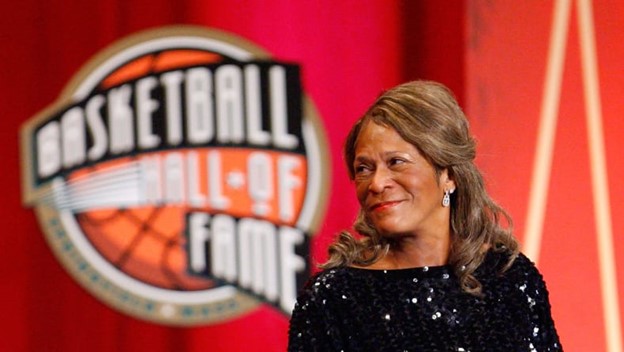
Stringer ended her illustrious career in April 2022 after 50 years and 1,055 wins as a head coach. She once was quite a fixture at this time of year, taking her teams to 25 of the first 31 tournaments from 1982 to 2012. The Hall of Famer’s journey began with a highly improbable run that remains a precedent.
The NCAA didn’t create the women’s tournament until 1982, more than 40 years after the men’s version. Stringer and her team at then-Cheyney State College (now Cheyney University) wasted little time making a statement on Black achievement against all odds: They advanced all the way to the finals before losing to Louisiana Tech.
No HBCU before or since has reached the Final Four, let alone the final game.
As someone who hits the floor whenever the beat drops (though I really don’t need no music), the NCAA’s “Big Dance” has been a great party since my days at Howard. But the boogieing never included the men’s team, which last reached the NCAA tournament in 1992.
That’s the main news from this vantage point as March Madness ramps up. Howard on Saturday prevented Norfolk State from threepeating as the Mid-Eastern Athletic Conference representative in the tourney. (Ironically, the women’s teams flipped the script Saturday night, with Norfolk State stopping Howard’s bid for a second consecutive NCAA trip).
The Bison likely won’t advance to the Sweet 16, when attention focuses on which PWI powerhouses survived or fell. There’s plenty of time to talk about top seeds Alabama, Houston, Kansas and Purdue, likely favored for deep runs on 90 percent of bracket contests nationwide. Someone will celebrate on April 3, as producers compile the “One Shining Moment” mixtape with Luther on vocals.
But following and caring about the tourney is different nowadays. Power-conference hoops don’t hit the same anymore and not simply because the talent was consistently higher a couple of generations ago.
Yes, today’s premier players usually leave as freshmen, saying hello and goodbye in the same season. The projected top two NBA picks this year are Victor Wembanyama and Scoop Henderson, who don’t even play college basketball. They’ve drawn zero interested viewers to Kentucky, Duke, or whatever factory they would’ve chosen.
But more than who still plays, the problem is who’s being played.
I’ve waited SO long for this
moment, there’s a new tension between anxiousness and anticipation.
I feel the latter because the pace
of my doctoral journey has gained steam. My mother-in-love recently told me to
not rush because I’m almost there now. I sort of brushed it off at the time,
but now I realize she’s right.
There’s no need to fret and worry –
especially not now. The finish line is in sight and within reach. However,
there’s still work to do and several steps to follow. Life kind of gets in the
way at times, but doesn’t it always?
That’s where the anxiousness tries
to seep in.
There’s the anticipation because you can see the goal, there’s a bit of anxiousness, too, because you’re not quite there. A little doubt whispers in corners of your mind, suggesting this new pace is too good to be true.
The irony isn’t lost on me. I’ve
wanted to reach this stage for a long time. No worries. I’m choosing
anticipation because I experience a sense of excitement every day as the end
draws nearer.
But that’s not the only reason. I’m
choosing anticipation because this studying I’ve done for several years aligns with
my current position and the work I feel drawn to. Everything is starting to
make sense and become clearer.
I’m studying how school leaders
ensure students’ social emotional learning needs are met throughout the entire
school. That’s real to me. I believe leadership has a critical role in process
of social emotional learning.
If you’re working and waiting, while
feeling anticipation and anxiousness, it’s OK.
Both feelings might exist, but ultimately,
we know which one gets across the finish line.
Without looking at Ja Morant’s background, I figure he falls into one of two categories.
Either he hails from a neighborhood faced with tough socioeconomic conditions, where those who fall prey are stereotypically awash in guns and violence. Or he rarely faced real drama (if ever), but he’s drawn to the lifestyle, attracted to the imagery dramatized onscreen and glorified in music.
But Morant’s background really doesn’t matter.
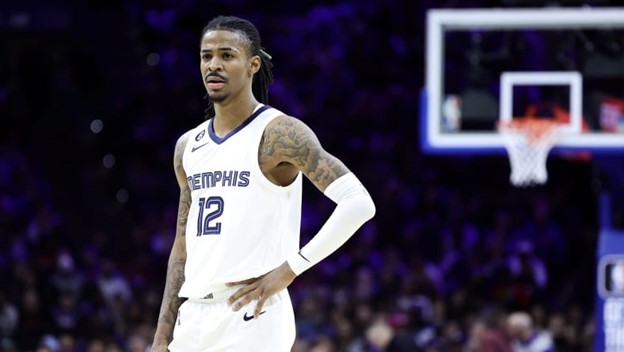
At 23 years old, he’s an NBA superstar, a face of the league who recently signed a five-year deal worth $193 million. Last week, Powerade announced a new partnership with Morant, who already has an endorsement deal with Nike. There’s no excuse for genuine thug life at his income bracket and Q rating.
Morant should satisfy any attraction to that world like the rest of us, via remote control.
Whenever there’s a dispute between management and workers in our devout capitalistic society, I tend to side with the laborers, whether it’s Starbucks vs. baristas, Amazon vs. drivers, hospitals vs. nurses or pro leagues vs. athletes.
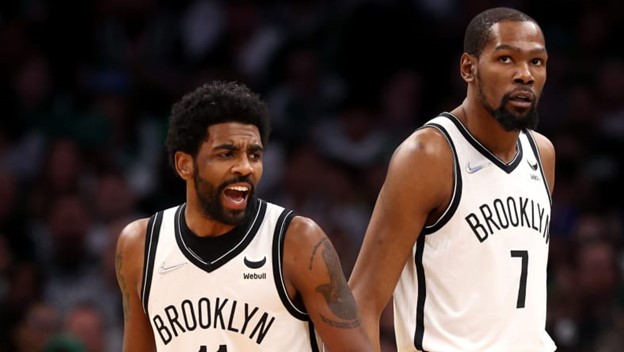
Such calls are easy to make 99 percent of the time, and I lean toward the workforce in close cases. In the NBA, that means supporting the trend of player movement, a hot topic at the All-Star Game with Kevin Durant and Kyrie Irving as prime examples.
The Brooklyn Nets are a smoldering shell of the championship-contending unit we saw when the season began. In accommodating trade requests from Irving and Durant earlier this month, Brooklyn shocked the league and set off a fresh wave of complaints about power dynamics between players and teams. Durant, Irving, and James Harden — the Nets’ three recent All-Stars — all wanted out.
They’re all balling elsewhere as a result.
“I think that’s a bad thing,” NBA commissioner Adam Silver said at his annual All-Star news conference. “I think it’s corrosive to the system. Certainly, fans don’t like it. Even lots of players don’t like it as well because, ultimately, they may be [signing with] a particular team under a belief that that player is still going to be there.”
Before we continue, let’s acknowledge that word usage is a huge part of the problem. The terms “trade request” and “trade demand” are not (necessarily) the same thing. But they’re often used interchangeably by fans and media, generating sympathy for owners.
If you ask to be shipped out, you can still play hard and conduct yourself as a professional. Your request doesn’t have to be followed by decreased productivity and increased negativity. And you don’t have to share your desire publicly; the team can (and will) leak that info if it’s beneficial.
Polite requests are perfectly fine and acceptable. Like the Bible says, sometimes you have not because you ask not.
Demands aren’t as nice. Rather, they’re nasty, confrontational ultimatums that suggest an “or else.” Maybe you become a cancer on the team and a no-show on the court; maybe you hold out or the team sends you home. Those time-honored strategies are the bare-knuckle tactics — slowdowns and strikes and lockouts — available in labor-management fights. Each side chooses its course of action and lives with the consequences.
That’s American business at its best and worst.
Last summer, Durant reportedly demanded that the Nets trade him or fire general manager Sean Marks and then-coach Steve Nash. But depending on the headline, Durant merely requested that owner Joe Tsai make a choice. Tsai supported Marks and Nash, and Durant rescinded whatever it was. Durant played at an MVP level until Irving’s request/demand was honored. Then Durant asked again to be traded and received his request.
Conversely, we know what time it is when players like Irving and Harden make trade “requests.” They might as well be demands because their rejection won’t be pretty. Harden essentially shut down on Houston and then Brooklyn to force his way out; Irving was expected to do likewise if the Nets didn’t send him to Dallas a few days before they sent Durant to Phoenix.
Unlike Silver, Durant thinks the player movement is a good thing.
“It’s bringing more eyes to the league, more people are more excited,” he said at the All-Star practice. “The tweets that I get — the news hits that we got from me being traded, Kyrie being traded — it just brings more attention to the league and that’s really what rakes the money in when you get more attention. So, I think it’s great for the league, to be honest.”
Irving is more concerned with individual players than the collective NBA.
“Why doesn’t anyone have the ability to ask for trades? That’s my question,” he said. “When did it become terrible to make great business decisions for yourself and your happiness and peace of mind? Not every employer you’re going to get along with, so if you have the chance to go somewhere else and you’re doing it legally, I don’t think there’s a problem with it.”
For the most part, he’s right.
A team can trade or cut players at any time, regardless of the players’ wishes and signed contracts. Fans understand the deal, realizing that their favorites can be dealt whenever the front office believes a move makes sense. We’re all accustomed to teams being in control, but some folks struggle with the concept of players enjoying a share.
Silver understands that a certain amount of movement is good and accepts the fact it’s not exclusively the teams’ call anymore. “You never want it to get to the point where a player’s literally demanding that he goes somewhere else,” he said, adding that the NBA hopes to “find the right balance.”
There’s rarely any balance between management and the workforce in American business.
Give it up for ballers if they’re able to create some.
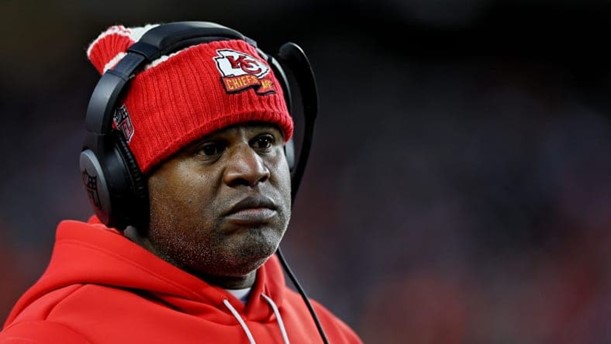
For all we know, Eric Bieniemy could be the all-time sorriest hire as an NFL head coach.
If the Kansas City offensive coordinator ever got a chance, his tenure could stink worse than Nathaniel Hackett’s 4-11 with Denver or Kliff Kingsbury’s 28-37-1 with Arizona. He could do a lousier job than Adam Gase’s 9-23 with the New York Jets, or Joe Judge’s 10-23 with the New York Giants.
All of those coaches have been hired and fired since Bieniemy won his first Super Bowl as Kansas City’s offensive coordinator in 2019. He interviewed for several of those head coach jobs while waiting for his ring. Hell, he’s interviewed for 15 head coach jobs with 14 teams over the last four hiring cycles, but there he was Sunday, still in place winning another Super Bowl with the Chiefs.
Bieniemy absolutely might’ve been as terrible in Carolina if he’d beaten out Matt Rhule (fired at 11-27). But he also might’ve enjoyed success like Matt LaFleur (47-19 with Green Bay) or Zac Taylor (22-11 the last two seasons with Cincinnati). All secured their gigs since 2019; Bieniemy sipped champagne that season.
 Follow