Fans of HBCU football were treated to a three-hour buffet in the HBCU Go Sports Kickoff Show, hosted by legendary broadcaster Charlie Neal at the Pro Football Hall of Fame in Canton, Ohio. He wasted no time telling everyone the stakes.
“This season, HBCU Go become the
first network in history to bring you a full season of live doubleheader (HBCU
football) games,” said Neal, standing inside the Black College Football Hall of
Fame rotunda within the larger museum. He was surrounded by photos and
artifacts from greats such as Walter Payton, Doug Williams, Steve McNair and
coach Eddie Robinson.
HBCU Go broadcast 11 games last season but will nearly double that amount this season. The action includes five classics, five homecomings and the Central Intercollegiate Athletic Association championship game. There are 23 games total, also carried by theGrio and broadcast TV stations around the nation.
Some of them exemplify
admirable traits that are worthy of emulation, such as kindness and respectfulness,
commitment and perseverance. We point them out and hope children head in that
direction.
Others display regrettable
characteristics that are opposite our desires, like being mean and
inconsiderate, careless and shiftless. We show them to the children, too, as models
to NOT follow.
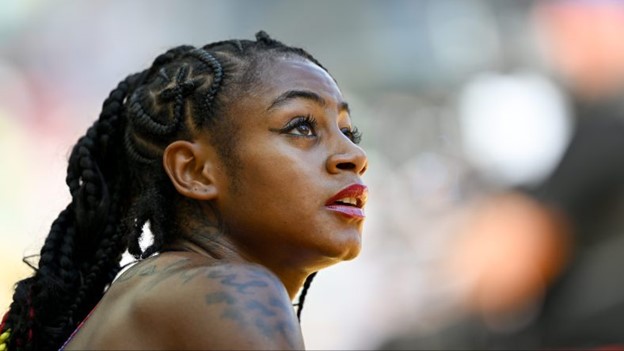
Sha’Carri Richardson could’ve gone the other way, succumbing to despair and disappointment after her rising star was shot down and stomped.
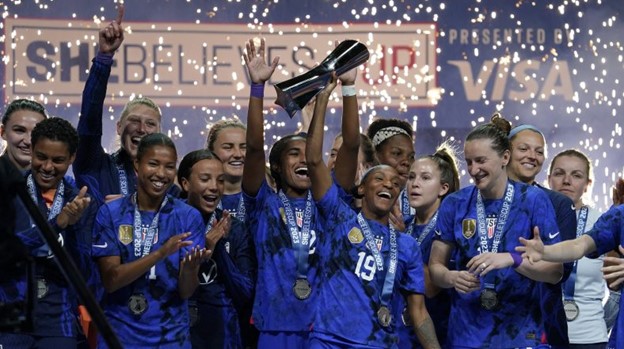
In case you missed it, the Women’s World Cup begins Thursday in Australia and New Zealand, and the U.S. hopes to win its third consecutive title. Our national team has been good for a minute, but it’s never looked better.
The
program has come a long way since the 2019 World Cup, when one headline pointed
out the obvious and asked a simple question: “Why is the U.S. Women’s World Cup roster so
white?” And that squad wasn’t nearly as pale as the 2011 version, which
featured just one Black player and one Latina player.
This
year’s team has a lot more swirl.
A record-high seven Black women are on the 23-player roster. There are two Mexican Americans, the second- and third-ever to make a U.S. women’s World Cup team. One multicultural teenager is a true American, with a background that embodies diversity while part of the country bans it.
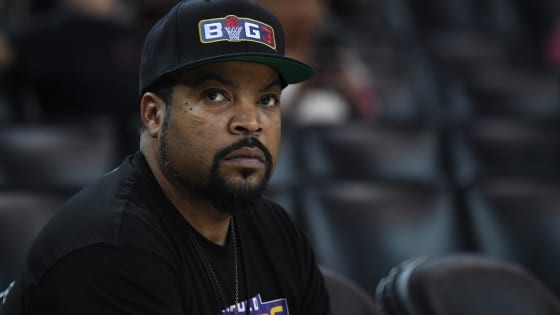
You have to give it up for Ice Cube and what he’s accomplished since rapping and acting his way into the social fabric. His lengthy catalog includes colossal cultural hits in music and movies, from gangsta rap to family flicks. Much respect to the now 54-year-old who began his career as a teen from South Central L.A.
His current ventures include pro sports, namely the Big3 basketball league he co-founded with entertainment executive Jeff Kwatinetz in 2017. From all outward appearances, the 3-on-3 league is doing pretty well in its sixth season, broadcast to hundreds of thousands of viewers via CBS and streamed to more eyeballs via Paramount+.
But Ice Cube thinks “gatekeepers” like the NBA have the Big3 in a chokehold. While appearing on theGrio Black Podcast Network’s “Dear Culture,” he told theGrio’s Panama Jackson that “they’re trying to crush Ice Cube and my league.”
Attending college doesn’t mean
what it used to mean, when ancestors were denied the opportunity but considered
higher education the ultimate goal for future generations.
Get off the farm, don’t ply the
trade, quit working with your hands. Turn in those dusty clothes for a white-collar
shirt after crossing the stage with your bachelor’s degree. That’s the path to expand
your mind and achieve upward mobility, economically and socially.
Now, the entire world is a click
away for anyone inclined to expand their horizons. If desired, you can become
enlightened while skipping
college and avoiding student loans, instead opting for skilled labor or
other jobs that pay OK but don’t require a bachelor’s.
But the romance of college remains
strong as ever around sports programs, especially the big-banking, money-making
duo of basketball and football.
Alums love to root for their alma maters in primetime battles on national TV. But overall, degrees don’t hit for recent teens like they used to hit for us. The U.S. Bureau of Labor Statistics reports the decline in college attendance since 2018 is the steepest on record, with help from the pandemic.
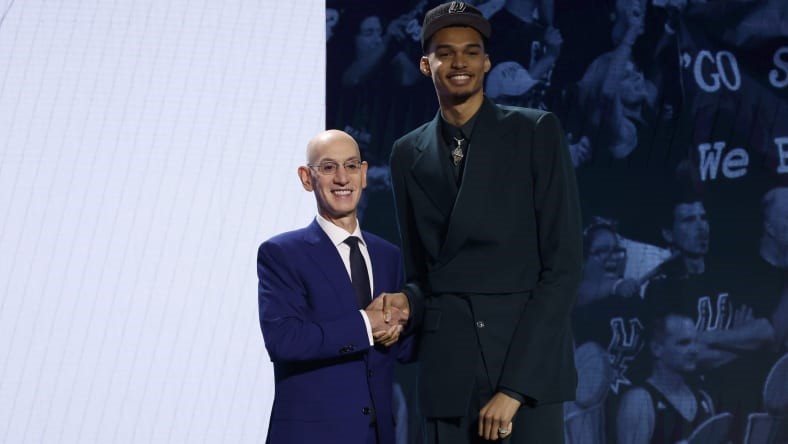
There’s no drama surrounding who’ll go No. 1 in the NBA draft Thursday when San Antonio will select French teenager Victor Wembanyama. He’ll instantly become a leading figure in the league, joining international fixtures Nikola Jokic, Joel Embiid, Giannis Antetokounmpo and Luka Doncic.
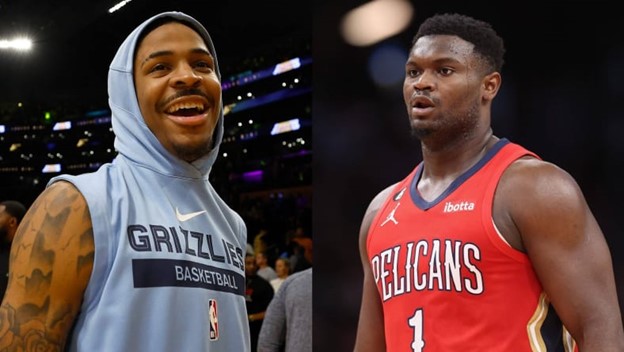
For real intrigue, consider the plight of two American-born stars, Memphis Grizzlies guard Ja Morant and New Orleans Pelicans forward Zion Williamson.
Each is a potential “face of the league” who right now risks ridicule and derision when they step out in public. We never imagined such a shameful turn of events when Williamson and Morant went 1-2 in the 2019 draft. In the blink of four years, they’ve become All-Star ballers at unexpected crossroads.
You might see their recent indiscretions as youthful mistakes, but being young isn’t necessarily followed by being dumb. There are levels of stupid behavior at every stage of life. But certain individuals tend to max out, be they anonymous Joes or well-known celebrities.
We wouldn’t have to talk about who stands during the national
anthem and who sits/kneels/stays away during the national anthem if it weren’t
played to death.
Blame sporting events. Between youth games, college games and
pro games, we’re deluged with the Star Spangled Banner every day of every year.
If not, can folks stop giving a damn about individuals’
posture during the song?
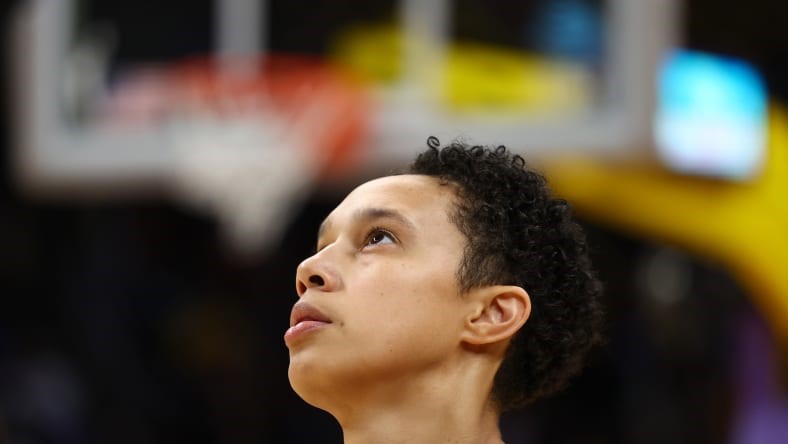
WNBA superstar Brittney Griner is back on the court after 10
months as a prisoner in Russia. And what she did prior to tip-off earned equal
billing with her exploits during the Phoenix Mercury’s season-opener May 19.
She stood for the national anthem. Previously she stayed in the locker room – like many WNBA players – to show solidarity with social justice activists declaring that Black Lives Matter. Just like that, she re-ignited the debate on proper protocol when Francis Scott Key’s biggest hit is played.
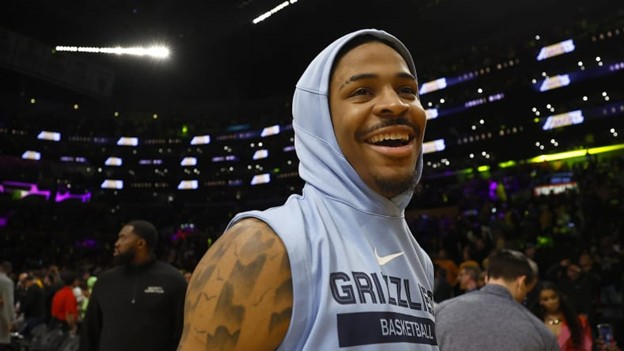
“I take full responsibility for my actions. I’m sorry to my family, teammates, coaches, fans, partners, the city of Memphis and the entire Grizzlies’ organization for letting you down. I’m going to take some time away to get help and work on learning better methods of dealing with stress and my overall well-being.”
That’s a perfect statement Ja Morant released after flashing a gun on social media. Whoever wrote it, the message hits all the right notes: accountability, remorse, reflection and a commitment to improve. For the talented and troubled 23-year-old NBA star, the words sound genuine, heartfelt and sincere. Well done.
There’s only one problem; the statement was released two months ago.
Now, Morant can dust it off for reuse because history has repeated itself. He flashed a gun during another Instagram Live session on Saturday, leading to yet another suspension.
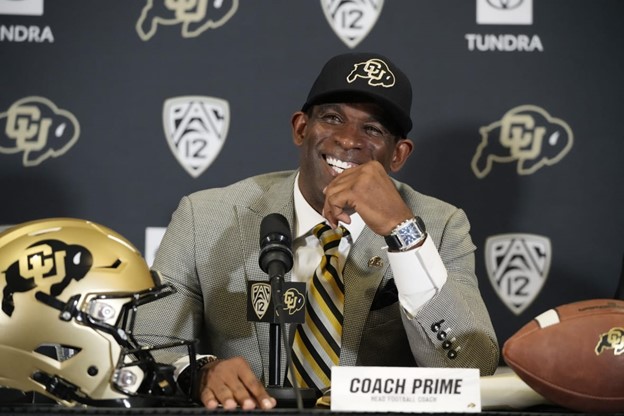
I’ve been a Deion Sanders fan for a long time, well before we sat together in first class in 1997. He had played football that day – against the Pittsburgh Steelers – and was flying to play baseball the next day – for the Cincinnati Reds. I was tagging along as a national baseball writer.
Later, our paths crossed multiple times when I became a syndicated sports columnist in his hometown, Fort Myers, Florida. Having spent nearly a decade there, I developed a good sense of the community that produced “Neon Deion” and “Prime Time.” They’re my peeps, too, just like Sanders; warts and all, they’re family.
Whether you consider him a shameless self-promoter or a fearless truth-teller, we can agree on one thing: He’s a master at commanding attention and polarizing the viewers. He started as a blinged-out Atlanta Falcons rookie from Florida State and hasn’t slowed down as head coach at University of Colorado Boulder.
Now, Sanders is making waves with an unprecedented approach to modern college football, where players essentially can pick a new school at will. Fifty-two Colorado players have entered the transfer portal, most involuntarily, since he arrived from Jackson State. Other Power Five programs have half as many players set to exit. Forty-three Buffaloes entered the portal after Colorado’s spring game on April 22.
“You all know that we’re gonna move on from some of the team members, and we’re gonna reload and get some kids that we really identify with,” Sanders said after the spring game. He has followed through on introductory remarks to the team in December: “I’m bringing my own luggage with me, and it’s Louis,” as in Vuitton.
Just like that, NFL players Jameson Williams and Stanley Berryhill have absorbed a valuable lesson on progress — so-called and otherwise. They’ve learned that the societal norms on what’s acceptable and what’s punishable can shift, yet remain unchanged. They learned how constant friction can create innocent victims and confused observers, in the flash of an eye.
Previously anonymous wide receivers for the Detroit Lions, Williams and Berryhill found themselves in undesirable news coverage last week, forever linking them to NFL gambling suspensions. Say hello to the Wall of Shame, where inclusion doesn’t have to be warranted.
They didn’t do anything close to what the three other suspended players did, but the general public isn’t great at reading past the headlines. Williams and Berryhill can count on folks to ignore the fine print and miss key distinctions. For that matter, media outlets can be just as careless and sloppy, splattering unrelated individuals with a broad brush of guilt.
 Follow