Thunderbolt’s Jim Shapiro: Logistics Is a ‘People Business’
 Follow

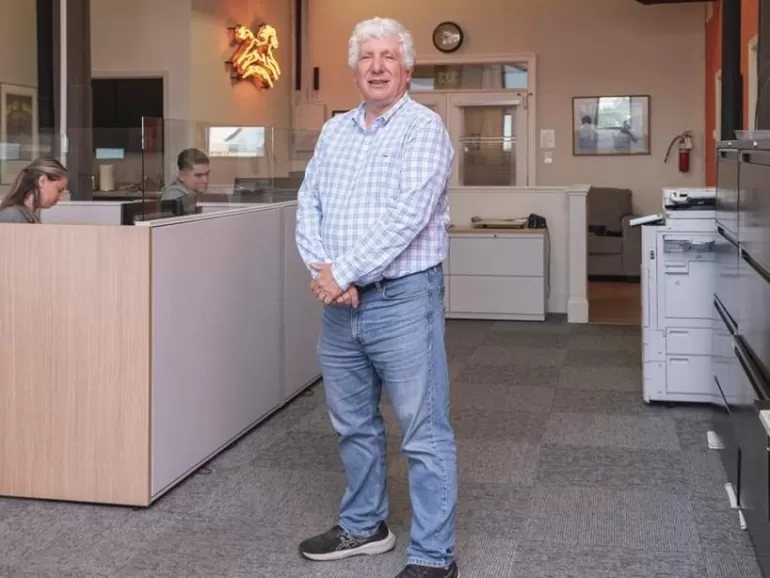
By DERON SNYDER (as published by Port of Baltimore Magazine)
When Jim Shapiro decided to grab a backpack and head overseas during a gap year from the University of Massachusetts, he wasn’t thinking about a career in logistics. He was feeding his innate curiosity about people and places.
“I had a Eurail pass and traveled for four months by myself in Europe,” said Shapiro, director of Thunderbolt Global Logistics. “That kind of opened me up to a lot of different things. I was interested in just everything.”
Shapiro returned and graduated with a degree in business management, intent to focus on international commerce. He moved to Baltimore in 1984 and used a Port of Baltimore directory to conduct a job hunt.
He knocked on doors at the World Trade Center — beginning on the 26th floor — and worked his way down to the fifth. That’s where he found work at Samuel Shapiro & Company (no relation), a 100-year-old shipping and logistics firm.
“Initially I was basically doing clerical work,” he said. “I was typing export declarations with carbon paper. I didn’t have much exposure to the Port, but I realized it’s a very close-knit community. I got to know a lot of people at companies in trucking and warehousing. Your competitors were your friends and you didn’t have an issue with it.”
Founding Something New
He was hooked and invested 20-plus years in the industry before partnering with longtime friend Stu Tobin on a new venture. They co-founded Thunderbolt in 2007 and had six employees within the first year.
“It was time for a change and I got a lot of support from family and friends,” Shapiro said. “My domestic relationships and overseas relationships really helped us as we started the company.”
A small but globally connected company, Thunderbolt enjoys extensive reach through its membership in overseas freight networks. Such connections are core to Shapiro’s belief that logistics at its base is a people business. Technology is vitally important but so is whatever’s happening in folks’ daily lives.
“It’s all about how you work with your customers and partners,” he said. “I’m a relationship-driven person, and the people part is the best part of the industry. That’s why we try to develop strong personal relationships with our customers, our vendors and our overseas partners.”
Shapiro travels for different overseas meetings about three times a year, expanding the network he started forming 40 years ago. A business partner rushed to Shapiro’s aid during a recent family vacation in Portugal. After Shapiro’s daughter fell ill, the man jumped in and immediately handled all affairs at the hospital and airport.
“This isn’t just someone you work with,” Shapiro said. “This is a personal friend who has stayed with me at my house before. The best part is when the people you work with become your friends.” At the same time, Shapiro credits much of his success — and Thunderbolt’s — to the employees who help make it all happen. “Our company is only as good as our staff, and we have a great team,” he said.
Finding Home at the Port
Like many transplants who arrive in Baltimore with little knowledge of ports or port livelihoods, Shapiro was pleasantly surprised by his discoveries. He quickly learned that the Port of Baltimore centers a wide range of industries and people connected to trucking and warehousing.
He’s played softball and bowled with these people. He has attended the Baltimore Port Alliance’s Bull and Oyster Roast. There have been more than a few crab feasts.
Shapiro has grown more involved in industry issues along the way, starting with the Baltimore Customs Brokers & Forwarders Association. He currently serves as vice president after stints as secretary and president. Thunderbolt was a member upon its founding and promptly joined the National Customs Brokers & Forwarders Association, too.
“Everyone’s kind of in the same boat, but they advocate for our industry in a great way,” he said. “We’re all, theoretically, competitors, but we’re not — we want to help each other.”
Port officials and Shapiro likewise help each other. Retirements have impacted some relationships, but he works with connections in sales, operations and marketing at the Maryland Port Administration. He serves on a federal workforce group and keeps track of developments involving the Port. He’s also a huge cheerleader.
“(Thunderbolt) focuses a lot on European imports and exports, and I’m always promoting Baltimore to European freight forwarders,” Shapiro said. “No offense to New York or Norfolk, because we do a lot there, but it’s much easier doing things here.”
The young traveler with a rail pass became a global logistics leader. And he found a home in Baltimore.