Baltimore Museum of Industry: Connected by the Water
 Follow

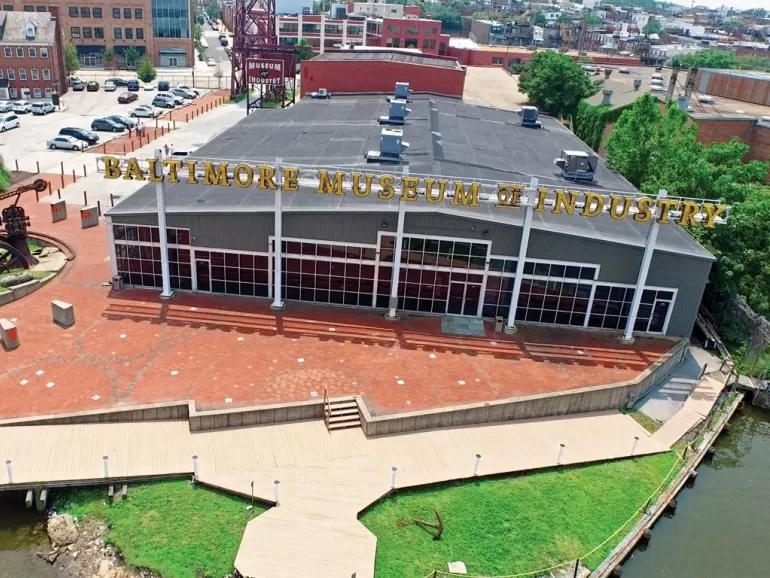
By DERON SNYDER (as published by Port of Baltimore Magazine)
The Baltimore Museum of Industry (BMI) mission statement doesn’t specifically mention the Port of Baltimore. Nor does the museum have a massive exhibit devoted to the waterfront. The mission is to “interpret the diverse and significant human stories behind labor and innovation in Baltimore” and inspire reflection on “the intersection of work and society.”
But BMI Executive Director Anita Kassof said the Port and the museum’s work are inextricably intertwined.
“Baltimore grew up from a colonial town into a major world-class city due to the Port, because of our strategic location,” Kassof said. “So implicitly, the Port is reflected in a lot of our exhibitions. Explicitly, we would actually like to have an exhibition dedicated specifically to the Port of Baltimore and we’d been working on conceptualizing that before the pandemic derailed our plans.”
The tragic collapse of the Francis Scott Key Bridge on March 26 has put BMI’s plans back on track.
“This is our opportunity to revisit those discussions and finally create the exhibition about the Port of Baltimore that belongs at the Museum of Industry,” Kassof said. “Because when the bridge collapsed, there was a moment when the eyes of the world were on Baltimore. Everybody recognized how logistically essential we are. … It was eye-opening because the Port is kind of hidden in plain sight in this community.”
A Missing Link in Baltimore
Like most folks, Kassof woke up to news that the Key Bridge had collapsed and bridge workers were feared dead. She realized right away that the incident would impact the museum, which had previously scheduled meetings with people from the Port and the city. But then she thought about everything more broadly.
“What I realized is that the museum had a really important role to play in documenting and telling the story of the Key Bridge and its implications,” Kassof said. “Our name is Baltimore Museum of Industry. But we’re really not about machines so much as about workers and work.”
Beyond the families of the unfortunate men who lost their lives, Kassof knew there’d be significant ramifications for workers throughout the supply chain. Shortly after the collapse, the museum secured funding to collect oral histories of affected individuals, stories that Kassof hopes become part of a long-term exhibition on the Port. An advisory committee and oral historian have begun work and the museum has announced a collecting effort that encourages donations related to individuals’ experiences with the Key Bridge.
“Our goal is for this to become a much longer-term, multi-year initiative, inspired by the impact of the Key Bridge collapse and what that means,” she said. “But then, really continuing to keep the Port and the kinds of jobs it supports in the public consciousness.
“Ultimately, we’d also like to create a school curriculum for our field trips that come to the museum to expose more students to the story of the Port and familiarize them with the kinds of jobs that Port businesses provide and the skills they would need to succeed in them.”
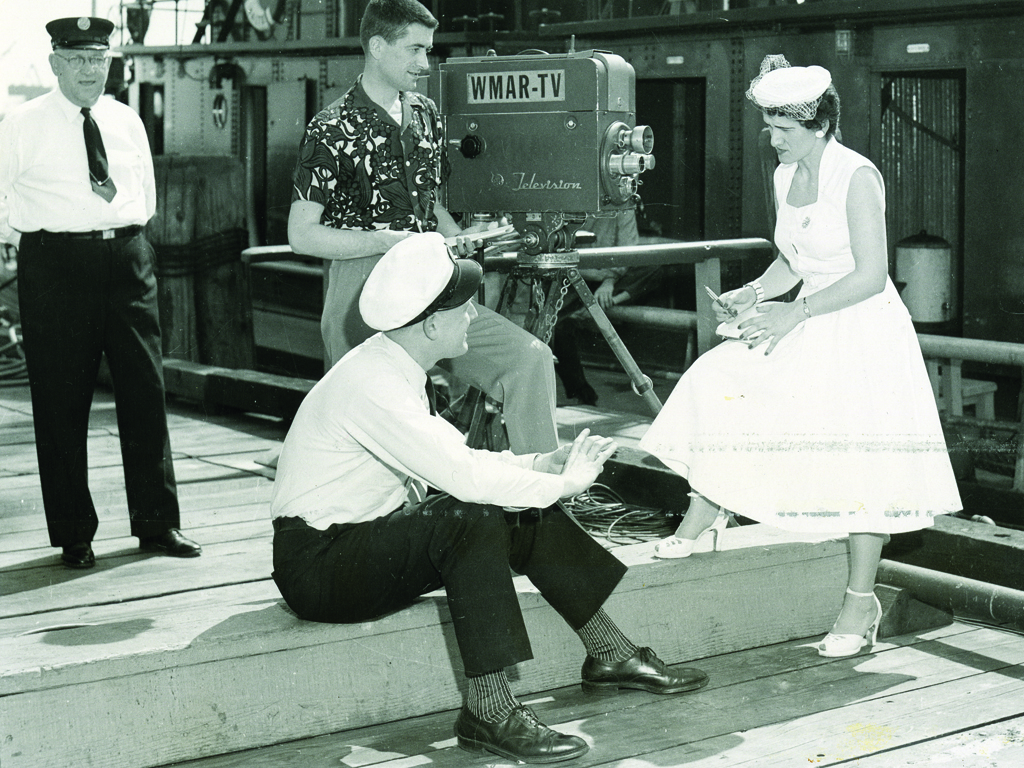
Helen Delich Bentley / Photo courtesy of BMI Archives
Honoring the Port’s ‘Godmother’
BMI plans to devote more space to the dockyard, but it already has a strong direct connection to what was renamed the Helen Delich Bentley Port of Baltimore in June 2006.
A longtime journalist and advocate for Maryland’s maritime industry before she entered public service, Bentley joined BMI’s Board of Trustees in 2003 and remained one of its most active members until her death in 2016. No one is associated with the Port more than Bentley, whose impact is well represented at BMI with more than 600 reels from her 1950s-1960s TV program, “The Port That Built a City.”
“We recently had that collection digitized,” BMI Archives Manager Maggi Marzolf said. “There are early videos of the Harbor Tunnel right when it opened, and you can see the surrounding area.”
Marzolf said BMI recently acquired Bentley’s Congressional papers and other items as well. She looks forward to a Port exhibit in the future, but said a small collection and the view from BMI’s Decker Gallery already make the link clear.
“You can see it right out the windows as you look onto the harbor,” Marzolf said. “You can see how everything is interconnected. We have Domino Sugar unloading off its ships, and we see all the docking areas and industries along the waterfront. And the ones that used to be along the waterfront. They’re all interconnected through this channel.
“It’s interesting when you look at everything,” Marzolf said about Baltimore’s workers and industries represented at BMI. “I don’t see just one industry on its own. I see several that are connected, almost like a spider web, and they all come together around one thing — and that’s the water.”

Baltimore Museum of Industry at a Glance
Year Founded: 1977
Leadership: Anita Kassof, Executive Director; Beth Maloney, Director of
Curatorial Affairs; Curtis Durham, Collections & Exhibitions Manager; Maggi Marzolf, Archives Manager
Address: 1415 Key Highway, Baltimore, MD 21230
www.thebmi.org