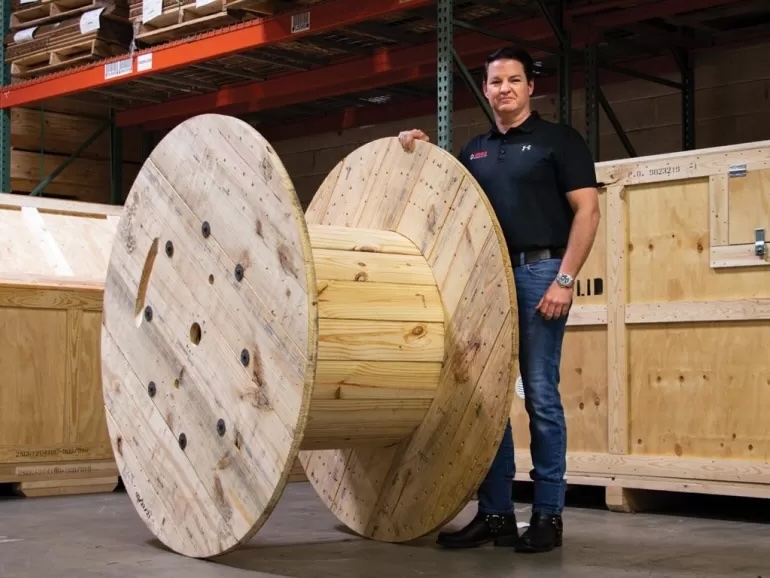
A family business doesn’t last for 90 years and through four generations of leaders in an everchanging field without navigating and initiating disruptive innovation. No one has to convince Mick Arnold of that fact.
What began in 1933 as Arnold’s Factory Supplies — a Baltimore maker of adhesives and inks for packaging materials — has since evolved into Arnold Packaging, a comprehensive firm that designs and supplies innovative packaging solutions and automation systems to optimize customers’ shipping, storage and production processes.
“The company obviously was a lot smaller under my grandfather, when we made glues and mineral pigments,” said Arnold, who became company president in 1995 after his father’s death. “Transportation wasn’t very good and things were manufactured a lot closer to point of use. You didn’t think of handing off to UPS or FedEx and competing in a market that was two or three states away, let alone on the other side of the Mississippi.”
Today, Arnold Packaging has 82 employees and the firm has boomed since 2020. “We doubled the size of the business from 2018 to 2022,” Arnold said.
WASHINGTON – Hip-hop
legend DMX, who died from a heart attack in 2021, would’ve turned 54 this month.
But the NYC gritty rapper lives on through his music and others’ renditions.
The latest example is slated for Jan. 12, when Sequoia REDWOOD Snyder drops her arrangement of “Who We Be,” a hit single from DMX’s Grammy-nominated album, “The Great Depression.” REDWOOD headlines at the Kennedy Center’s Studio K Club three weeks later, bringing the 25-year-old D.C. native to where her journey began.
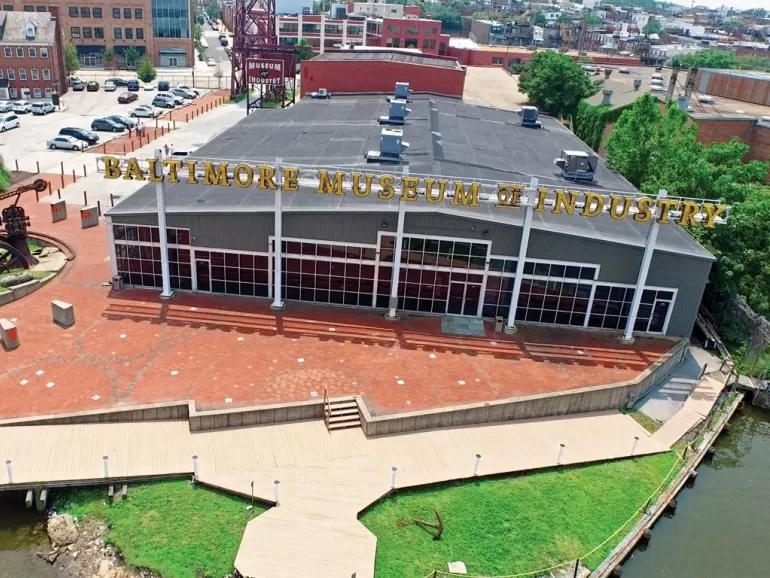
The Baltimore Museum of Industry (BMI) mission statement doesn’t specifically mention the Port of Baltimore. Nor does the museum have a massive exhibit devoted to the waterfront. The mission is to “interpret the diverse and significant human stories behind labor and innovation in Baltimore” and inspire reflection on “the intersection of work and society.”
But BMI Executive Director Anita Kassof said the Port and the museum’s work are inextricably intertwined.
“Baltimore grew up from a colonial town into a major world-class city due to the Port, because of our strategic location,” Kassof said. “So implicitly, the Port is reflected in a lot of our exhibitions. Explicitly, we would actually like to have an exhibition dedicated specifically to the Port of Baltimore and we’d been working on conceptualizing that before the pandemic derailed our plans.”
The tragic collapse of the Francis Scott Key Bridge on March 26 has put BMI’s plans back on track.
“This is our opportunity to revisit those discussions and finally create the exhibition about the Port of Baltimore that belongs at the Museum of Industry,” Kassof said. “Because when the bridge collapsed, there was a moment when the eyes of the world were on Baltimore. Everybody recognized how logistically essential we are. … It was eye-opening because the Port is kind of hidden in plain sight in this community.”
 Follow