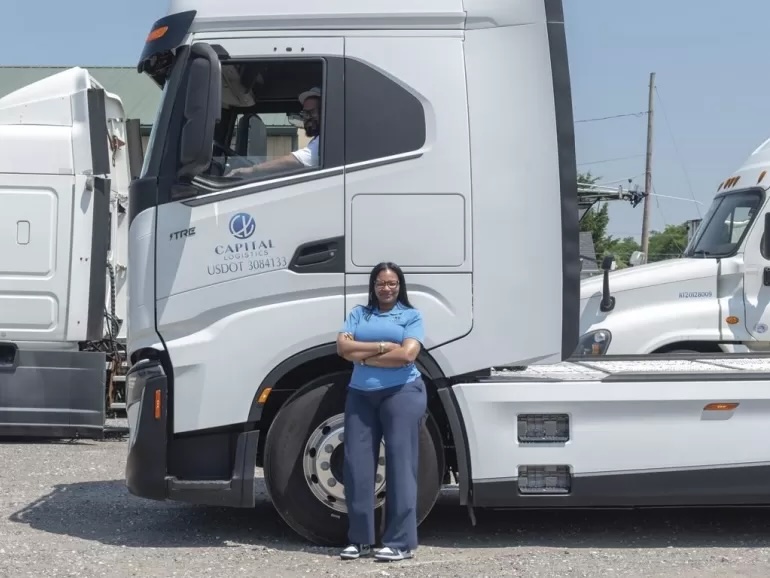
In 2018, Gloria Baldwin made a major career pivot — from healthcare to transportation. An acquaintance initially steered her toward freight brokerage, cautioning her against the challenges of owning trucks. But when she and her oldest daughter began seeking clients, the message they heard was clear: “We need trucks to move our freight.” Two months later, Capital Logistics was born.
“We didn’t have any trucks at the time,” Baldwin recalled. That quickly changed. The company acquired its first vehicle in 2019, and within three years, its fleet grew to 25. Today, Capital Logistics operates 35 Class 8 trucks and is a key partner in the Clean Ports Program with the Port of Baltimore — a $3 billion federal initiative aimed at modernizing port operations and trucking fleets.
Baldwin is determined to lead the company into an electric future. Capital Logistics owns three electric trucks, with plans to transition to a fully electric fleet in the next few years. The company also intends to establish a commercial EV charging station to support small and mid-sized fleets. “We made a bold decision in 2022 to shift toward electric trucks,” she said. “Our mission now centers around innovation and sustainability.”
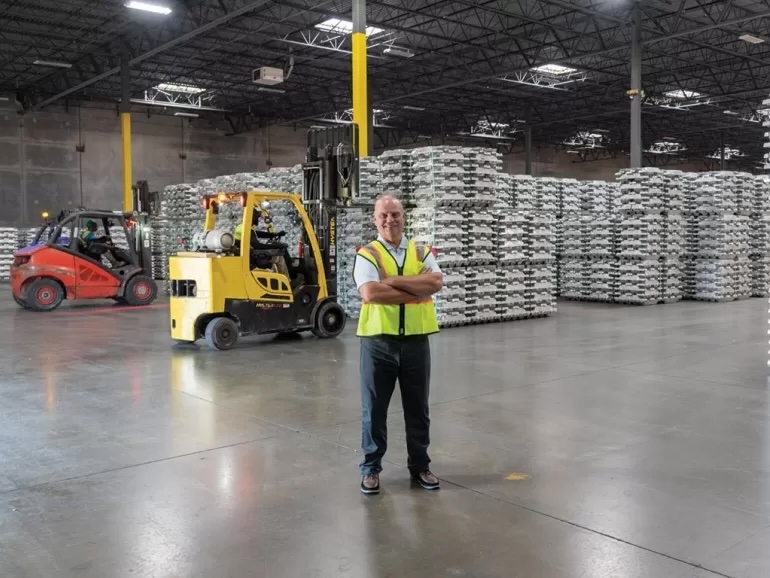
In March 2020, the World Health Organization declared COVID-19 a global health emergency. Five months later, owners Frans Zwanenburg and Kathy Haines founded Ancora Warehousing & Logistics, LLC.
Starting a business amid a worldwide pandemic isn’t ideal and only a few would do it, Zwanenburg said.
“Nobody was working from offices anymore and we began our journey in a conference room at one of our vendors. We needed some more privacy and decided to move into a rental house owned by Kathy Haines, which became vacant during COVID-19. Then neighbors started to complain, and we signed our first office lease at the Maritime Center at Tributary Street,” Zwanenburg said.
As the company’s customer base grew, and the demand for warehouse space to hold inventories skyrocketed, Ancora’s providers strained to keep up with its volumes, which led Zwanenburg and Haines to look for their own warehouse space around Baltimore. “None was available, but finally we found a path forward and ended up getting our own large Class A warehouse and office in May 2023,” Zwanenburg said. “The best part: every step we took was done with our own capital and cashflow. No company or financial institution was willing to take any risk in financing us during these uncertain times, and without employees, there was no governmental payroll help for Ancora or any available aid programs for a startup trying to hire people. No matter what, we focused on our priorities and hard work and became who we wanted to be.”
The founders focused on the potential rewards of filling a vacancy at the Port of Baltimore and rode out the virus until business returned to normal.
“We were not afraid,” Zwanenburg said. “We just had to make decisions. We had a business plan, but a lot of things happened that nobody [expected] and the container business was becoming very difficult.”
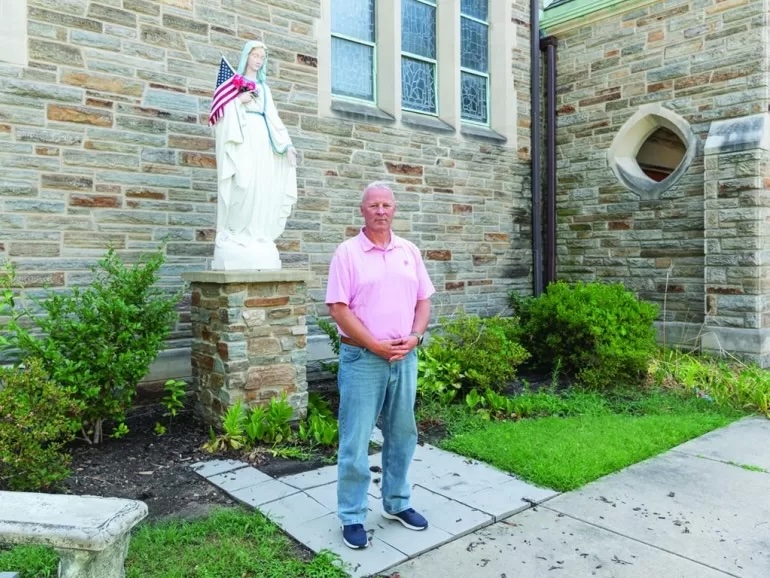
For whatever reason, Andrew Middleton couldn’t sleep the night after taking the captain and a crewman from the cargo ship Dali on a quick shopping trip before their vessel was set to embark from Baltimore. He was lying in bed awake around 1 a.m. when he heard “this loud rumbling.”
“Initially I thought it was thunder,” said Middleton, Director of Apostleship of the Sea for the Archdiocese of Baltimore. “It lasted for 20-25 seconds and then it got quiet again. I lay there for a while and decided to get up and get my day started.”
Within seconds of turning on the radio, Middleton learned that the Francis Scott Key Bridge had collapsed after being struck by the Dali. “My first thought was, ‘I was just with those guys yesterday,’” he said about the March 26 tragedy. “I sent text messages to the crewmembers asking if everyone was OK. One of them responded within a few minutes. And that started what ultimately ended up being a very, very long day.”
 Follow